
Which powders suit a powder stick pack machine?
Instant coffee mixes, collagen and powdered beverages are the usual starting points, but the product name alone does not settle the configuration. A powder stick pack machine links metering, film handling, forming, sealing and cutting in one cycle, and every step reacts to how your powder behaves. Send the actual formulation or a representative sample with the smallest and largest intended dose, and explain how the powder reaches the machine and how long it sits in a hopper before packing.
The same serving weight can occupy very different volumes. A light, aerated powder needs more pack space than a dense one at the same weight, and a powder that settles during a run may discharge differently from the auger an hour later. Describe any clumping, dust, moisture pickup or uneven discharge you already see in production. Those notes steer the discussion toward the feeding and filling arrangement instead of a machine picked from a photograph or a nominal speed.
How does auger dosing work on a stick pack machine?
An auger is a rotating screw that meters powder into the filling path of each lane, and the screw, its outlet and the drive settings are chosen around your material and dose. In the four-lane reference configuration every lane has its own auger. Ask how powder is distributed to the augers, which adjustments the operator can make, and, if servo control is proposed, which movements it drives and how the settings are saved for each approved recipe.
Steady supply to the augers matters as much as the screw itself. Ask how the hopper and replenishment arrangement handle your powder as the level falls from nearly full to low, since fill weight can drift as the head of powder above the screw changes. If additional feeding equipment is needed, the quotation should name who supplies it and who controls the interface. In a sample trial, take fills after replenishment, after a pause and during sustained running, and keep those samples apart so each adjustment addresses the condition that caused it.
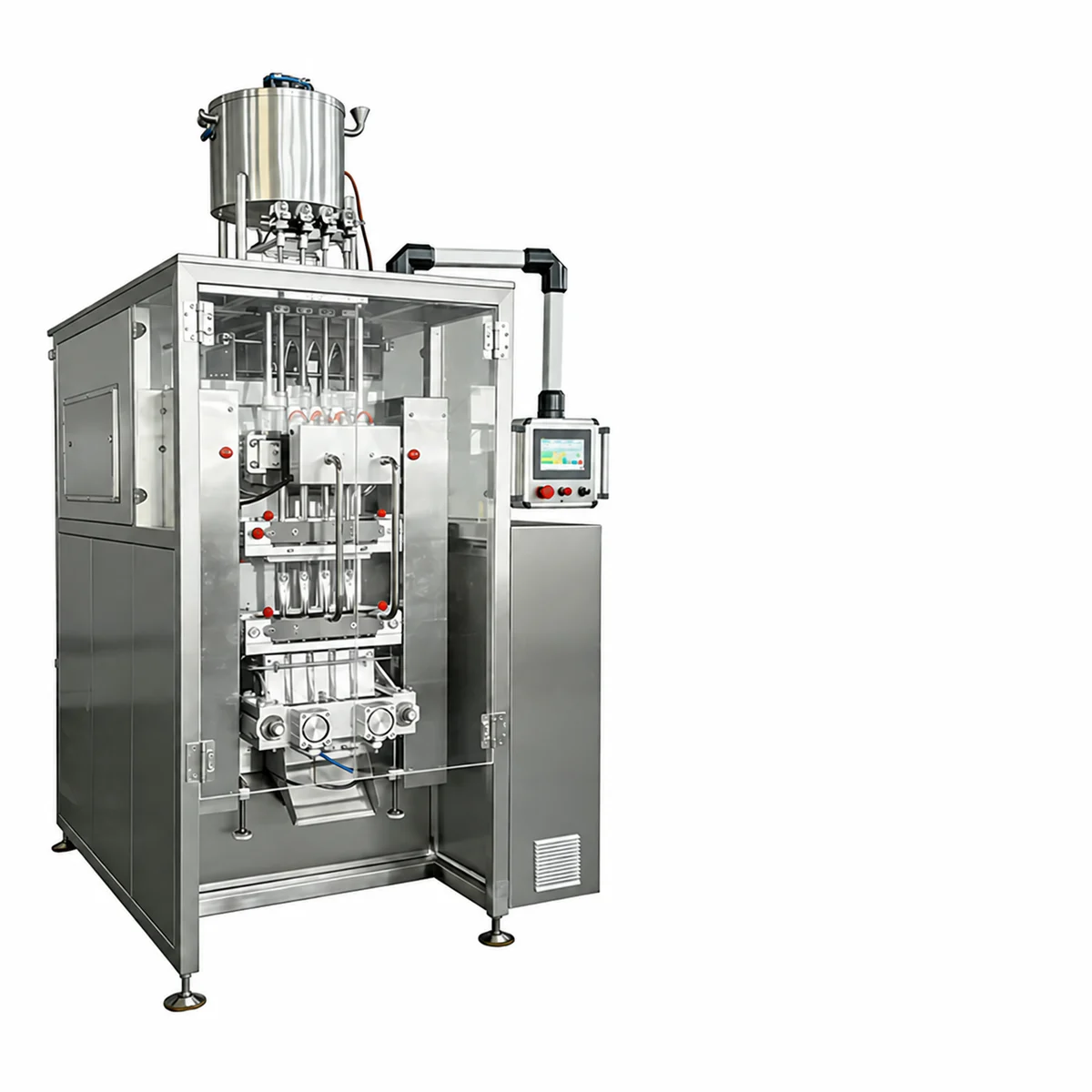
Film forming, filling and sealing in a multi-lane machine
In a multi-lane machine the film is divided into parallel webs, each wrapped around a forming tube, and the dose has to drop and settle before the end seal closes and the knife separates the stick. Review the proposed lane count against the pack drawing, dose volume and film roll specification. The four-lane platform is the starting point for that discussion; the configuration you actually buy should be written into its own technical agreement.
Powder reaching the seal area is the defect to watch most closely in a powder trial. Observe the product drop, the settling time and the timing between filling and sealing. Dust extraction is an option in the reference configuration, so if it is proposed, ask what it covers and where it stops. Raising jaw temperature does not cure powder trapped in a seal. Inspect packs from every active lane and keep examples of good and defective packs, so each setup change is judged against physical evidence.
| Decision | Why it matters | What to send |
|---|---|---|
| Dose range | Influences filler sizing and usable pack volume | Minimum and maximum target fill weight |
| Powder behavior | Can affect feeding, dust and seal cleanliness | Sample, bulk density and handling notes |
| Pack format | Must suit the forming and sealing arrangement | Finished pack dimensions and film specification |
| Output | Depends on the complete process | Required accepted packs per minute and operating pattern |
Film and pack size for powder stick packs
Most powder projects start from a heat-sealable laminate such as PET/PE, PET/AL/PE, NY/AL/PE or paper/PE and a stick within the reference ranges of about 15–30 mm wide and 50–180 mm long. Fix the size on a drawing with finished width, length, seal areas, tear notch or other opening feature and print position, and state whether the dimensions describe the finished stick or the flat film. Check internal volume with filled samples, especially when the range runs from a small serving to a larger portion: an empty sample can look right and still be hard to fill, close or empty.
Give the film supplier's material code, structure, thickness and roll dimensions so feeding, registration and sealing are reviewed on that exact material. If you want to compare a second film, keep its trial results separate; laminates that look alike do not always seal alike. Judge finished-pack appearance and opening against your own quality checks. Barrier performance and shelf life need evidence for the complete product and package, and a clean run on the packing machine does not provide it.
Recipe changeover and cleaning access
Changeover planning starts with the list of powders that will share the machine and the order you intend to run them. A new flavor, serving size or formulation can mean different settings, a different auger or extra cleaning. Ask which components are removed, how they go back together and which settings are checked before production restarts. Put access to the hopper, augers, outlets and the corners where spilled powder collects on the review list.
Your product and quality team should define the cleaning method, and it should not assume every stainless part tolerates the same treatment. The reference configuration uses a SUS304 frame with 304/316L product-contact parts, so check which grade each contact part has on the machine you are quoted. Count drying, reassembly, line clearance and the first accepted packs in the changeover estimate. For frequent recipe switches, consider a spare set of contact parts, labeled and stored so operators can tell a clean set from one still waiting for inspection.
How fast is a four-lane powder stick pack machine?
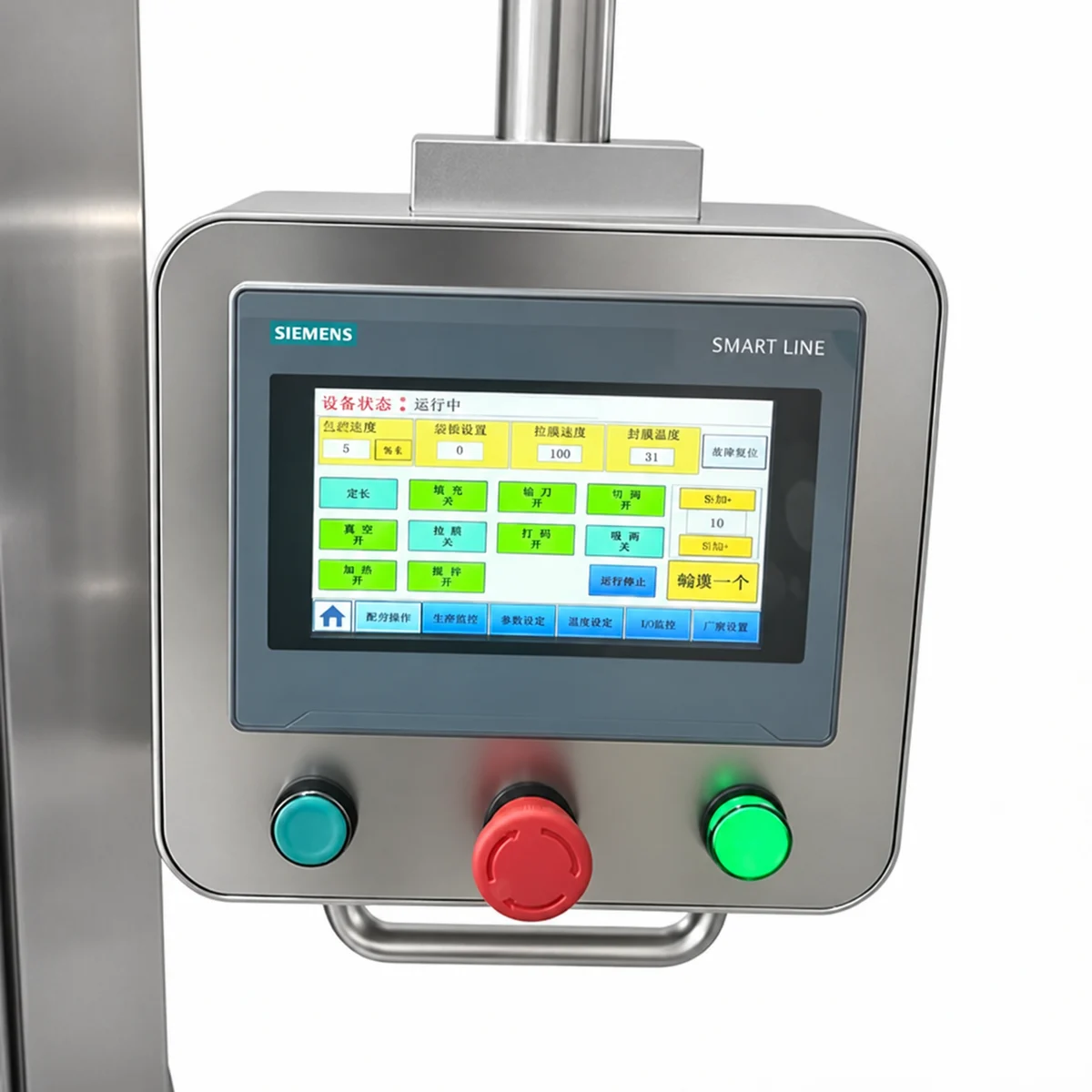
As a reference range, a four-lane powder stick pack machine runs about 30–40 cycles per lane per minute, roughly 120–160 sticks per minute, using an independent auger for each lane, a single forming and sealing section and a PLC with touchscreen. Fine, sticky or dusty powders usually sit toward the lower end, and product-specific losses come off that figure.
Figures are typical reference ranges for four-lane configurations. Output, fill range and dose accuracy depend on the product, film and pack size; they are confirmed in the quotation and verified during factory acceptance testing, not guaranteed for every product.
| Parameter | Typical reference range |
|---|---|
| Lanes | 4 in the reference configuration; other lane counts are quoted per project |
| Output | About 30–40 cycles per lane per minute, roughly 120–160 sticks per minute |
| Fill weight | About 1–20 g per stick; around 30 g needs different auger tooling and a trial |
| Stick length | About 50–180 mm |
| Stick width | About 15–30 mm, set by the forming tube |
| Film structures | Heat-sealable laminates such as PET/PE, PET/AL/PE, NY/AL/PE and paper/PE |
| Seal and cut | Back seal; straight, zig-zag or round-corner cut, with an optional tear notch |
| Power supply | About 3.5–4.5 kW; 220 V or 380 V, 50/60 Hz, matched to the destination grid |
| Compressed air | 0.6–0.8 MPa |
| Machine weight | About 650 kg |
| Construction | SUS304 frame with 304/316L product-contact parts |
| Options | Dust extraction and nitrogen flushing |
Measuring accepted output in a sample trial
Accepted finished packs per minute, measured over a stated shift pattern, is the output figure to plan around. Cycle rate multiplied by lane count leaves out film splices, hopper refills, start-up checks, cleaning and downstream handling, all of which reduce what reaches dispatch. Ask for the trial duration and the reject count next to any reported speed, so a short demonstration is not read as a production forecast.
Before testing, agree on the fill-weight sampling method, lane identification and acceptance limits. Keep start-up, steady-running and restart samples in separate bags. Run the most demanding recipe and film as well as the routine product if they differ. Log every adjustment before collecting the next sample set. The result is a handover record operators can return to when fill weight or pack appearance changes months later.
What to send for a powder machine quotation
Send the product description, sample availability, dose range, pack drawing, film details and required accepted output. Add floor area, installation access and site utilities, meaning power supply and compressed air, so they can be checked against the proposed equipment. Describe upstream feeding and downstream counting or cartoning, and mark coding, discharge conveyors and any inspection devices as either buyer-supplied or requested in the scope.
Compare quotations on the tested material and format, supplied components, change parts, trial criteria and documentation, together with training, installation planning and the proposed spare-parts list. If the formulation or pack changes after the order, go back to the recorded trial conditions to decide what needs retesting. Enquiries are handled on WhatsApp through the request-a-quote page, and a single-machine order is quoted the same way.
Documents to list in a powder machine quotation
A quotation covers only the documents it names, so list the ones you need in your brief. Useful items are a written configuration list naming the augers, lane count, pack range and options such as dust extraction, plus the agreed factory acceptance criteria and the results recorded when your machine is tested against them.
Operating instructions, a recommended spare-parts list and wiring diagrams for the control cabinet are other common requests; check which of them the quotation actually includes. Market-specific compliance paperwork is a separate question, so raise any requirement directly rather than assuming it arrives with the machine. File whatever you receive with the sample-trial results so installation, training and later service all refer to the same configuration.
Common Questions
Can one powder stick pack machine run several different powders?
Yes, a shared platform can run several recipes, provided each is checked for settings, cleaning and dose. A powder with a very different density or a much larger dose may need another auger or its own trial. List every powder and dose you plan to run, so change parts and cleaning steps are scoped before the order.
What fill weight can a powder stick pack machine handle?
The four-lane reference configuration covers about 1–20 g per stick. Around 30 g needs different auger tooling and a trial, and a bulky powder can run out of pack volume before it reaches the target weight. Send your minimum and maximum dose with a sample so both ends of the range are tested.
Why does powder end up in the seal of a stick pack?
Usually the dose is still falling or dusting when the end seal closes. The filling-to-sealing timing, the fill height in the stick and very fine particles all contribute. Fixes come from timing, pack length or dust extraction rather than higher seal temperature, and each change should be checked on packs from every lane.
Does a powder stick pack machine need compressed air?
Yes. The four-lane reference configuration lists 0.6–0.8 MPa of compressed air, alongside a power supply of about 3.5–4.5 kW at 220 V or 380 V, 50/60 Hz. Compare your plant supply with these reference figures and with the utilities stated in the final quotation before planning installation.