
Treat stick pack film as part of the process
Stick pack film has two jobs: it has to support the intended package performance, and it has to run through the chosen machine. A structure that looks suitable on a material specification may still need development work for tracking, forming, sealing and cutting, so review it with the equipment team before committing to printed production rolls. The best starting point is a named film grade, a finished pack drawing and a representative sample of the actual product.
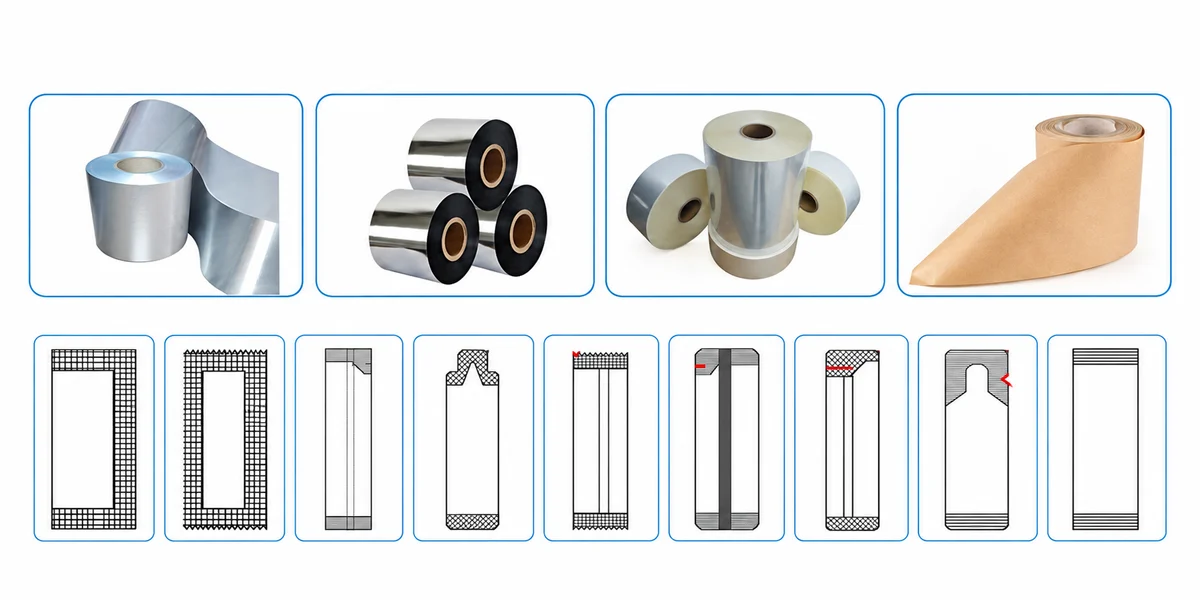
The powder equipment information includes examples of heat-sealable laminated structures, including PET/PE and PET/AL/PE. These names identify broad constructions, not universal approvals. Layer thicknesses, coatings, sealant chemistry and surface behavior can differ between suppliers. The article therefore focuses on the information to exchange and the checks to perform. It does not prescribe one film structure for coffee, protein powder, gel and every other single-serve product.
What should a stick pack film specification include?
A complete specification covers the material and the physical roll. Ask your film supplier for the full layer structure, total thickness, roll width, core dimensions, maximum roll diameter and winding direction. Add the print repeat, registration-mark position and artwork orientation. Where available, include dimensional tolerances and the supplier's recommended sealing conditions. Keep a material code and revision on the specification so that the trial roll can be matched to the later production order.
Physical roll details are easy to overlook when the discussion concentrates on barrier properties. A roll must fit the unwind arrangement and present the film in the correct direction. The print orientation must also agree with how the web is slit and formed into lanes. Send a simple roll-unwinding illustration if the supplier's terminology is ambiguous. Resolving this before printing is much easier than discovering that the artwork faces the wrong way when the roll reaches the machine.
Send the checklist below to the film supplier and the equipment team at the same time, then file the completed version with the trial report. If a supplier, grade or roll dimension changes later, compare the new answers line by line against this record.
| Item | What to specify | Why the machine needs it |
|---|---|---|
| Layer structure and thickness | Full laminate construction (for example PET/PE or PET/AL/PE) and total thickness | Tells the machine team what the forming and sealing tools must handle |
| Roll width and core | Roll width, core dimensions and maximum roll diameter | The roll has to physically fit the unwind stand and the lane layout |
| Winding direction | Which face is out and which way the roll unwinds | Wrong winding turns the artwork or the sealant layer the wrong way at the machine |
| Print repeat and registration | Print repeat length and registration-mark position | Lets the control system time the cut and seal to the printed artwork |
| Artwork orientation | Orientation of text and graphics relative to the web direction | Confirms the pack reads correctly once it is formed and cut into lanes |
| Sealing conditions | Supplier-recommended temperature, pressure and contact-time range | Gives the machine team a starting point instead of guessing settings |
| Material code and revision | Material code and specification revision number | Ties the trial roll to the exact production order placed later |
How does lane layout affect roll width?
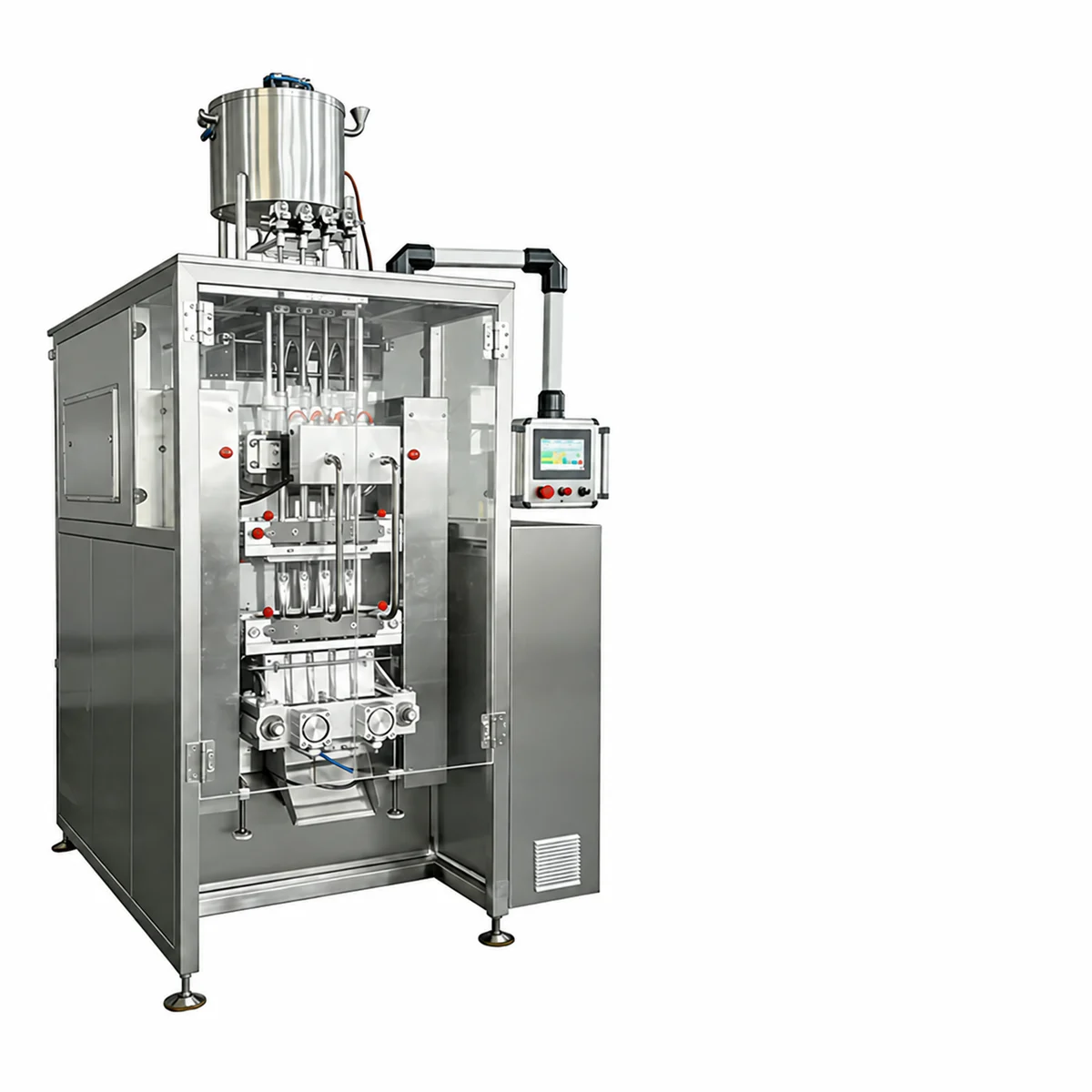
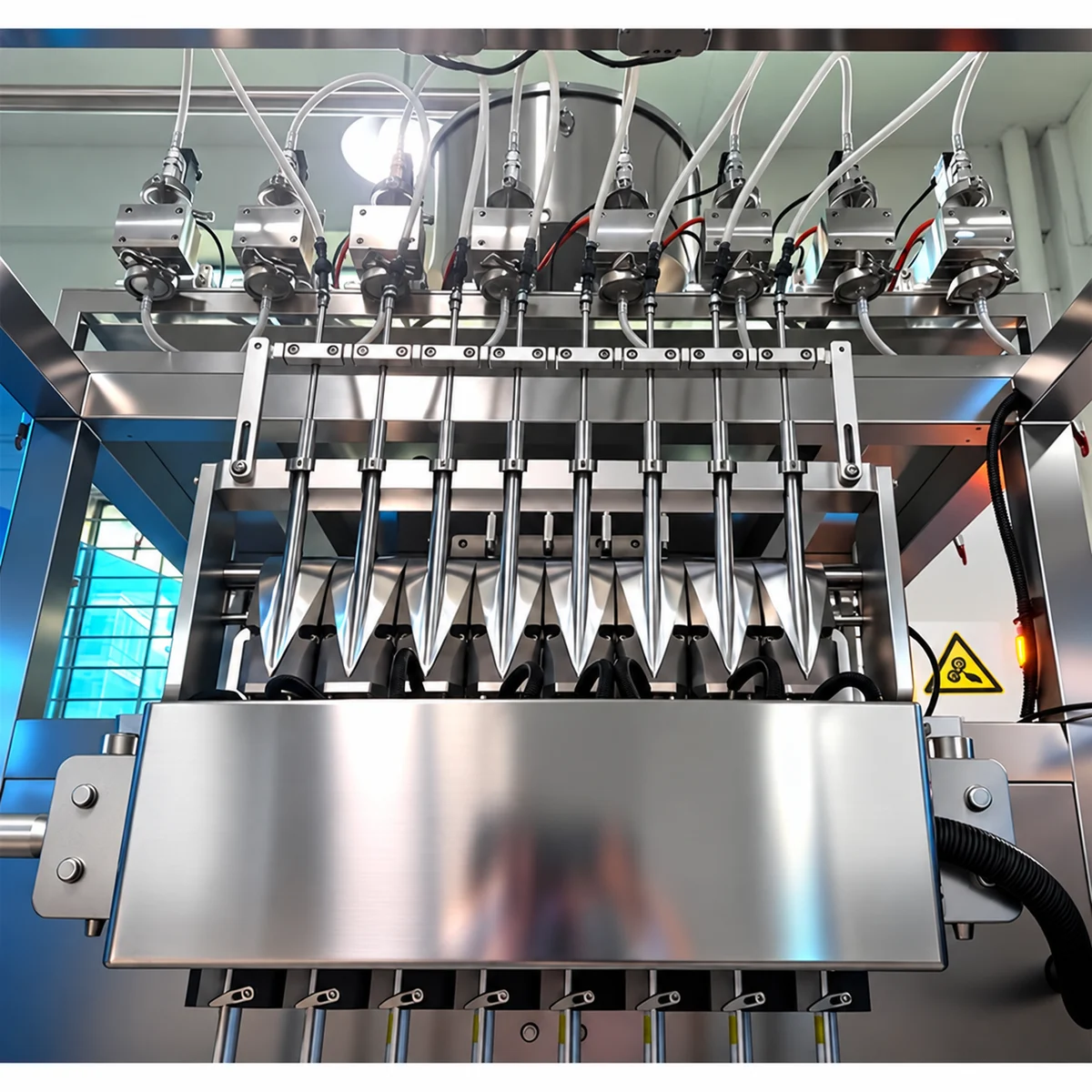
Lane layout sets the roll width. A multi-lane machine may divide one wide web into several strips before forming the packages, so the required width depends on the machine arrangement, finished pack geometry and allowances for seals, slitting and edge trim. No universal rule converts finished pack width into a roll order for every machine; use the selected supplier's approved web-layout drawing as the purchasing reference.
That drawing should show the lane arrangement and the relationship between repeated artwork, registration marks and cut positions. Check whether each lane uses identical artwork and whether any inspection or coding equipment needs a reserved area. If more than one pack width is planned, ask which parts and roll widths change. A machine's advertised package range does not mean that one roll specification or one forming set covers the entire range without adjustment.
Check forming and web movement with the real material
Web movement can only be judged with the real material, because curl, stiffness, friction and roll quality all influence how the film travels from the roll through the guides and forming parts. During a trial, watch whether the film tracks steadily across all active lanes and whether the formed pack stays aligned with the sealing and cutting positions. Record recurring wrinkles or sideways movement instead of judging only the first acceptable pack.
Compare behavior at startup, during a sustained run and after a stop. A short successful demonstration may hide problems that appear as roll tension or machine conditions change. If an adjustment is made, record it along with the roll identification. Avoid attributing every defect to the machine or every defect to the material in advance. A shared record lets the film supplier and equipment team investigate the actual interaction between the web, the forming arrangement and the operating conditions.
Further reading: Packaging Digest: a packer’s experience testing film and machinery together
Develop a usable sealing process
Sealing conditions have to be established with the actual film and product, not copied from another project. The sealant layer must work with the selected sealing arrangement, and temperature, pressure and contact time interact with the film construction and machine motion. Start from the material supplier's guidance and settle the conditions through an agreed trial. A temperature borrowed from another product is not a validated setting for your package, especially after a change of grade or thickness.
Look at the product as well as the film. Powder near the sealing area and liquid left by a nozzle can interfere with closure. Powder dosing and dust management, or liquid shutoff and nozzle timing, should be reviewed alongside the sealing settings. Record the agreed methods for evaluating finished seals and the conditions under which samples were made. Raising temperature should not be treated as an automatic cure for product contamination, poor alignment or a mechanical setup issue.
Align printing, registration and cutting
Print, seal and cut stay in step when the registration mark, the sensor and the web layout agree. The sensor lets the control system coordinate printed artwork with the packaging cycle, so the mark design and location must suit the proposed sensor. Send the artwork file for review before the print order is released. Include the code area, tear feature and intended cut position, since these details compete for the same limited space on a narrow package.
During testing, inspect packs from every lane. Check whether artwork remains consistently positioned and whether the cut avoids important text. Repeat the inspection after a stop and restart rather than relying on a single strip of samples. Ask the supplier to show how the operator recognizes and responds to lost registration. Keep the accepted artwork revision with the production recipe and film specification so that an old print file is not accidentally combined with a later pack drawing.
Separate machine trials from packaging claims
A successful machine trial demonstrates that the tested material can be processed under the recorded conditions. It does not, by itself, establish a shelf life, a recycling route or suitability for every product-contact use. Keep the relevant supplier documents tied to the exact film grade and ask the people responsible for your product to define any additional evaluation required for its market and distribution conditions.
The same distinction applies when a film is changed for sustainability, sourcing or cost reasons. A replacement may have a familiar structure name while behaving differently during forming or sealing. Compare the new specification with the approved one and repeat the affected checks. Treat a substitution as a controlled packaging change, with responsibility assigned for material performance, machine compatibility and artwork. This prevents an apparently small purchasing change from becoming an unexplained production problem.
Create a film trial record that can be reused
A useful record includes the supplier, grade, batch or roll identification, dimensions, drawing revision and product batch. Add the machine configuration, active lanes, operating settings, trial duration and accepted output. Note setup waste separately and retain examples of the acceptable package and any recurring defect. Photographs should show both the whole pack and the relevant seal or registration detail.
Send this record with any request to review film compatibility or a packaging issue, and say whether the behavior occurs on every lane, at a particular speed or only after a restart. If you are still selecting film, provide the candidate specifications before ordering a large printed quantity. Named materials and recorded observations give the project a repeatable starting point for factory acceptance, operator training and later troubleshooting, instead of an undocumented combination of settings that happened to work once.
Common Questions
What does a laminate name like PET/AL/PE tell me about a film?
It names the layer families, such as a polyester outer layer, an aluminum layer and a polyethylene sealant, but not the layer thicknesses, coatings or sealant grade. Two films with the same name can form and seal differently, so ask for the full structure and material code.
How do I know what roll width to order?
Order from the approved web-layout drawing, not from arithmetic on the pack width. That drawing shows how many strips the web is slit into, the seal and trim allowances, and where artwork and registration marks repeat. Confirm it with both the film supplier and the equipment team before printing.
Can I switch film suppliers without retesting?
Treat it as a controlled packaging change rather than a purchasing swap. Compare the new specification against the approved one, then repeat the forming, sealing and registration checks on the machine with a trial roll. A familiar structure name does not mean the new film behaves the same way.
Does a successful film trial prove shelf life?
No. A trial shows the tested film can be formed, sealed and cut under the recorded settings. Shelf life, recycling routes and product-contact suitability need separate evidence tied to the exact film grade, defined by the people responsible for your product and its market.