
What is the difference between a stick pack and a sachet?
A stick pack is a narrow, elongated single portion, usually formed with a longitudinal seal and two end seals; sachet is a broader commercial term that covers narrow packs as well as wider rectangular pouches, some of them sealed on all four sides. The names overlap, so a purchase specification should describe the finished drawing, seal arrangement and opening instead of relying on a product name. Two suppliers can use the same name for packages that need different forming parts and sealing tools.
Begin with the moment of use. A coffee mix may be poured through a bottle opening, a gel may be squeezed directly from its package, and a seasoning may be scattered across food. Each action creates a different requirement for opening width, stiffness and controlled emptying. Make a filled sample and let a user open it before approving the artwork. An attractive empty mock-up cannot show whether powder bridges at the opening or whether a viscous product is difficult to squeeze out.
Further reading: Packaging World: stick packaging experience and consumer use
Which format suits your product: stick pack or sachet?
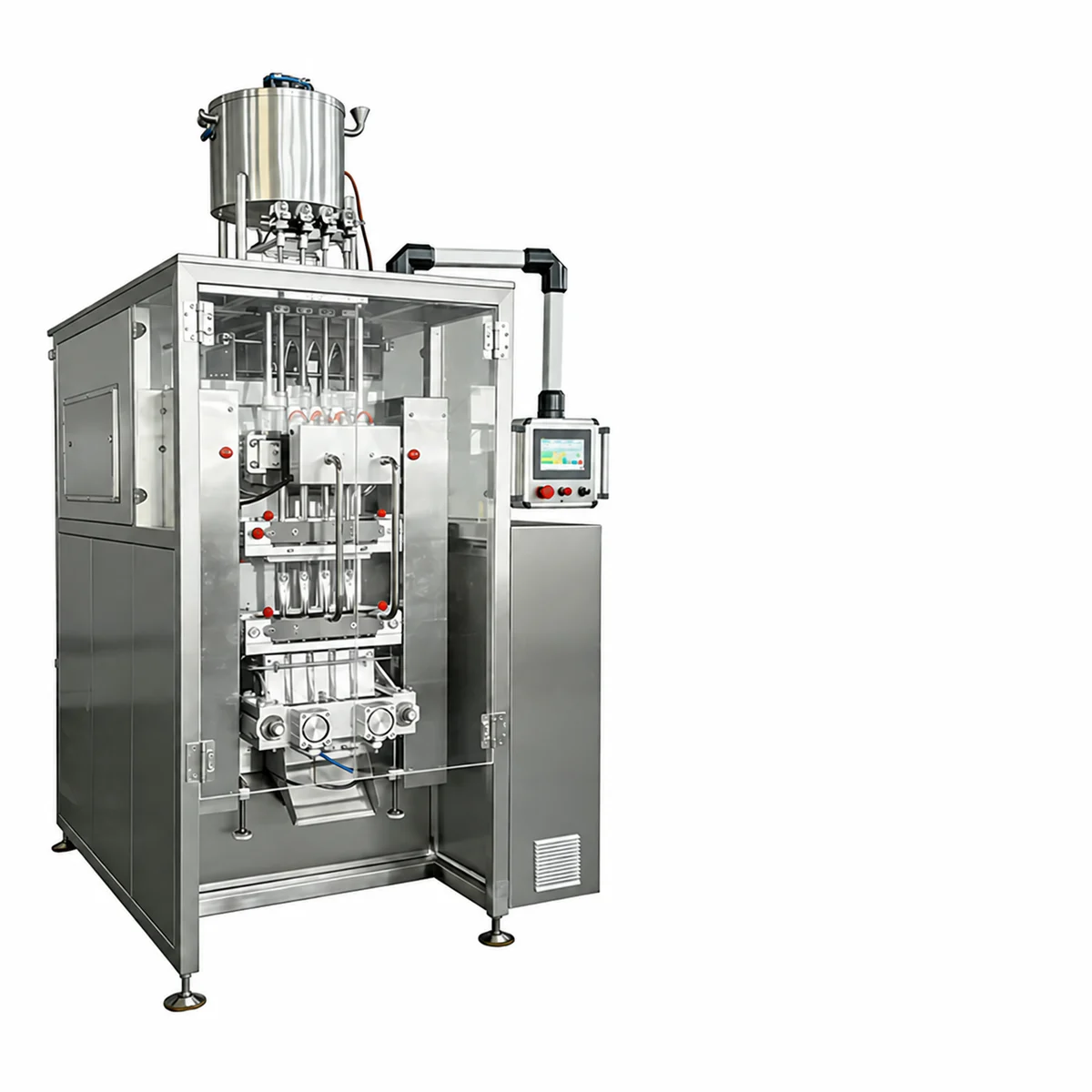
The better format is the one whose opening and cross-section suit the way your material flows and doses, whatever label it carries. Our equipment range covers powder, liquid and granule applications, but those categories point to a filling approach, not to a finished package. Coffee, collagen and protein blends can behave differently even when all three are dry powders. A material that runs easily through a narrow filling tube may allow a slimmer pack than a cohesive blend that needs more space or a longer settling interval.
For an energy gel, examine viscosity at the intended filling temperature and the tendency to leave a tail after dosing. A wider sachet may change the filling geometry, but it does not automatically solve dripping or contamination at the seal. The pump, nozzle and filling sequence still need to match the product. Supply a representative formulation, the minimum and maximum dose, and any particles or temperature restrictions when comparing formats. Ask for observations from a product trial rather than selecting a package from appearance alone.
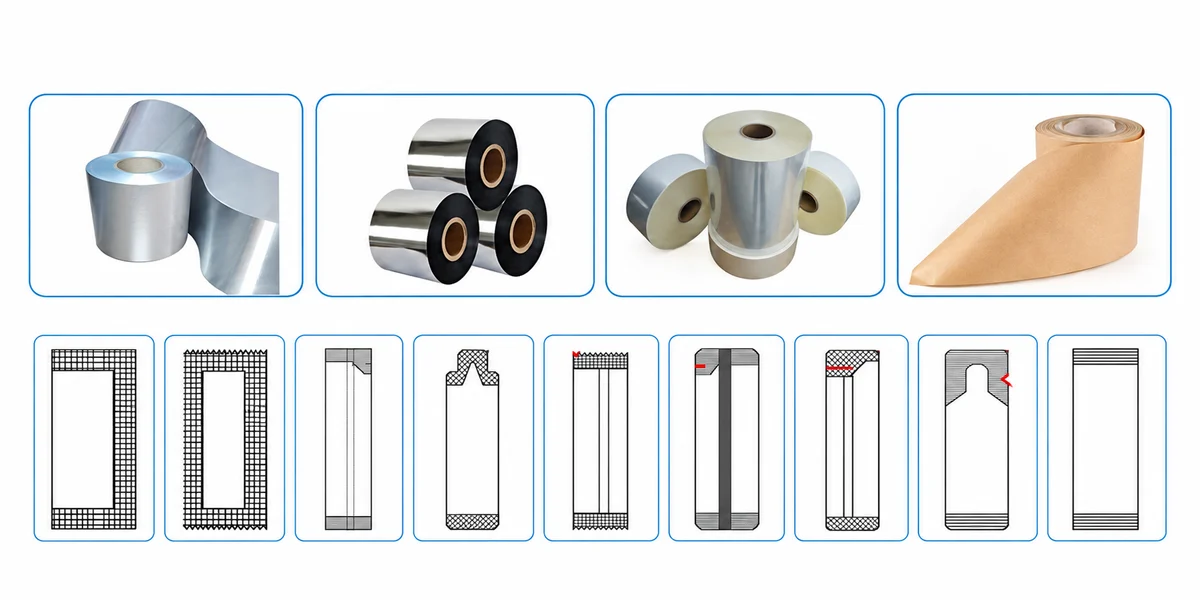
Define the seals before comparing usable space
Usable space is set by the seals, not by the outer rectangle. A pack's external width and length include longitudinal seals, end seals, tear features and cutting allowances, none of which hold product. A slim stick pack and a wider sachet with the same external area therefore need not have the same usable volume. Different machine platforms may form the longitudinal seal or close the sides differently, which also changes the artwork layout and material requirements.
Request a drawing showing the finished perimeter, seal bands, opening feature and print orientation. Mark which dimensions are fixed by your customer and which can be adjusted during development. For example, a retail carton may limit the overall length while the width remains negotiable. Giving the equipment team that distinction allows them to evaluate practical alternatives. Do not approve a film order from a rough width-by-length sketch that leaves the seal construction undefined.
| Decision | Slim stick pack | Wider sachet |
|---|---|---|
| Shape | Narrow, elongated presentation | More width for dose or presentation |
| Dose | Useful where product can fill and dispense through a narrow format | May provide more usable area for another dose or material |
| Opening | Review tear direction and dispensing behavior | Review opening width and dispensing behavior |
| Machine | Requires a compatible forming, filling and sealing configuration | May require a different seal layout or cutting arrangement |
Choose the filling system with the package
Pick the filler and the package together, because the dose has to enter the available opening while the sealing area stays clear. Powder configurations may use auger dosing, while liquid and gel configurations need a suitable pump and nozzle arrangement. A geometry that works well for a small free-flowing dose may become unsuitable when the same product range adds a larger serving or a different formulation, so plan for the whole range rather than the launch product alone.
Consider how material reaches the filler as well. Hopper replenishment, powder settling and liquid supply can influence consistency during a longer production run. Ask the supplier to explain which parts change for each intended material and pack size. A touchscreen recipe can store settings, but it cannot replace an incompatible forming tube, auger or nozzle. Record the proposed change parts in the quotation so that an attractive format does not create an unexpected tooling expense later.
Do stick packs use less film than sachets?
Sometimes, but there is no fixed saving percentage to plan around. A stick pack can be a material-efficient format for some applications; the real answer comes from comparing the actual film structures, seal allowances, roll layout and accepted package output. A smaller package made with a different structure is not a like-for-like comparison with a larger one. Material lost during setup, roll changes and rejected production also affects consumption per saleable unit.
For a practical comparison, ask the film and machine teams to review both approved drawings. Record the material used during a representative run and the number of accepted packs produced from it. Keep startup waste separate from steady operation so that short and long batches can be compared fairly. The resulting record is more useful than a general marketing claim because it reflects your dose, artwork, film and production schedule. It also shows whether a saving depends on unusually long uninterrupted runs.
Evaluate opening, printing and secondary packaging
The opening should suit the intended use without compromising the rest of the package. Compare the tear direction, notch position and the amount of product that remains after emptying. Printed instructions should remain readable around seals and folds. Where a batch or date code is required, reserve a suitable area and confirm that the proposed coder can print there without interfering with the cut or sealing process.
The next packaging stage matters as much as the individual pouch. Narrow sticks may need counting and orientation before entering cartons, while wider sachets may stack or feed differently. Test the actual carton or shipping arrangement with filled packs, including any leaflet or divider. If packing will be manual, have the intended team handle a representative quantity. A format that looks efficient at the machine discharge can create extra work at the packing table if packs are difficult to separate, count or arrange.

Run a side-by-side stick pack vs sachet trial
The most reliable way to choose is to run both candidate formats with the same product batch and a clearly identified film for each. Review filling consistency, visible seal contamination, opening behavior and handling after the packs have rested. Define any integrity checks with the people responsible for your product and packaging quality; no single test result establishes suitability for every formulation and distribution route.
Photograph the approved samples next to their drawings and retain examples for later comparison. Record machine settings, any adjustments required, rejected packs and the reason for each rejection. If one candidate runs faster but produces more difficult-to-handle packs, describe that tradeoff explicitly. Choose the format from accepted output and user experience together. A short demonstration may help narrow the options, but production acceptance should use the agreed machine configuration and a representative quantity of your material.
Further reading: Packaging Digest: a packer’s experience testing film and machinery together
Make the format decision reviewable
Finish with a brief that connects the customer experience to a manufacturable package. It should identify the product, serving size, finished drawing, film grade, required output, opening details and downstream packing method. List the sizes needed at launch and those expected later. Ask whether each future size needs settings, change parts or a different machine configuration, and keep that answer with the quotation.
If the format is still open, send both candidate drawings with the brief instead of asking for a generic stick pack machine, and we will review each one against powder, liquid or granule equipment before a sample trial. The useful result is a documented combination of product, package and equipment. It gives your film supplier, production team and equipment supplier the same basis for decisions and reduces the risk of discovering a mismatch after artwork or tooling has already been ordered.
Common Questions
Is a stick pack a type of sachet?
In everyday trade use, yes: many suppliers treat a stick pack as a slim sachet. That overlap is why the label is useless in a purchase order. Write down the finished width and length, where each seal runs and how the pack opens, so every supplier quotes the same package.
Is a stick pack cheaper to produce than a sachet?
Not by default. Any saving depends on the film structure, the seal allowances and how many accepted packs each roll yields for your dose. Run both approved drawings on your product, keep setup waste separate from steady running, and compare film used per saleable pack before deciding.
Does a wider sachet stop a gel from dripping at the seal?
No. Extra width changes the filling geometry, but a tail of gel left by the nozzle can still reach the seal. Drip control comes from the pump, the nozzle and the filling sequence, so test the actual formulation at its filling temperature in whichever format you shortlist.
Which format is easier for consumers to open and empty?
It depends on the product and the moment of use. A narrow stick pours cleanly into a bottle, while a wider sachet can suit squeezing or sprinkling. Hand filled samples to real users and check tear direction, notch position and how much product stays behind after emptying.