
How viscous is your gel at the filling point?
The viscosity that matters is the gel's at the machine inlet, at the temperature it will actually be filled, not in a warm sample jar. Many gels thicken as they cool and flow more easily while being pumped, so provide viscosity data where you have it, the filling temperature range, any particles, and whether the gel foams, strings or leaves a film on surfaces. Explain how it is prepared, how it is transferred and how long it can wait in the supply system.
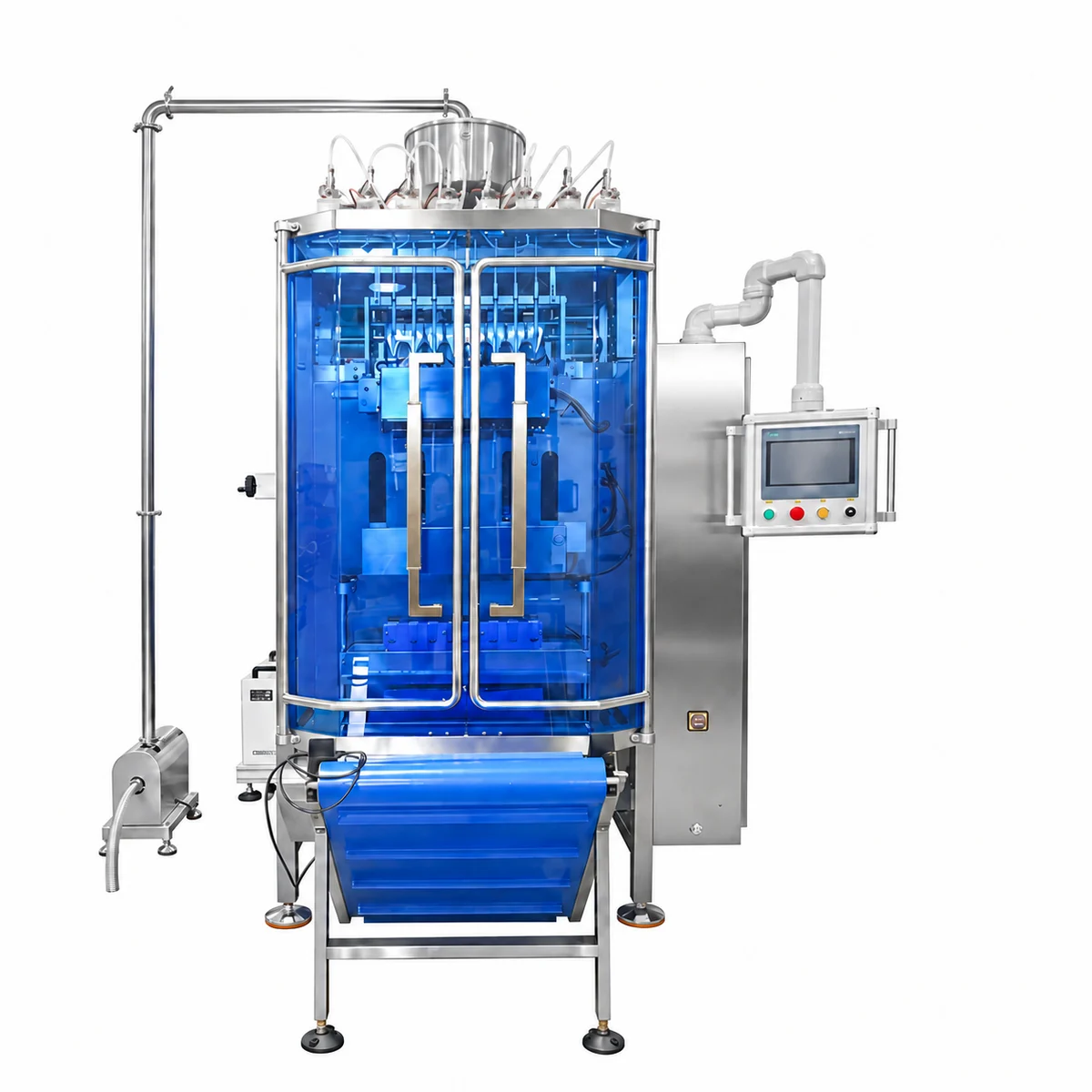
The company's liquid equipment materials describe multi-lane pump-and-nozzle configurations and anti-drip arrangements for gel applications, with heating, agitation and cleaning interfaces as configuration topics. Each of those has to be reviewed for your formulation and supply scope. Start with a sample that represents production and a plain account of how it is handled, rather than assuming the word liquid implies a standard setup.
Pump and product path for gel filling
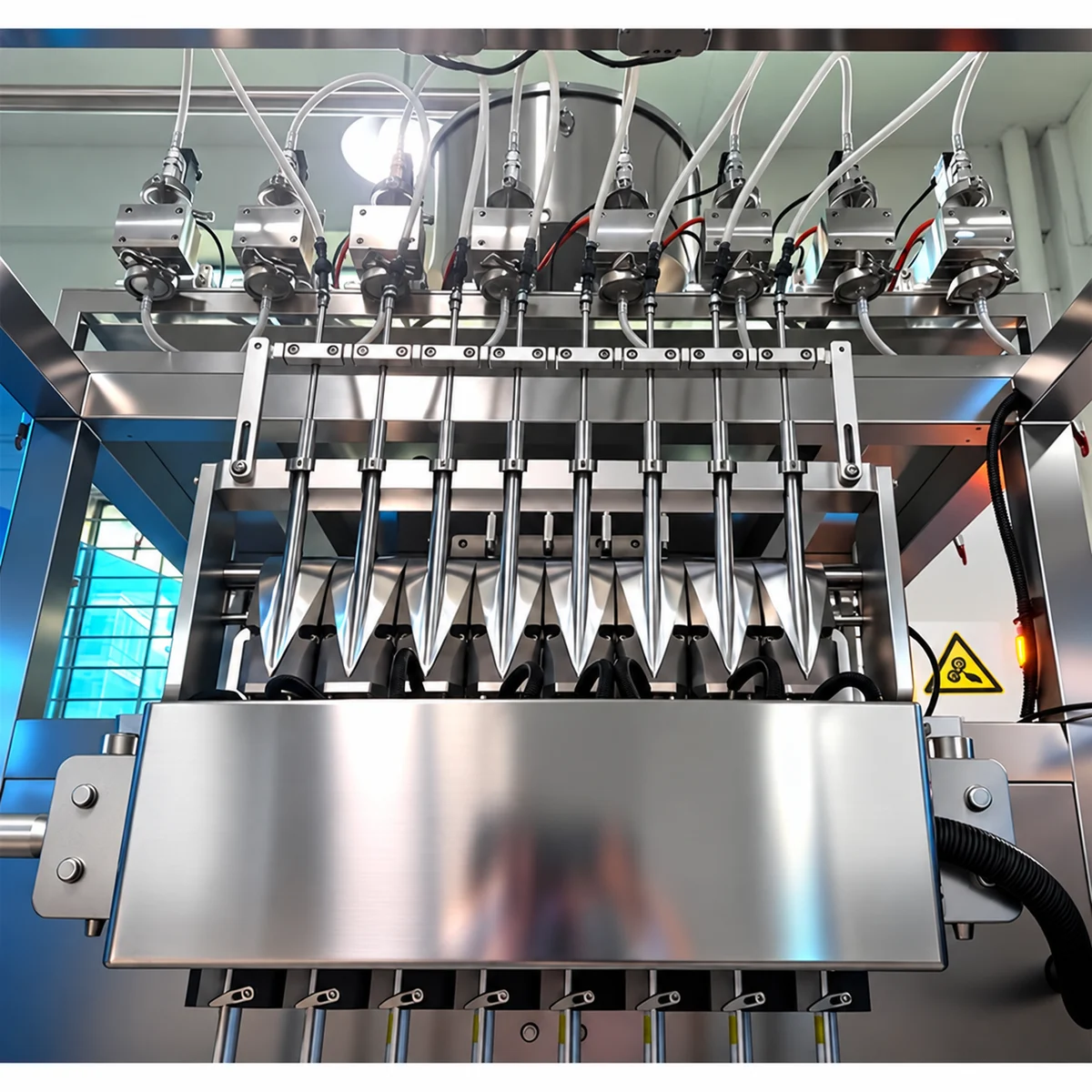
Each lane needs a pump that pushes the dose through the real hoses, valves and nozzles within the machine cycle; in the liquid reference configuration that is a piston or servo pump per lane. Ask for the complete path from the supply connection to the nozzles, and which parts sit inside the quotation versus your own process. Long or narrow runs matter more with a thick gel, so make transfer and replenishment visible early in the project.
The liquid reference configuration lists a jacketed, heated and agitated hopper as an option for viscous products. Specify it only if your formulation needs it, and define the target conditions and which part of the circuit they cover with the people responsible for the recipe. In the trial, follow the gel through refills and waiting periods as well as steady running; the question is whether the whole path doses consistently, not whether one pump can move the gel for a few minutes.
What causes gel drips and strings at the nozzle?
Drips and strings come from gel left hanging at the nozzle tip when the pump stops, and thicker, stickier gels pull a longer tail. Suck-back anti-drip nozzles draw that tail back between cycles, but how well they work depends on the gel and the timing, so judge them on finished packs rather than a dosing video. Watch the tail between nozzle and pack, and check whether residue lands where the end seal will form.
Build pauses and restarts into the trial, because gel that has been standing in the line behaves differently from gel moving steadily through it. Label samples by lane and operating stage, and note every adjustment before retesting. If gel appears near an end seal, review nozzle timing, fill position, dose and pack headspace together, and let the correction follow the observed cause rather than a general claim about one nozzle design.
Gel stick or sachet: matching the serving to the pack
Pick the serving from how the gel is used, on the run or on the bike, then choose a format the machine can make. In the liquid reference configuration a stick pack holds about 1–30 ml, a four-side-seal sachet up to about 50 ml, and pack width runs about 15–80 mm per lane depending on format. A slim stick, a wider sachet and a shaped pouch each need their own forming, sealing and cutting arrangement, so confirm geometry, opening and tooling before the artwork is finalized.
Use filled samples to judge grip, tearing and squeezing out the last of the gel, ideally with cold or wet hands as an athlete would. Include any carton or multipack dimensions that limit the overall size. If the format is still open, send alternative drawings with the reasons behind each, so the discussion compares practical options rather than a single early concept.
Film and seal checks for a gel formulation
Provide the film structure, supplier grade, thickness, roll dimensions and print layout, and have the machine team check tracking, forming, registration and sealing on the proposed pack. The liquid reference configuration takes a film reel about 400–480 mm wide. Keep the material code with the trial record, since a film substitution can change sealing even when the laminate name looks familiar, and agree the finished-pack checks with your quality team.
Inspect the seal areas on every lane, including the first packs after a restart, and record contamination, wrinkles, print drift or cuts that make the pack hard to open. Temperature, pressure and dwell time belong to the sealing discussion; gel in the seal is usually fixed upstream at the nozzle. A successful run records what happened under those conditions, while shelf life and distribution performance need separate evidence for the finished gel and pack.
How do you clean a gel stick pack line between flavors?
Cleaning a gel line means the whole wetted circuit, hopper, pump, hoses, connections, valves and nozzles, not just the part you can see. Sugary gel left in a pump chamber or a hose carries taste and color into the next flavor. Ask for a drawing or description of the circuit, which parts are removed and which are flushed in place, and what instructions are supplied; if automated cleaning is offered, find out exactly what it reaches and what the operator still does by hand.
The procedure has to suit the formulation, the equipment and your plant. Stainless construction and quick-release fittings do not prove that cleaning is effective, so your team defines the checks before another batch or flavor is released. Count reassembly and the return to accepted packs as part of changeover, and use the result to decide which spare or dedicated contact parts are worth ordering with the machine.
Planning an energy gel trial
A gel trial needs the formulation description, dose range, filling temperature, sample quantity, candidate drawing and film details, plus how the gel is supplied, typical batch sizes and the required accepted output. List the flavors, cleaning needs and downstream counting or cartoning. The clearer the boundary between our supply and your process, the easier it is to compare configurations and see what other equipment the line will need.
Agree lane-level fill checks, restart checks, finished-pack inspection and the test period before the trial starts. Keep photos or video tied to those conditions, retain approved samples, and list unresolved items with the next verification step for each. The aim is a repeatable combination of gel handling, dosing, pack forming and cleaning that matches your production day.
Which stick pack machine suits energy gels?
Energy gels run on the liquid stick pack machine, not the powder or granule route. Its typical four-lane reference configuration doses each lane with a piston or servo pump through suck-back anti-drip nozzles and reaches about 120–200 packs per minute, depending on viscosity and fill volume. Fill volume is about 1–30 ml per stick pack, or up to about 50 ml in a four-side-seal sachet.
Thick or heated gels, and gels with particles, generally run slower than thin liquids on the same platform, so give the viscosity and temperature at the filling point when you ask for output. The jacketed, heated and agitated hopper is an option, not a default. These are reference configuration ranges for comparison; the configuration and output for your gel are confirmed in the quotation and verified during factory acceptance testing.
Common Questions
Why does gel temperature matter on a stick pack machine?
Temperature changes viscosity, and viscosity sets the pump, nozzle and achievable output. A gel that cools in the hopper thickens and strings differently from the warm sample you approved. State the filling temperature range up front, and add the heated or jacketed hopper option only if the formulation actually needs it.
Can energy gels with particles be stick packed?
They can, but particles narrow the choice of pump, valve and nozzle and usually lower output compared with a smooth gel. Describe particle size and how much of the gel they make up when you send the sample, because the dosing system is reviewed for particulate tolerance before a configuration is proposed.
What causes gel in the end seal of a stick pack?
Usually a tail of gel left at the nozzle after dosing, or a fill that sits too close to the seal. Check nozzle timing, suck-back, fill position and headspace together, and inspect the first packs after every stop, when gel that has been standing in the line behaves differently from gel moving steadily.
What needs cleaning when an energy gel line changes flavor?
Everything the gel touches: hopper, pump, hoses, connections, valves and nozzles. Ask which parts come off and which are flushed in place, what any automated cleaning covers, and how long reassembly and the return to accepted packs take. Your team defines the checks before the next flavor is released.