
What coffee products go into stick packs?
Instant coffee powder, soluble granules, coffee-and-sugar blends and three-in-one mixes with creamer are the usual candidates, and each one loads a filler differently. Fine instant powder flows readily but dusts. Agglomerated granules are coarser and can break down if handled roughly. A three-in-one mix combines coffee, sugar and creamer particles of different size and density that can drift apart in a hopper. Name the exact product, and say whether it is packed straight from the blender or arrives in bags from another site.
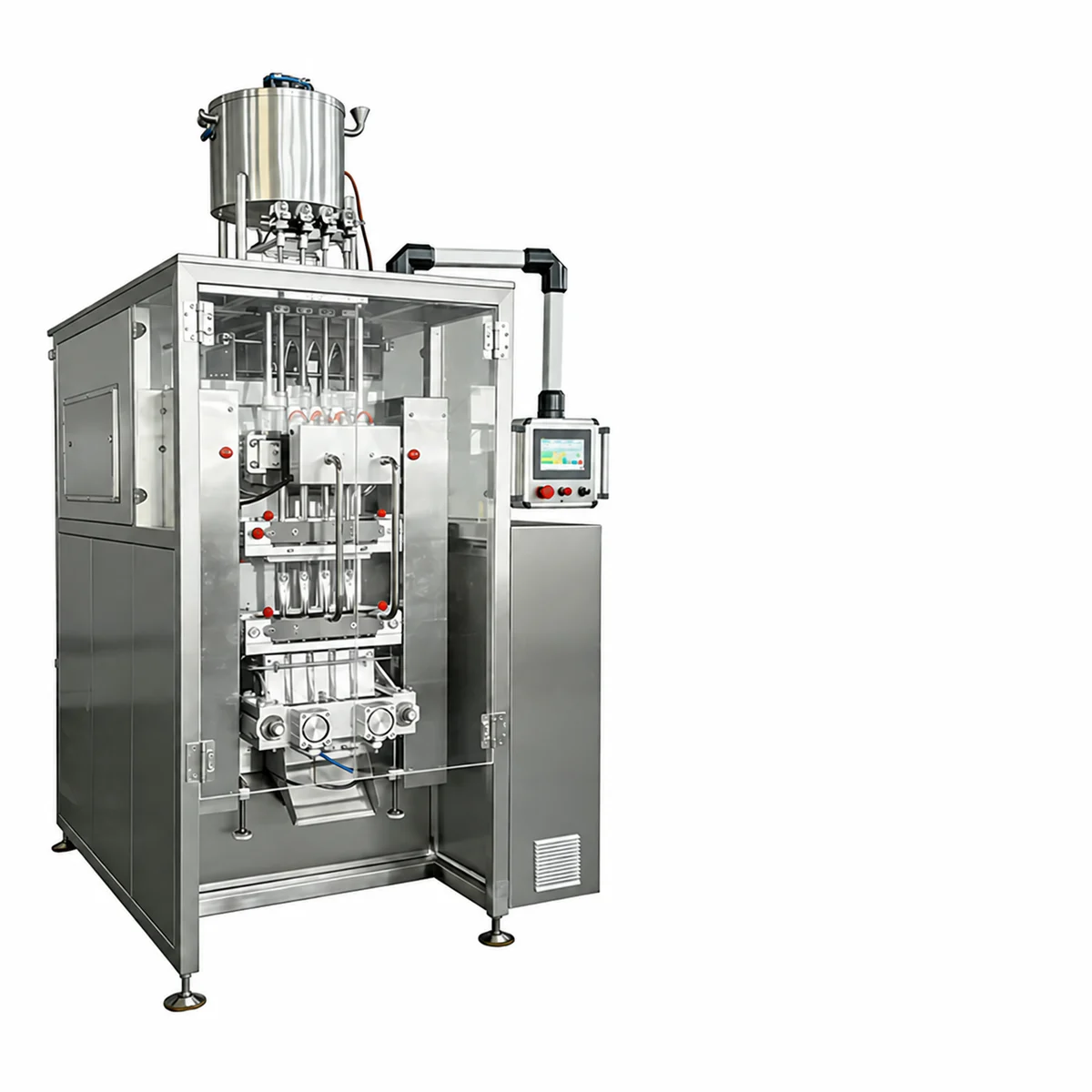
Our coffee equipment materials describe multi-lane powder packaging with auger dosing, film forming, sealing and cutting. That is a sound starting configuration, not proof that every recipe behaves alike. This page covers powder and granule portions only; whole beans, capsules and drip-bag filters use other packaging processes and belong in a separate part of the enquiry.
Coffee stick pack size: from serving to drawing
Size the stick from the volume the coffee occupies, not from its weight. A black-coffee serving of soluble powder is small and dense; a three-in-one serving with sugar and creamer is much heavier and bulkier, so the two rarely share one pack geometry even when the retail boxes look alike. Measure the actual blend loose and after settling, leave headspace so the dose has finished falling before the end seal closes, and never order film from the serving weight alone.
Send a candidate drawing with overall width, length, seal arrangement and opening feature, and mark the dimensions fixed by an existing carton. If the width is flexible, say so: a slightly wider stick is often easier than forcing a bulky mix through a narrow forming tube. Then tear a filled sample open over a cup. A pack that leaves creamer clinging inside or scatters powder on opening needs changing before artwork is printed.
Can an auger dose three-in-one coffee without separating it?
An auger meters whatever reaches its flights, so it can dose a three-in-one mix consistently by volume but cannot re-mix a blend that has already separated upstream. Sugar crystals, creamer and coffee differ in particle size and density; vibration, long transfer drops and a hopper run nearly empty let them stratify, and sticks from the end of a batch can taste different from those at the start. Ask how coffee reaches the hopper, how refills are handled and whether agitation is proposed, and for what reason.
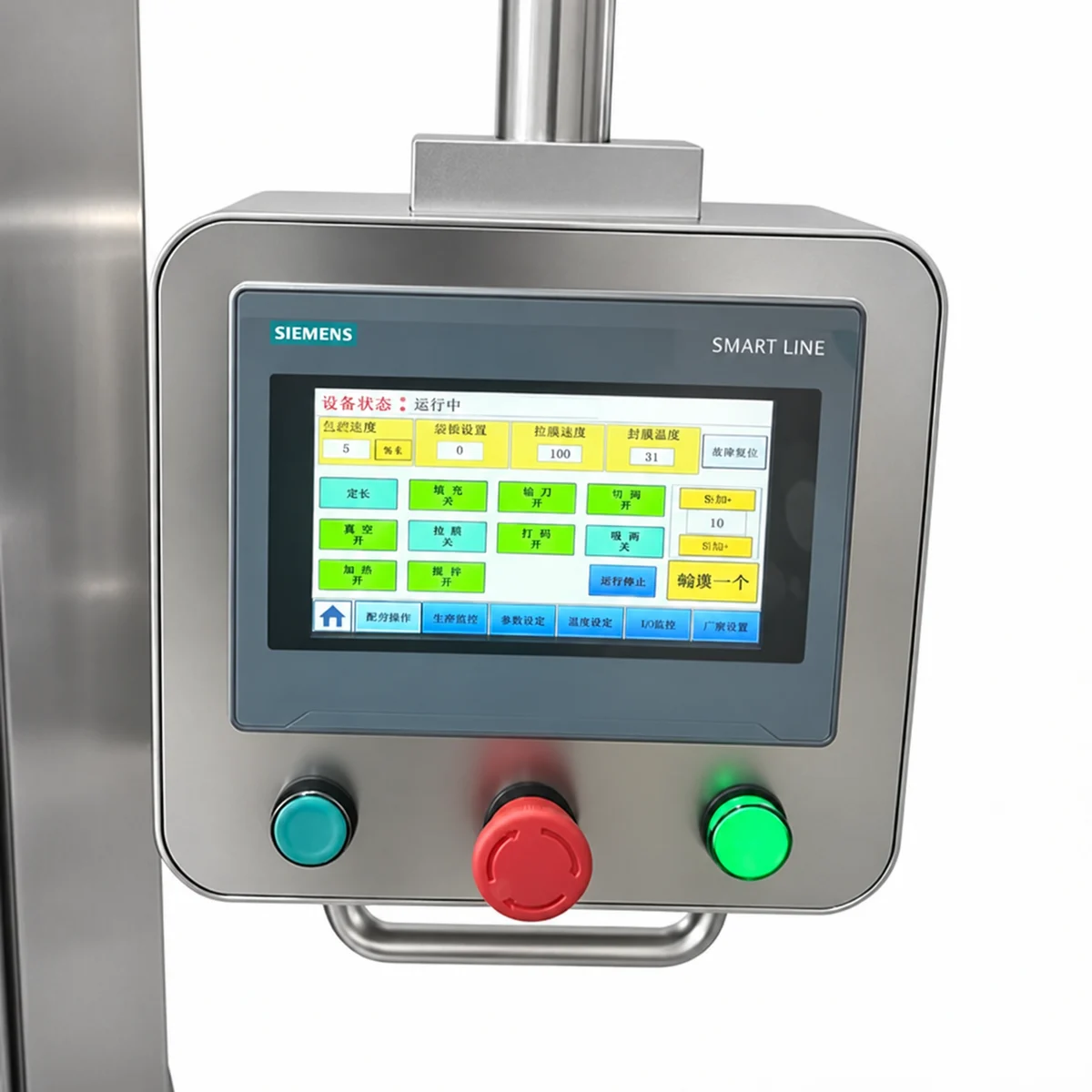
Judge the blend, not just the weight. Pull samples from every lane at start-up, mid-run, after a hopper refill and after a stop, and have your quality team check composition as well as fill weight. A stored recipe on the touchscreen cannot fix an unsuitable screw or an irregular feed. The samples show whether a problem sits in dosing or in handling, and they become the operator's reference once the product is in routine production.
What film keeps coffee aroma in a stick pack?
Coffee aroma and moisture protection come from the laminate's barrier layers and thickness, which you choose with your film supplier; the machine's job is to form and seal that film cleanly. The powder reference configuration runs heat-sealable laminates including PET/PE, PET/AL/PE, NY/AL/PE and paper/PE. Give the machine team the chosen structure, thickness, roll dimensions and print layout so tracking, forming and sealing can be checked, and keep the film code and artwork revision in the trial record. A substitute roll with the same laminate name can seal differently.
Nitrogen flushing is listed as an option on the powder reference configuration. If you want it, state its purpose and how the result will be measured before it goes into the quotation, and confirm the gas supply and any measuring equipment separately. A gas connection on the machine does not by itself establish the atmosphere inside every finished stick. Stability and shelf life are proven by testing the finished coffee pack, not by watching a machine run.
Creamer residue, dust and coffee seal quality
Creamer-based mixes and fine instant powder are the coffee products most likely to leave residue in the seal area. Creamer that contains fat can cling to the forming tube and smear where it lands, while fine powder lifts as dust when each dose drops. Review product drop, dosing timing, film alignment and the dust-extraction option together. If a seal looks weak, look for particles trapped in it before raising the jaw temperature.
Inspect the end seals, back seal, cut position and the date or batch code on every lane, including the first sticks after a stop. Keep accepted examples, photograph recurring defects next to the settings that produced them, and agree who performs seal-integrity checks. That gives a repeatable acceptance basis instead of a handful of good-looking packs from a demonstration.
Changeovers between coffee flavors and blends
A coffee line usually runs several products, such as black, sweetened, three-in-one and flavored, so plan changeovers recipe by recipe. Recipes that share a serving and film move with a settings change and cleaning; a new serving or width may also need change parts. Going from a creamer blend to black coffee is the harder direction, because residue carries into a product that shows it. Have production and quality define the cleaning checks before the next recipe is released, and time the hopper and auger removal during the trial.
Decide how sticks are counted and cartoned after discharge; hand-packing and automatic counting place different demands on operators and floor space. State the target as accepted sticks over an agreed period, including changeovers and refills. A higher cycle rate only helps if blending, supply and cartoning keep up across the whole coffee production schedule.
What to send for a coffee stick pack trial
Send the launch blend itself, the dose range, a pack drawing and the production film details, together with how the coffee is supplied, typical batch sizes and the number of recipes. Agree how much product and film setup and testing will consume. A substitute powder is useful for early setup if it is labeled as such, but it cannot stand in for a three-in-one mix whose behavior depends on its creamer and sugar.
Ask for a trial record showing lane-level fill results, seal and print checks, restart behavior and accepted output, plus the changes needed for other servings or blends. The points below are the coffee-specific ones to watch. The aim is a documented combination of blend, dose, film and settings that your production team and ours can both review before a quotation is finalized.
- Blend uniformity during feeding
- Fill weight across lanes
- Dust near the sealing area
- Pack opening and appearance
- Changeover between recipes
Which stick pack machine suits coffee powder?
For instant coffee and three-in-one mixes, the powder stick pack machine is the usual starting point. Its typical four-lane reference configuration pairs an independent auger per lane with one forming and sealing section, running about 30–40 cycles per lane per minute, or roughly 120–160 sticks per minute, for fill weights of about 1–20 g; around 30 g needs different auger tooling and a trial. Stick width is about 15–30 mm, set by the forming tube.
Treat those figures as a reference configuration for comparison, not a quotation for your coffee. Fine, sticky or dusty powders run toward the lower end of the output range, and the configuration actually supplied is set in its own technical agreement. If your product is agglomerated soluble granules rather than powder, compare the granule stick pack machine too, whose reference configuration meters with volumetric cups or vibratory feeding. A trial with the real blend decides between the two.
Common Questions
Will sugar and creamer separate in a three-in-one coffee stick pack?
They can, and it usually happens before the dose reaches the stick. Vibration, long drops and a nearly empty hopper let sugar, creamer and coffee stratify, and the auger then doses whatever sits at its inlet. Keep the blend path short and the hopper level steady, and have your quality team check composition on sticks taken after refills and stops.
Are soluble coffee granules better on an auger or a cup filler?
Fine instant powder suits an auger, as on the powder reference configuration, while free-flowing agglomerated granules may suit the volumetric cups or vibratory feeding of the granule machine instead. Fragile granules can also break down in a screw. Send a sample so both routes are judged on your actual coffee rather than on its product name.
Is nitrogen flushing available for coffee stick packs?
Yes, nitrogen flushing is listed as an option on the powder reference configuration. Define why you need it and how the result will be measured before it enters the quotation, and confirm the gas supply separately. The flush itself does not prove shelf life; that is established by testing the finished coffee stick in its chosen film.
Can a coffee stick pack machine pack beans, capsules or drip bags?
No. A coffee stick pack machine handles powder and granule portions such as instant coffee, soluble granules and three-in-one mixes. Whole beans, capsules and drip-bag filters use different packaging processes, so describe them as a separate part of your enquiry if they belong to the same product range.