
Freeze-dried vs spray-dried coffee: identify the incoming material
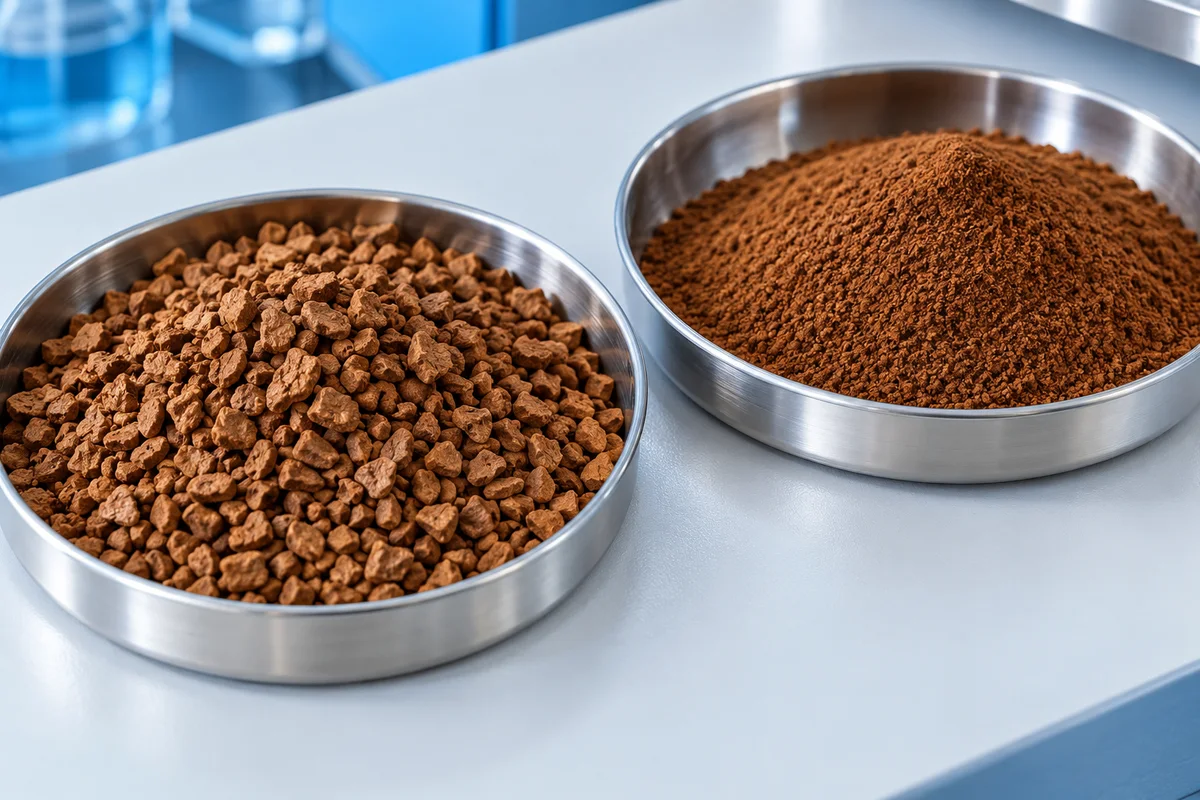
Start the material review with the drying process and the supplied grade. During spray drying, extract droplets form small spheres and lose water as they fall through the drying tower. For freeze-dried coffee, the frozen extract is ground, granulated and graded through screens. Freeze drying then removes water by sublimation from solid to gas. The dried product is subsequently sifted to its granulometry specification.
Agglomeration of ground spray-dried coffee uses contact with steam to produce a granulated product. Ask for the drying and agglomeration description alongside the incoming sample. Record the supplied grade, batch identity and particle-size specification. Keep that description with the sample throughout the dosing review, including any later change of coffee grade.
For a freeze dried vs spray dried coffee stick pack comparison, use the same review headings for each candidate: material identity, dosing observations, moisture condition and finished-pack checks. Start a separate record for each coffee under consideration. For broader equipment selection, continue to the coffee stick pack application page linked below.
Related reading: Coffee Stick Pack Machine & Packaging
How should freeze-dried granules be assessed during dosing?
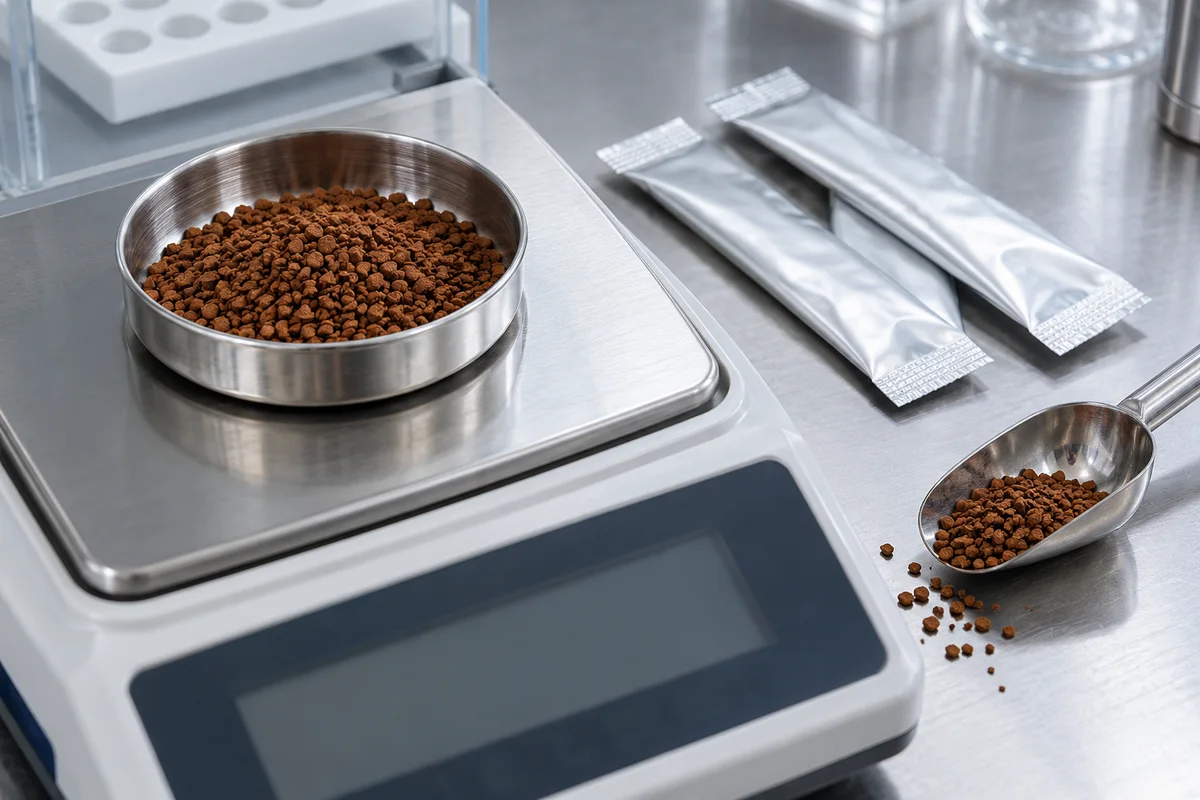
Mentpack attributes freeze-dried granule breakage into fines to auger shear. Make granule condition an explicit trial question. Retain an incoming sample and collect material after dosing. Compare the samples using the same inspection procedure, and record the dosing arrangement used for each comparison. Include photographs and the agreed particle-size assessment in the trial record.
Mentpack describes free-flowing freeze-dried coffee granules falling into a measuring cup. Mentpack explains that volumetric dosing follows volume rather than weight. Mentpack notes that freeze-dried coffee bulk density can shift between batches and granulation grades. Mentpack describes weight checks to confirm fill accuracy and inform correction of the cup setting. Review the material condition and the fill-weight record together before accepting the dosing setup.
For soluble coffee stick pack dosing, specify how samples will be identified and how fill weights will be recorded. Keep the incoming lot, dosing setting and collected pack samples connected in the trial sheet. When comparing another grade, repeat that record for the new material and include the corresponding cup-setting review. Agree the acceptance criteria before running the comparison.
What should the powder moisture review cover?
Moisture gain causes instant coffee quality loss. Environmental humidity can significantly affect instant coffee quality during storage. Moisture uptake triggers caking in instant coffee powder. Moisture-induced caking decreases powder flow and water solubility. Include powder condition in the receiving, hopper and finished-pack review.
Instant coffee requires packaging materials with a high moisture barrier. Request the film specification as part of the coffee project. Record the material condition when the container is opened, during the trial and when samples are collected. Keep the exposure history with any moisture measurement and appearance notes. Use the same observation fields for each material being considered.
When investigating a powder problem, describe what was observed before proposing a change. Record whether the sample contains visible clumps, where the sample was taken and what handling preceded collection. Compare that record with the incoming sample. Include the actual coffee grade and film in the review, and keep moisture observations separate from the granule-breakage comparison.
How should coffee, sugar and creamer blends be evaluated?
NESCAFÉ Australia Original three-in-one sachets contain coffee, sugar and creamer. The creamer ingredients for that Australian product include milk protein. Begin the blend review with the exact ingredient and allergen sheet for the intended recipe. Identify each formulation planned for the line, and attach its sample and specification to the relevant trial record.
In bulk solids, segregation can result from differences in particle size, shape or density. Segregation can occur during filling of a container, silo or hopper. A well-blended material can subsequently segregate during powder flow. Include blend uniformity as a question for the actual coffee recipe, and agree how it will be assessed through transfer and filling.
Use a sampling plan that identifies the collection location and the stage of the trial. Ask for the agreed composition check to accompany the fill-weight results. Retain samples for comparison across the run and mark the recipe used for each. Review the observations recipe by recipe before deciding which formulation should set the equipment trial priorities.
Related reading: Powder Stick Pack Machine: Auger Dosing
What should the seal-area inspection record include?
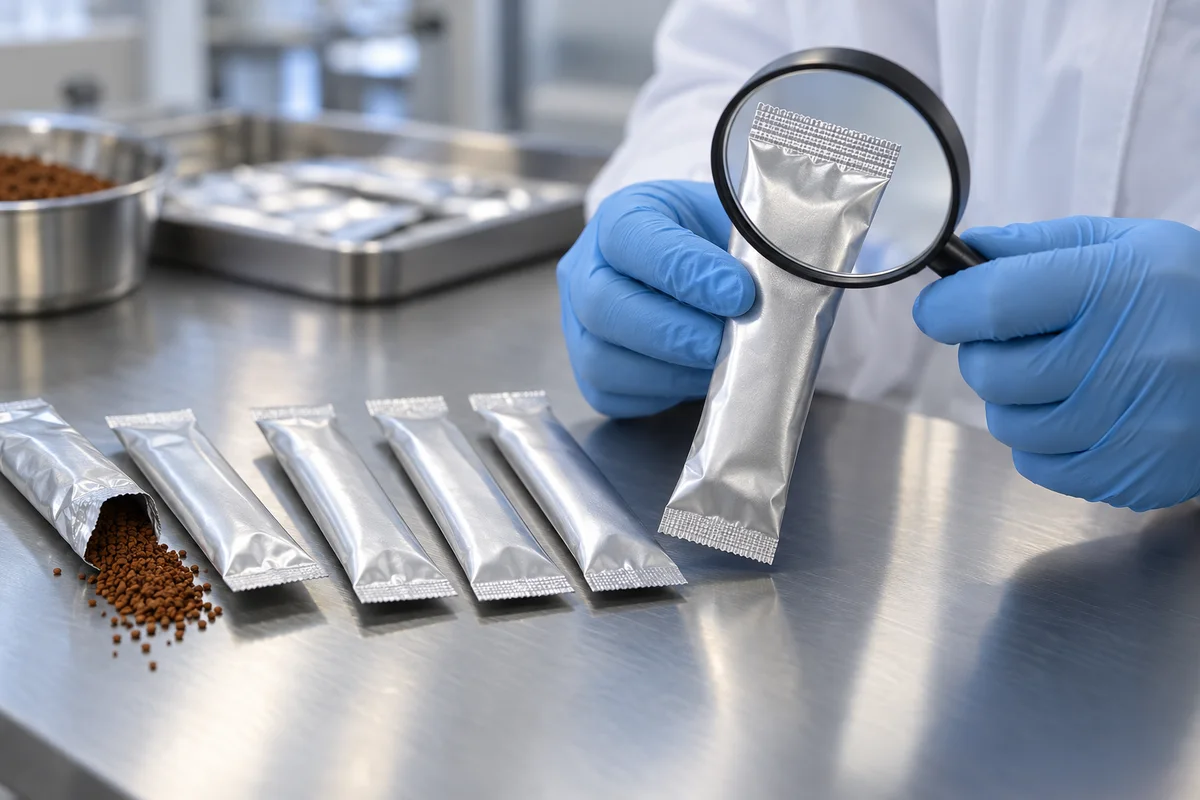
ROVEMA attributes improved seal quality to dustless dosing without trickling in its vacuum closing system for an auger doser. For the coffee trial, photograph the seal area and record any visible material there. Identify the corresponding dosing setting, material sample and finished packet. Include the proposed response to any residue in the trial review.
Inspect collected packets throughout the agreed trial sequence. Keep a place in the record for seal appearance, the selected integrity check and its result. When revising the dosing setup, collect a fresh set of packets for the same review. Decide whether to accept the change against the agreed criteria, and retain the before-and-after packet records together.
What does nitrogen flushing do before the pack is sealed?
Nitrogen is usually used to displace air, especially atmospheric oxygen, in food packaging. Pure nitrogen modified atmospheres are frequently used in coffee bags or capsules. For the instant coffee stick project, define the gas review alongside the material and film review. Ask for the proposed gas arrangement and the finished-pack sampling plan in the trial specification.
Form-fill-seal machines form a film tube and place product inside. Gas flushing replaces air inside the tube before the individual packs are sealed. Record the configuration used for the coffee trial alongside the material lot and film. If the setup is changed, identify the change in the same record before collecting the next set of samples.
After modified-atmosphere packaging, the packs must be tested for the correct gas mixture and for leaks. Modified atmosphere performance depends on retaining the protective gas inside the package. Specify the sample identification, collection point, test method and acceptance criteria before the run. Record gas results and integrity results against the corresponding packets, and resolve each failed check before accepting the trial.
Use the nitrogen-flushing guide below to continue the gas-system review. For this coffee trial, keep the final decision tied to the material actually filled and the packets actually tested. Bring the observations together in a review of granule condition, fill weight, powder condition, blend assessment and finished-pack integrity. Send that record with the coffee sample when discussing the next configuration.
Related reading: Nitrogen Flushing for Stick Packs: Residual Oxygen Control
Coffee trial decision checklist
Use the checklist as the review agenda before accepting a configuration. Fill in the observation and decision for each applicable row, then attach the associated sample record. Mark the recipe and lot on the final review. Keep unresolved questions assigned to a specific repeat check, and record the accepted setup alongside the retained packet samples.
Scroll horizontally to see all columns. Keyboard: focus the table and use the arrow keys.
| Review item | Record to inspect | Decision to record |
|---|---|---|
| Incoming material | Grade, process description and retained sample | Accept the sample identity or request clarification |
| Granule handling | Incoming and post-dosing comparison | Accept or repeat the handling trial |
| Dosing | Fill-weight record and dosing settings | Accept the setting or revise and recheck |
| Powder condition | Exposure record and sample observations | Accept or investigate the observed condition |
| Blend assessment | Recipe identification and composition check | Accept or repeat the blend review |
| Finished pack | Seal inspection, gas check and leak check | Accept or repeat the package checks |
Sources
- ABICS — Instant Coffee Guide for Baristas
- Mentpack — Freeze Dried Coffee Packaging
- CETEA / Coffee Science — Instant coffee: Products and packaging systems characteristics
- Lopriore et al. / Foods — Impact of Environmental Humidity on Instant Coffee Stability
- NESCAFÉ Australia — Original three-in-one product ingredients
- Jenike & Johanson — Cure Segregation / Improve Blending
- ROVEMA — Vacuum Closing System for Auger Doser
- WITT — Modified Atmosphere Packaging