
What granule properties change the machine setup?
Particle size, bulk density, flow and the balance of coarse and fine fractions decide how dosing and feeding are set up. Granulated drink mixes, sugar-like ingredients and blended solid beverages differ on all four. Send a representative sample with the smallest and largest intended portions. If the recipe combines coarse particles with fine powder, say so rather than calling it free-flowing; the filler has to be judged on what it actually receives.
Watch the material in storage, transfer and the hopper. A blend can separate into fractions as it is handled, and moisture pickup or compaction can change how it discharges. Note any bridging, clinging to surfaces or lumps. These details shape the trial and the feeding arrangement. Pack weight is only part of the assessment; where blend uniformity matters, your product team should also decide how the contents of representative packs will be checked.
Volumetric cup and vibratory dosing
Each lane of a granule stick pack machine is usually dosed by volumetric cups or vibratory feeding, and the choice is made after your sample has been run, not from the product name. Ask how each lane is supplied, how the dose is adjusted and how settings are saved. Two products with the same nominal weight can need different setups, because particle shape and the volume that weight occupies are not the same.
A volumetric cup measures volume rather than weight, so any change in bulk density shows up directly as a change in fill weight. Compare samples after a refill, at different hopper levels and after a pause. If filling is inconsistent, review the supply and dosing sequence together before moving the target setting, then record the change and retest the affected conditions. That evidence is worth more than one good batch made at the start of a demonstration.
Stick pack or sachet for granules?
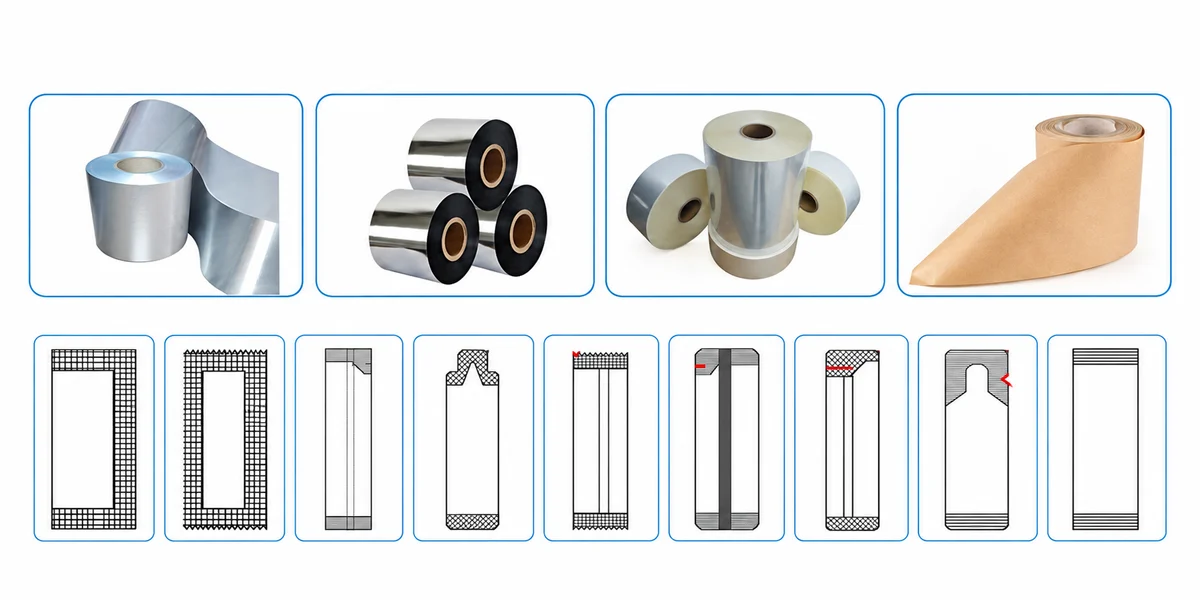
A slim stick suits a small serving; a wider four-side-seal sachet gives more room for a bulky or coarse blend. In the reference configuration, back-seal sticks run about 20–60 mm wide per lane and four-side-seal sachets about 30–80 mm, both about 50–180 mm long. Draw the finished pack with dimensions, seal layout and opening feature, and check that the filling path passes the largest particles and leaves room to close the pack.
Stick and sachet capability, seal layout and cutting options are confirmed for the configuration you order; belonging to the same equipment family does not make formats interchangeable. Compare settling, appearance and emptying on filled samples, and note any carton dimensions that limit the pack. Settling the pack design this way comes before printed film and format-specific parts are ordered.
Keeping granules out of the seal and cut
Granules have to land in the pack within the filling interval and leave the closure zone clear before the jaws close. Watch for particles that bounce, hang in the filling path or arrive after the main dose. Inspect end seals and cut edges on samples from every lane. When a particle is trapped, look at timing, fill position and pack volume together; a higher seal temperature will not solve it.
Provide the film supplier's code, structure, thickness and roll dimensions, keeping in mind the reference film reel width of up to about 420 mm, so film handling and sealing are reviewed on the actual material. Check registration, seal appearance and cut position during sustained running and after restarts. Agree pack tests and acceptance limits with your quality team before the trial, and keep results with the tested product and film: a similar-looking film or a different particle distribution can call for another review.
Protecting the blend during refills and changeover
Map how granules travel from blending or storage into the machine, including transfer equipment, batch size, waiting time and any segregation or breakage you already see. If a recipe contains fragile particles, state what particle condition or appearance has to survive packing. Ask the equipment team to review the supply arrangement against those points and to say which feeding components and interfaces are in the quoted scope.
For several recipes on one machine, list the changeover sequence and cleaning expectations. Review access to hoppers, dosing parts, chutes and pockets where material collects. Tie each approved product to its settings and contact parts, and count inspection, reassembly and start-up checks in the changeover time. The aim is a repeatable switch in which operators can confirm the right product and film are loaded before accepted production resumes.
How fast is a four-lane granule stick pack machine?
As a reference range, each lane runs about 30–50 packs per minute, up to roughly 120–200 packs per minute across four lanes, with fill weights of about 1–30 g per stick pack. Free-flowing, uniform granules sit toward the upper end; blends that segregate or bridge sit lower. Volumetric cups or vibratory feeding are chosen after the sample has been tested.
Figures are typical reference ranges for four-lane configurations. Output, fill range and dose accuracy depend on the product, film and pack size; they are confirmed in the quotation and verified during factory acceptance testing, not guaranteed for every product.
| Parameter | Typical reference range |
|---|---|
| Lanes | 4 in the reference configuration; other lane counts are quoted per project |
| Output | About 30–50 packs per lane per minute, up to roughly 120–200 packs per minute |
| Fill weight | About 1–30 g per stick pack |
| Pack length | About 50–180 mm |
| Pack width | About 20–60 mm per lane for back-seal sticks; about 30–80 mm per lane for four-side-seal sachets |
| Film reel width | Up to about 420 mm |
| Dosing | Volumetric cups or vibratory feeding, selected with the product sample |
| Power supply | About 3.5–4.5 kW; 220 V or 380 V, 50/60 Hz, matched to the destination grid |
| Machine weight | About 550–850 kg depending on format and options |
Testing usable output across the active lanes
Usable output depends on dose, pack length, filling interval and downstream handling as much as on lane count. State the required accepted packs per minute and the operating pattern, including batch changes and refills, and explain how finished packs will be collected, counted or passed on. A packer that discharges faster than the next station can take packs does not deliver the line output you need.
Plan a trial that covers start-up, steady running, refills and restarts. Collect lane-identified samples and keep weight results separate from checks on pack appearance and product condition. Where mixture consistency matters, use your product team's test method instead of treating weight alone as proof. Record conditions, duration and rejects, and if the recipe or portion changes after testing, decide whether the earlier evidence still applies. The trial record should cover these points on every lane:
- Consistent product supply to each lane
- Target weight and variation between lanes
- Product trapped in seals or caught during cutting
- Pack volume, settling and appearance
- Recipe changeover and cleaning access
What to send for a granule machine quotation
Send the formulation description, particle-size information, bulk density if known, dose range and a representative sample. Add the stick or sachet drawing, proposed film and accepted-output target, then the upstream material supply, installation space and site utilities. Point out moisture sensitivity, segregation, particle damage or cleaning problems already seen in production, so the sample assessment focuses on the conditions most likely to decide the result.
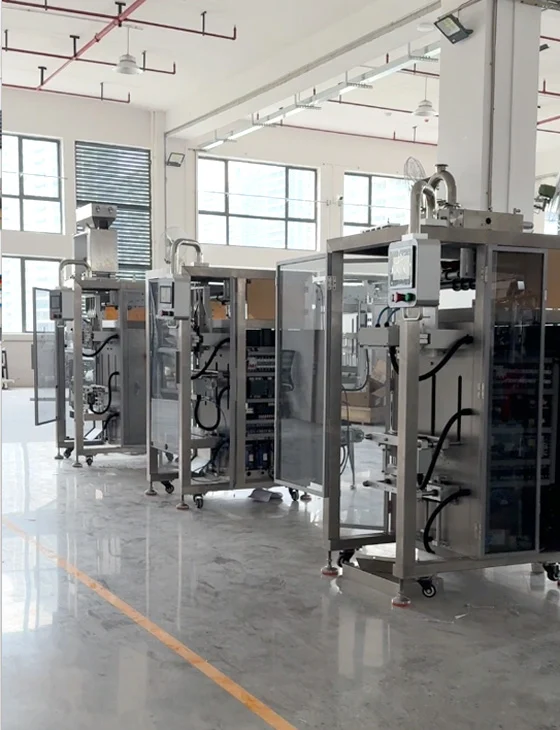
The quotation should name the proposed dosing method, pack format, lane configuration and included peripherals, with the change-parts list and agreed trial criteria alongside. The workshop photographs on this page show packaging equipment and assembly context; they do not identify a specific granule model or prove a format capability. Enquiries go through WhatsApp from the request-a-quote page, where the same brief can be sent.
Documents to request for a granule machine
Name the documents you need in the brief, since a quotation only covers what it lists. For granule projects the most useful is a configuration list stating the dosing method, cup or feeder sizes, format tooling and lane count, together with the agreed factory acceptance criteria and the results recorded for your machine.
Operating instructions, a list of change parts and wear items, and control-cabinet wiring diagrams are other common requests; check which are included. Raise any market-specific compliance documentation as its own question instead of assuming it is supplied. Keep the set with the trial evidence so a later recipe or format change can be compared with the original setup.
Common Questions
What fill weight can a granule stick pack machine handle?
The four-lane reference configuration doses about 1–30 g per stick pack. A bulky or coarse blend may fit better in a four-side-seal sachet, which runs about 30–80 mm wide per lane in the reference ranges. Send the portion and a sample so volume, not only weight, is checked.
Why does fill weight drift on a volumetric granule filler?
Because the cup measures volume. If bulk density changes with hopper level, segregation, moisture pickup or particle breakage, the weight in each cup changes with it. Test fills at different hopper levels and after refills, and record weights lane by lane so drift can be traced to the supply or to one lane.
Can coarse and fine particles separate inside the machine?
Yes. A blend can segregate in the hopper and feed path, especially during refills and long waits. Describe any separation, bridging or breakage you already see and send the real blend. The trial should check the contents of representative packs by your own method, not only pack weight.
How fast does a granule stick pack machine run?
As a reference range, about 30–50 packs per lane per minute, up to roughly 120–200 packs per minute on four lanes. Free-flowing, uniform granules run toward the top of that range and blends that segregate or bridge run lower. Ask for accepted output measured on your own product.