
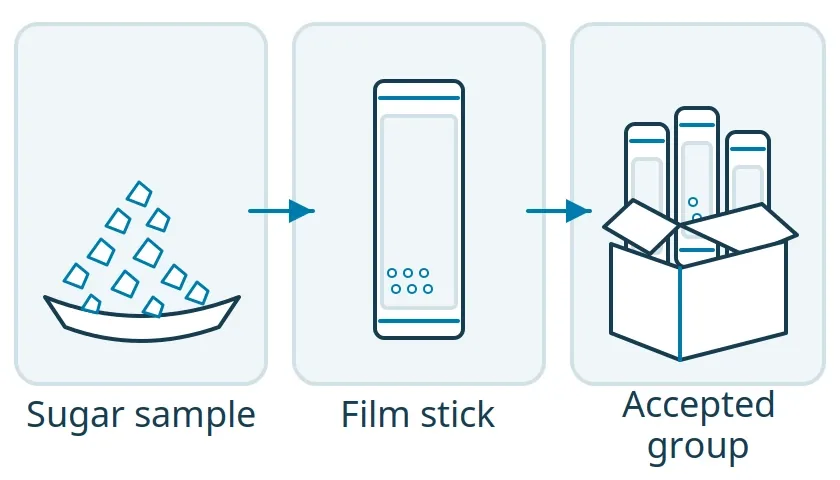
Read the sugar sample before choosing the filler
This page is for packing granulated white sugar into narrow portions formed from roll film. A sugar stick making machine, in this context, forms, fills and closes the package; it does not manufacture sugar crystals or candy sticks. Use the granule equipment family as the starting route, with the actual sugar grade identified in the enquiry.
Record the supplier grade, crystal-size information, fines content and bulk density if available. Bulk density describes the mass occupying a given bulk volume, including the spaces between particles. Keep the measurement method and sample condition with the value. Two sugar samples described simply as white sugar may need different dose settings; the grade name alone is an incomplete buying specification.
Include observations from the way sugar reaches your current hopper: lumps, dust, interrupted flow or changes after storage. Record moisture exposure and production-room conditions where known. If caking or increased fines are observed, compare incoming sugar with the material after storage and transfer so the trial sample represents what reaches the filler. Fine granulated sugar still consists of crystals; powdered sugar needs its own assessment. Ask for a dosing recommendation from the representative sample rather than treating the word fine as a reason to select an auger.
Related reading: Granule Stick Pack Machine: Drink Mixes; How a Stick Pack Machine Works
Cup or auger dosing: a conditional choice
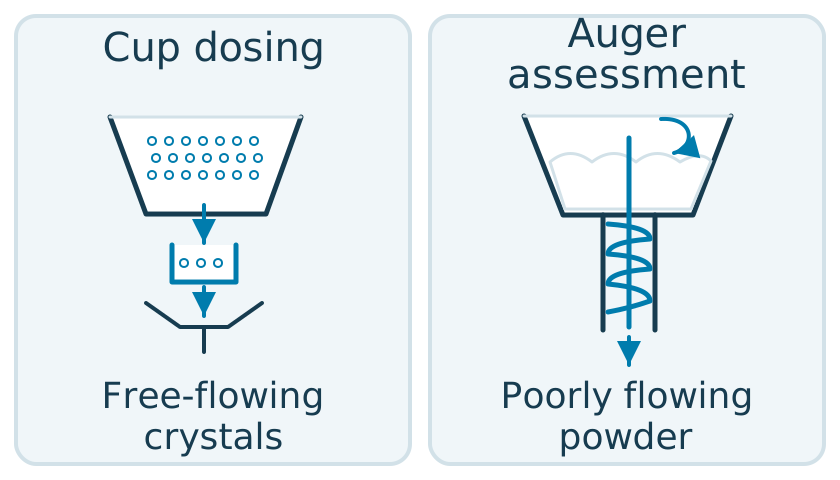
For sugar that flows freely as crystals, begin the discussion with volumetric cup dosing. A cup delivers a set volume, so a change in bulk density can change the mass of the portion. Cup size and adjustment are therefore reviewed against the target mass and sample condition. Treat the choice as a candidate to test, rather than a promise of a particular accuracy.
If the sample behaves as a poorly flowing powder, ask for an auger assessment. An auger uses a rotating screw to meter the product; the proposed screw and operating settings depend on that sample. Switching to an auger does not remove the need to inspect feeding or finished packs. Compare the alternatives on the same sugar, dose range and pack drawing, with weight results kept by lane.
A quotation should identify the dosing route and the change parts or adjustments needed for each sugar grade and portion. If the sample shows lumps or a variable supply, resolve the handling conditions before accepting a filler recommendation. A short demonstration on a convenient replacement product does not establish the result for your sugar.
Related reading: Powder Stick Pack Machine: Auger Dosing
Scroll horizontally to see all columns. Keyboard: focus the table and use the arrow keys.
| Sample behavior | Route to assess | Evidence to request |
|---|---|---|
| Free-flowing crystals | Volumetric cups | Weights by lane and after refill |
| Fine crystals that still flow | Evaluate cups on the actual grade | Cup filling and discharge observations |
| Poorly flowing powder | Auger assessment | Feed behavior and weights at intended settings |
| Lumps or changing condition | Review handling before selecting | Representative samples and storage history |
Discuss this configuration
Send the details below to discuss the configuration and any missing information. Leave undecided fields blank; agree how to share samples and documents on WhatsApp.
- Sugar / sample
- Dose / checks
- Pack / film
- Output / count
- Supply / cleaning
We reply within 24 hours.
Discuss on WhatsAppReview portion, pack and lanes as one layout
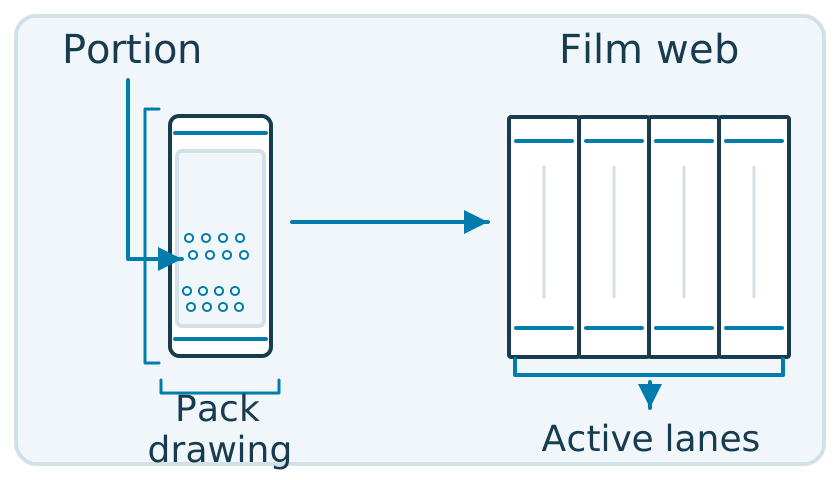
Choose the sugar portion from your product brief, then review the occupied volume and package drawing together. Record the target mass, any intended range and the acceptance criteria your quality team will use. There is no universal sugar-stick size or fixed fill range established by this page. The finished-pack drawing is the input for the proposed equipment configuration.
Add the finished width and length, seal arrangement, opening feature and print position to the drawing. Ask the equipment team to show how the proposed active lanes fit the film web, including forming and sealing allowances. A maximum bag width and a maximum lane count listed separately do not prove that the two can run together.
Select lanes against required accepted packs per minute and the operating pattern, including refills and grade changes. Keep total output, per-lane output and the time window clearly distinguished in the proposal. If cartons are filled in fixed counts, include the collection requirement at this stage; it can change what useful line output means for your project.
Related reading: Stick Pack Sizes & Dimensions Guide; Single vs Multi-Lane Stick Pack Machines
Scroll horizontally to see all columns. Keyboard: focus the table and use the arrow keys.
| Review input | Document to use | Decision it supports |
|---|---|---|
| Portion and grade | Product brief and sample ID | Dosing volume and adjustment |
| Width, length and seals | Dimensioned finished-pack drawing | Forming and sealing arrangement |
| Active lanes and roll layout | Proposed web drawing | Combined layout feasibility |
| Accepted output and grouped count | Production and carton brief | Line capacity and handoff |
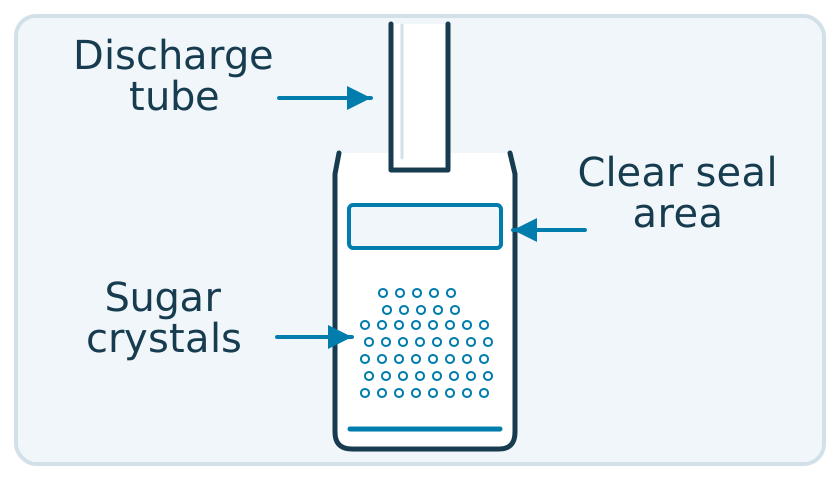
Keep crystals and fines away from the seal area
Inspect the filling path and the seals together when loose sugar appears near a closure. Sugar crystals or fines can reach sealing surfaces during discharge. The useful review is where the product lands, whether discharge finishes before closing, and whether the pack has enough room for the intended portion. Record the lane and operating stage instead of labelling every defect a film problem.
Ask the proposed configuration to explain dosing-tube position, filling timing and access for cleaning around the closure area. If dust collection or containment is being considered, define it as a separate equipment and plant review item with responsibilities assigned. This page does not establish a dust-control design or confirm that extraction is included in the machine.
Keep the film supplier specification beside the inspection record. Have the supplier and equipment team review the actual structure, roll details and sealing conditions rather than increasing temperature as a general remedy. After any adjustment, check the resulting packs by the agreed method and retain the product and film identifiers with the observations.
Related reading: Stick Pack Film & Machine Compatibility
Scroll horizontally to see all columns. Keyboard: focus the table and use the arrow keys.
| Observation | Review point | Record |
|---|---|---|
| Crystals in an end seal | Discharge position and timing | Lane, stage and close-up image |
| Dust around the filling area | Transfer path and containment scope | Location and operating condition |
| Poor closure without visible sugar | Film and proposed seal settings | Film ID and inspection result |
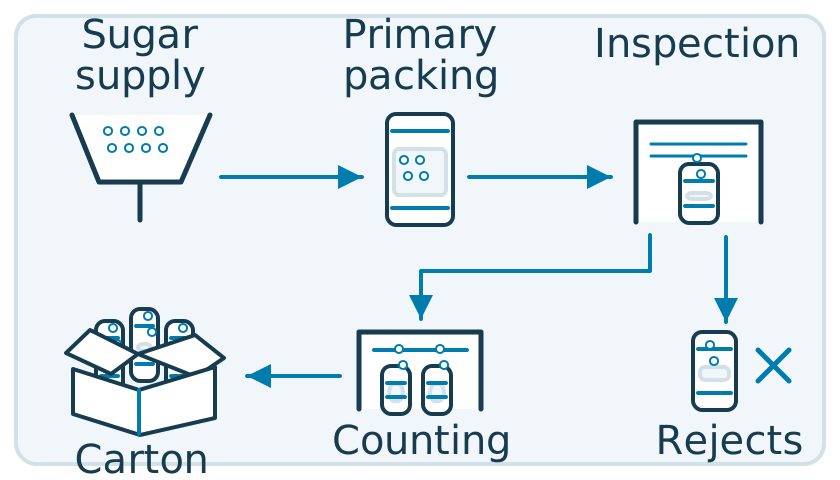
Define the handoff from sugar supply to carton count
Treat sugar supply, primary packing and secondary packing as connected scopes. Ask how sugar is delivered to the hopper and how refill demand is handled. Then define what leaves the packer: individual sticks or another agreed discharge arrangement. A machine counter is not sufficient evidence that a carton contains the required number of acceptable portions.
Where automatic counting, inspection or cartoning is proposed, ask where rejects leave the process and which count is used to form a group. Review missing-pack and restart behavior with the integration team. Require the proposal to name who supplies each interface, the signals or physical handoff involved, and which items remain outside the offer.
Keep this scope visible while comparing equipment. The diagram is a purchasing map, not a claim that every component is standard or supplied by StickPackMachine. Resolve responsibility for conveying, inspection, grouping and cartons before using the packer speed as a whole-line target.
Related reading: Multi-Lane Stick Packaging Machines Compared
Scroll horizontally to see all columns. Keyboard: focus the table and use the arrow keys.
| Interface | Question to resolve | Owner / evidence |
|---|---|---|
| Sugar supply → hopper | How is refill demand handled? | Named supplier; supply layout |
| Packer → collection | What discharge arrangement is proposed? | Named supplier; interface drawing |
| Inspection → counting | How are rejects excluded from the group? | Integrator; agreed sequence |
| Counting → carton | How are group count and restart verified? | Integrator; witnessed count record |
Build a sample trial around each lane and operating stage
Agree the trial conditions and pass criteria before requesting a demonstration. Send representative sugar and the intended film, with the pack drawing and target mass. Ask the sample-testing discussion to cover sugar supply, lane-identified weights, closure inspection and the proposed discharge. The trial plan should show what is being evaluated and what still requires project confirmation.
Use a blank record that separates startup, steady running, refill and restart. Repeat entries for each sampled lane and stage, recording sugar batch, film revision, settings and observation period. Refer to the agreed acceptance document, and keep dose measurements, closure observations and rejects separate. Your quality team should define the sampling method and allowed weight variation; this guide does not supply a numerical tolerance or a required test duration.
If secondary packing is part of the project, add a referenced group or carton record with the required and observed portion counts. Record how rejected portions were excluded from the accepted group; this is a trial observation, not a promise of automatic individual-stick tracking. Ask for repeat evidence after a corrective action, and document the scope of the repeat rather than assuming an earlier successful stage covers every changed condition.
Related reading: Stick Pack Machine Sample Testing; Stick Pack Machine FAT Checklist
Scroll horizontally to see all columns. Keyboard: focus the table and use the arrow keys.
| Trial field | Blank record | Purpose |
|---|---|---|
| Sugar / film / drawing | IDs and revisions: ___ | Trace the tested combination |
| Agreed criteria | Document and revision: ___ | Identify the pass criteria |
| Lane / stage / settings | Lane: ___; stage: ___; settings: ___ | Repeat per sampled lane and stage |
| Dose result | Measurement: ___ g; method: ___ | Record finished weight separately |
| Seal result | Observation: ___; method: ___ | Record the closure assessment |
| Accepted output / rejects | Window: ___; accepted: ___; rejected: ___ | Keep counts separate |
| Group / carton record | Record ID: ___; required count: ___; observed: ___ | Verify the counted handoff |
| Action / repeat evidence | Owner: ___; action: ___; evidence: ___ | Close or retain the open item |
Include cleaning and grade changes in the brief
List the sugar grades and any other products sharing the proposed line. Ask which hoppers, cups or screws, discharge tubes and other contact parts are accessible or removable, and how they are reassembled. Keep the equipment instructions with the cleaning requirements set by your product and plant teams. Visible access to one hopper does not describe access to the entire product path.
For each portion or grade change, identify settings, tooling and inspection steps before acceptable packs resume. Include refill and restart behavior in the changeover discussion. If operators need instruction on removal, reassembly or recipe selection, put that requirement in the installation and training scope rather than assuming it is included.
Related reading: Stick Pack Machine Installation & Training
When this does not apply
This application route concerns sugar portions in flexible-film sticks. Preformed tubes, sugar-cane products, cubes, hard candy sticks and equipment that manufactures sugar need their own processes. Send a finished-pack sample if the term sugar stick is being used for a different object.
Coated, blended, damp or poorly flowing products require a fresh material assessment. Conclusions for one white-sugar grade are not automatic evidence for another product, film or pack. Food-contact, plant dust-management and market-specific compliance decisions require the responsible teams and project documents; this guide gives no certification or safety-design conclusion.
Related reading: Stick Pack vs Sachet: Which Format to Use
Prepare the enquiry and carry open items forward
Bring together the sugar grade and flow observations, representative sample, target mass, pack drawing, film information and accepted-output target. Add the intended portions per carton, supply layout and grade-change requirements. Mark unknown fields as undecided and assign the next information request. That creates a usable starting brief without presenting guesses as approved production inputs.
Use the quotation guide to compare what is included once the configuration and interfaces are described. For further reading, the granule machine page explains the general material route, the dimensions guide helps prepare the drawing, and sample testing explains how to discuss the trial inputs. Keep the finished proposal and trial evidence linked to the same revisions so later changes remain traceable.
Related reading: Stick Pack Machine Price: Budget & Quote Guide; Request a Stick Pack Machine Quote
Method and sources
Prepared on 8 October 2026 using external manufacturers’ public sugar-application and dosing-method documentation, plus this site’s published granule, powder, sample-testing and acceptance guidance. The public documentation supports the material and dosing distinctions; the matrices and blank records here are purchasing aids assembled for this application.
No sugar performance trial or completed carton-count test is reported here. No catalogue figures have been converted into a sugar specification. Confirm the chosen equipment and any feeding, dust-management, inspection or secondary-packing options in the project proposal and trial records.
Common Questions
What does "roll stock" mean?
Roll stock is packaging material supplied on a reel. In this project, send the film supplier specification and roll details for review with the proposed forming tools and lane layout; the word roll stock alone does not establish compatibility.
What are the key differences between a stick pack and a sachet?
A stick pack is the narrow format considered here; a rectangular sachet uses a different pack layout. Choose from the product volume, opening and downstream handling requirements, then confirm the forming and sealing configuration. A machine family description does not establish both formats for a particular order.
What are the common problems with packing machines?
For a sugar project, discuss the observations actually present: interrupted feeding, changing weights, loose sugar near seals or an incorrect grouped count. Record the lane, stage and material identifiers before requesting a correction. Use the agreed trial criteria to decide whether the change worked.
Which is the best packing machine?
For this application, the useful candidate is the one supported by your sugar, pack and line requirements. A catalogue speed or larger lane count alone cannot settle the choice. Compare documented dosing, closure and accepted group-count evidence under the same project conditions.
How much does a packing machine cost?
The price discussion follows the proposed configuration and scope. Identify the filler, lanes, tooling and any feeding or secondary-packing equipment in the offer, then use the machine price guide for the budget comparison. This page gives no fixed sugar-machine price.
What are sugar sticks?
Here, sugar sticks are narrow flexible-film portions of granulated sugar. The phrase can also refer to candy or other products. For an equipment enquiry, send the actual finished-pack sample so that packaging sugar crystals is distinguished from making confectionery.