
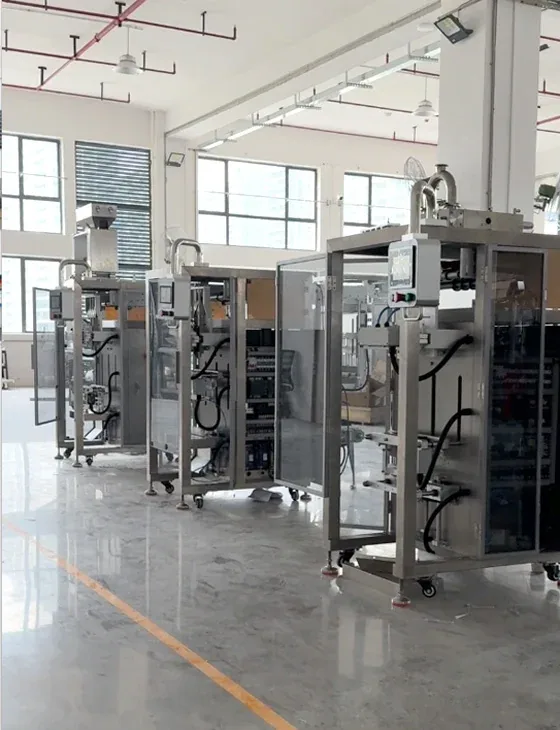
Which stick pack machine service do you need now?
Use the table to find the service you need and the information to send. If you are still choosing equipment, begin with your product and pack brief. For an existing machine, include its identification plate and configuration.
Scroll horizontally to see all columns. Keyboard: focus the table and use the arrow keys.
| Project stage | Service | Have ready |
|---|---|---|
| Choosing a configuration | Sample testing | Product description, fill-weight range, pack dimensions, output target and handling notes |
| Order placed, preparing the site | Installation and training planning | Floor layout, access route, electrical supply, compressed air where specified, and a list of operators to train |
| Line in production | Spare and change parts | Machine serial or identification plate, part location, photos of the part and its assembly |
Why test a sample before ordering a stick pack machine?
A sample trial shows whether the proposed filling and packing arrangement suits your actual product before the machine specification is fixed. It is most useful when your formulation, dose range or pack format has not yet been run on the configuration under discussion. Send the application brief first, then agree the trial scope, sample quantity, fees, freight and return or disposal of material before shipping anything.
Ask us to put the trial date, fees and results in writing. The sample testing page describes the brief and the records, including dosing observations, seal checks and any limits found. Each project agrees these separately.
What must the receiving site have ready?
Before the machine is dispatched, the site needs a floor layout, an access and unloading route, an electrical supply with grounding, compressed air where specified, and space for cleaning, service access and change parts. Plan product feeding and finished-pack handling as well. Put who does what during installation and training in the order scope from the start.
The installation and training page says how support is delivered, remote, on site or both, and the project agreement states location, travel, language, schedule and fees. It also describes an operator handover (safe startup and shutdown, recipe setup, changeover, cleaning and routine checks) followed by site checks with your own production material and film.
Spare parts and change parts for daily operation
Keep a parts list for the machine you received, including its reference and approved configuration. Wear items support routine maintenance; change parts let you run another pack size. Have both identified while you prepare the quotation or commissioning records.
The spare-parts page explains how to identify a component by its identification plate, location, documentation number and photos of the part in its assembly, and how to build an initial parts list of wear items and critical spares. A second pack size may need its own forming, sealing or cutting parts. Ask for those to be quoted separately from routine spares.
Keep the records with the machine
File trial results, factory acceptance checks, installation records and the parts list under the same machine reference. When a recipe changes or a component wears, the team can see what was tested and supplied. Use the factory acceptance checklist to record what needs to be checked before dispatch and what remains for your site.
Common Questions
Is a sample trial required before ordering?
A trial is useful when your product, dose or pack has not been run on the proposed configuration. It checks feeding, dosing and sealing before the specification is fixed. Agree sample quantity, scope, fees and handling arrangements with the team before shipping material.
Which service items should be written into the machine order?
Write in who handles installation and training, whether support is remote or on site, the operator handover content, any change parts for additional pack sizes and an initial list of wear items and critical spares. Named items are easier to compare between quotations and harder to overlook at delivery.
Who on my team should be involved in each service?
Production and quality staff are most useful during the sample trial, since they know the material and the acceptance limits. Facilities and engineering staff should lead site preparation for installation, and the maintenance team should own the spare-parts list and the record of the machine reference and approved configuration.
When should the spare-parts list be prepared?
Prepare it while the order is being finalized or at commissioning, not after the first breakdown. Ask for part identification, quantity, replacement guidance and current availability for each wear item and critical spare, and keep change parts for a second pack size on a separate list from routine maintenance spares.