
Which stick pack application matches your product?
Match your product to the closest of the four applications by how it behaves, not only by what it is called. Coffee powder, a nutritional blend, protein powder and energy gel all suit single-serve packs, but each creates a different filling and pack-development task. The table lists the questions each one raises; the application pages then turn those questions into a checklist.
A product name gets the conversation started, while a representative sample and a defined pack make the machine selection meaningful. Two products sold in the same category can still need different setups: a fine, cohesive collagen and a free-flowing agglomerated drink mix, for example, behave very differently in a hopper.
| Application | Questions to resolve |
|---|---|
| Coffee | Powder or granules, blend composition, dose and aroma protection |
| Nutritional powder | Bulk density, dust, flow and cleaning requirements |
| Protein powder | Dose volume, settling, powder handling and recipe changeover |
| Energy gel | Viscosity, filling temperature, residue and pack opening |
Which stick pack machine does each application use?
Powder applications go to the powder machine, gels and liquids go to the liquid and gel machine, and granulated mixes go to the granule machine. Coffee is the one application that can fall on either side: fine instant powder and three-in-one blends are usually assessed on auger dosing, while soluble coffee granules may point to volumetric or vibratory feeding.
Protein and nutritional powders share the powder route, but protein servings often take up more volume per gram, so pack width and length need checking against the reference ranges on the powder machine page. Energy gels need a pump, tubing and anti-drip nozzles rather than an auger. The table below is a starting point for the conversation; the sample trial confirms the route.
| Application | Usual machine route | Check first | Application page |
|---|---|---|---|
| Coffee | Powder machine for instant powder and blends; granule machine for soluble granules | Particle form, blend composition and aroma protection in the film | Coffee stick packs |
| Nutritional powder | Powder machine with auger dosing | Dust, flow after a refill or pause, and cleaning between recipes | Nutraceutical stick packs |
| Protein powder | Powder machine with auger dosing | Dose volume against pack size, settling and recipe changeover | Protein powder stick packs |
| Energy gel | Liquid and gel machine with pump dosing | Viscosity, filling temperature, drip at the nozzle and pack opening | Energy gel stick packs |
What does a coffee stick pack project need?
A coffee project starts with the recipe, because fine instant powder, soluble granules and a sugar-and-creamer blend each reach the hopper differently. Particle size, density and blend handling decide the dosing method, so size the serving around how the drink is prepared and check the volume of your actual material. A pack copied from another coffee brand may have too narrow a filling opening or too little space for your blend.
Settle aroma and moisture protection with the film supplier, then pass the chosen film specification to the equipment team; if nitrogen flushing is wanted, list it as a separate option with its own checks. During the trial, look at fill results lane by lane, dust near the seal, print position and how the pack tears open. Whole beans, capsules and drip-bag filters are different packaging tasks and should be named as such in an inquiry.
Collagen and nutritional powder blends
Nutritional powders vary widely in flow, cohesion, dust and sensitivity to humidity, so describe the formulation and send a sample drawn from production material rather than a lab batch. The stick pack filler portions a blend that has already been mixed; it does not replace upstream mixing or prove that the blend is uniform. Agree the target portion and the checks with the people responsible for production and quality.
Collagen and similar powders are a natural fit for multi-lane auger dosing. Assess the hopper and auger together, including how weights behave right after a refill or a pause, and plan access to product-contact parts and the steps for a recipe change before the scope is fixed. The trial can show pack forming and seal quality; product claims and release testing remain with your quality team.
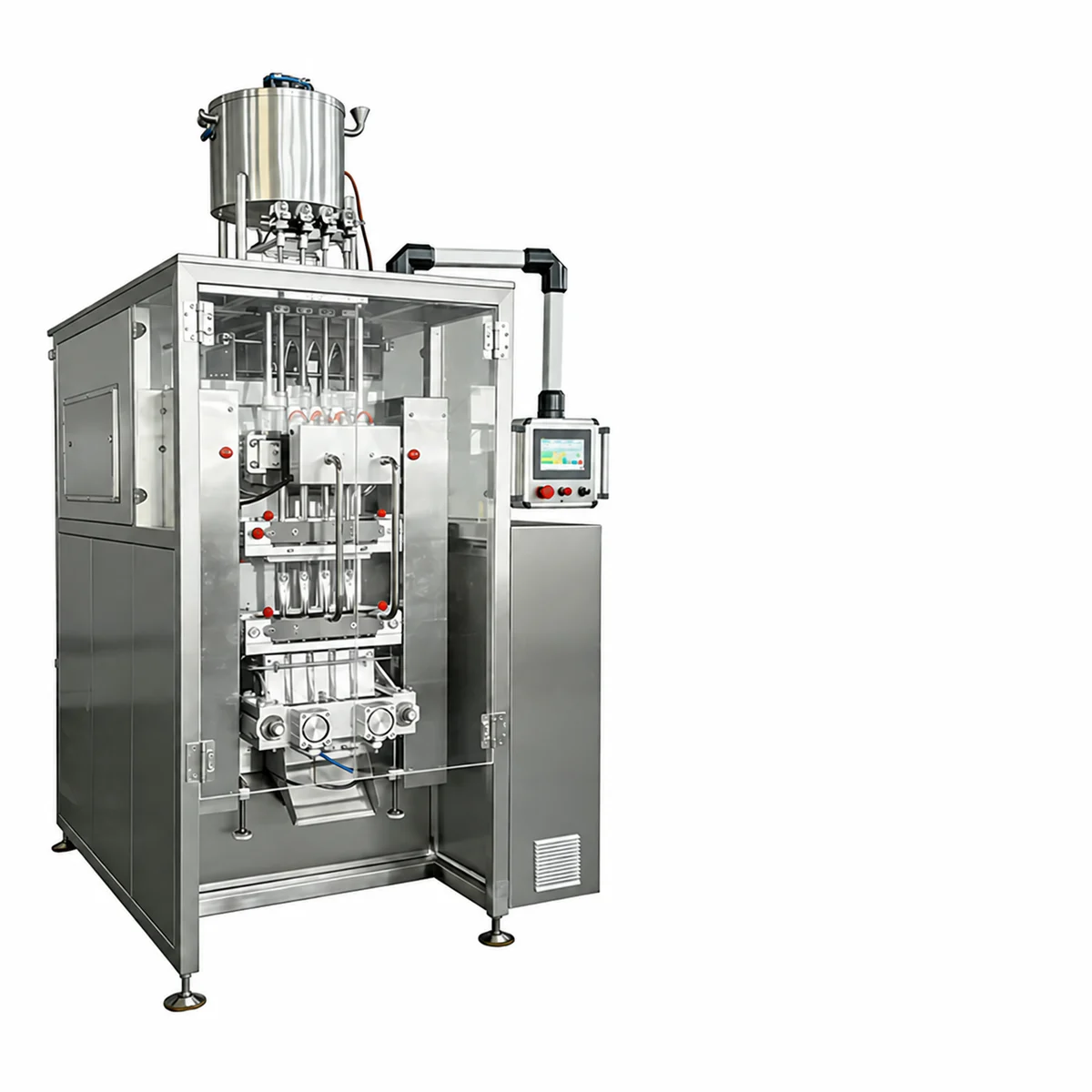
Protein powders with larger volume requirements
Protein blends often take up a lot of volume for their weight, and whey, collagen and plant-based recipes feed and settle in different ways. Measure the actual blend loose and after settling, and list the smallest and largest servings the line must fill. The goal is a pack that lets the dose drop in and the seal close cleanly, not the slimmest possible stick.
Ask how the proposed powder configuration handles your blend and how weights will be checked across every lane. Include dust control, the opening experience and carton packing in the same review, and spell out cleaning and changeover steps when several formulations share the machine. A fair capacity comparison counts the work between batches as well as the accepted output during a steady run of one recipe.
Energy gels and liquid nutritional products
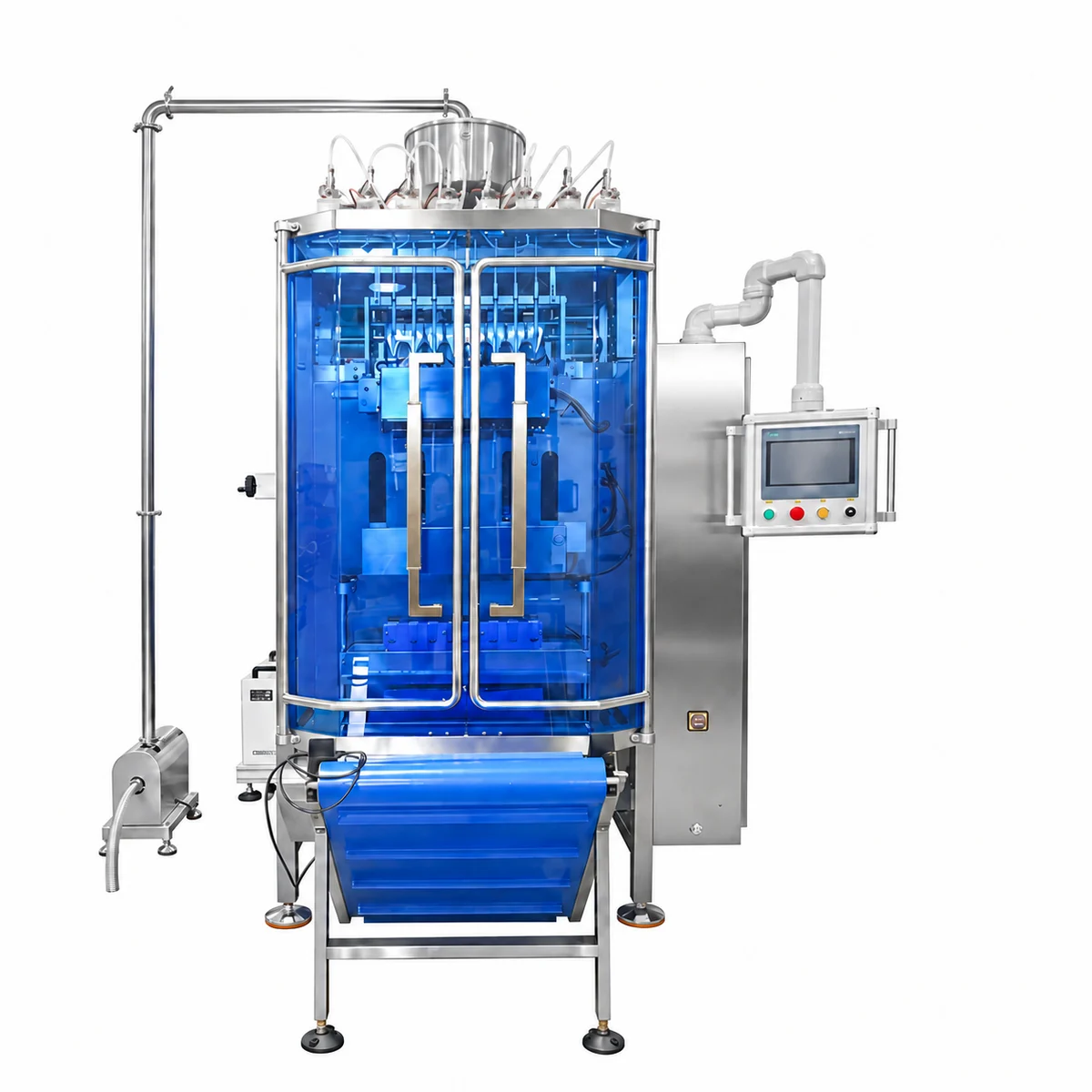
An energy gel project turns on viscosity, filling temperature and how cleanly the product breaks off at the end of each dose. Describe any particles, foaming or stringing and explain how the gel is supplied to the machine. The pump, hoses, valves and nozzles form one product path and are reviewed together; heating, agitation or automated cleaning are configuration items to confirm, not features to assume.
During a trial, inspect complete packs, including the first ones after a pause, and judge nozzle shutoff and anti-drip performance with the real gel. Decide whether the pack is a slim stick, a wider sachet or another shape and agree the tooling for it. A gel that pumps well is not proof that one machine can make every opening, seal layout or shaped pouch seen on the market.
What if your product is not one of these applications?
Start from the closest behavior rather than the closest name. A granulated drink mix belongs with the granule machine even though it is not a separate application page, a sports or vitamin powder usually follows the nutritional powder checklist, and a syrup or liquid supplement follows the energy gel checklist. Tell the engineers which of these comparisons you made and why.
Then describe what makes your product different: a hygroscopic ingredient, visible particles, a very light bulk density or a filling temperature above room temperature. Those details decide whether a standard route applies or whether the trial needs extra tooling or a different feeding arrangement.
Matching the pack to the stick pack machine line
Every application needs a pack drawing with overall dimensions, seal widths, opening feature and print orientation, plus a note on what the retail presentation fixes and what can still move. Review the film grade and roll layout with the machine team before ordering production film. Finished dimensions include the seals, so portion weight alone cannot tell you the space available for filling or the right roll width.
Look past the packing machine as well. Product preparation, hopper replenishment, counting and carton loading all have to keep up with the output you need. State that output as accepted packs over an agreed period, list the routine tasks inside that period and check the proposed layout against your floor space and utilities. That turns a product idea into a line that can actually run.
What should a stick pack trial brief include?
A trial brief should cover the product description, a representative sample, the portion range, a pack drawing and the film information, followed by the batch pattern, the accepted output you need and how many recipes or pack sizes the line will run. Add cleaning requirements and the equipment you already have upstream and downstream. Where something is undecided, name the open decision so the engineers can separate confirmed requirements from assumptions.
Agree what the trial will record before the material ships: fill observations by lane, seal and print checks, restart behavior, accepted output and any changeover you want demonstrated, each linked to the material batch, film and configuration used. The sample testing service page explains how trials are arranged. Then open the application page for your product and use its checklist to finish the brief.
Common Questions
Which stick pack application page should I read first?
Read the one closest to how your product behaves: coffee, nutritional powder, protein powder or energy gel. Each page lists the dosing, film and trial details that application needs. If your product is a granulated mix, go to the granule machine page instead, since granules are covered on the machine side rather than as a separate application.
Can coffee and nutritional powders share one stick pack machine?
Often yes, when both run on auger dosing and fit the same pack size. The shared line then needs a planned cleaning and changeover routine between recipes, and a very different dose may need other auger tooling. Run each recipe in the sample trial rather than assuming the second one behaves like the first.
Why is a product sample needed for an application review?
Because flow, dust, viscosity and particle behavior decide the setup, and none of them show up in a product name or a photograph of a finished pack. A sample drawn from production material lets the engineers see how it feeds, doses and seals on the proposed configuration before the quotation is fixed.
How does a coffee application differ from a protein powder one?
Coffee blends are usually fine and aroma-sensitive, so film barrier and dust near the seal get the most attention. Protein blends take up more volume per serving and settle differently, so pack width, length and weight checks across lanes come first. Both need a defined dose range and a representative sample.