
How many lanes does a stick pack machine need?
A stick pack machine needs enough lanes to reach your required accepted output in the operating time available, and no more than your product range and batch sizes can keep busy. Lane count describes how many packaging paths run in the machine, not the whole production job, and a higher count is not automatically the right fit for frequent changeovers or uncertain launch volumes.
Start with current demand and, separately, a realistic expansion scenario. Group the products that share a film and pack size, and flag those that need different cleaning or tooling, so you compare an operating schedule rather than two catalogue headlines. Note who will run the line, how many shifts are planned and whether volumes should grow soon after launch; those answers decide how much spare lane capacity is worth buying now. StickPackMachine focuses on multi-lane configurations, so single-lane equipment appears here as a planning comparison, not as a model from our range.
| Question | Why it changes the decision |
|---|---|
| How much accepted output is needed? | The required output sets the process target; nominal capacity alone is insufficient. |
| How many products and pack sizes will run? | Frequent changes increase the importance of tooling and cleaning. |
| Can feeding keep up? | Upstream product supply must support all active lanes. |
| What follows the machine? | Counting, boxing or manual handling must accept the discharge. |
| How will the equipment be serviced? | Access, maintenance and spare parts influence practical operation. |
Is a multi-lane stick pack machine faster?
In nominal terms, yes: nominal output scales with active lanes and cycle rate. Accepted output is another matter, because it also reflects stops, rejects and the work between batches. To compare fairly, measure accepted packs over the same defined period with the same product, dose and film, and state whether roll changes, replenishment, cleaning and changeover are counted. Otherwise a short demonstration and a full-shift estimate look comparable when they are not.
For planning, divide the required accepted packs by the time actually available to run that product, keeping the time reserved for other recipes visible. Then ask the supplier to show whether the proposed configuration meets that figure under agreed conditions. Multiplying the best observed speed by every hour in a shift produces a number nobody can plan with. A transparent calculation gives production, purchasing and the supplier one shared target.
How does product variety affect the lane decision?
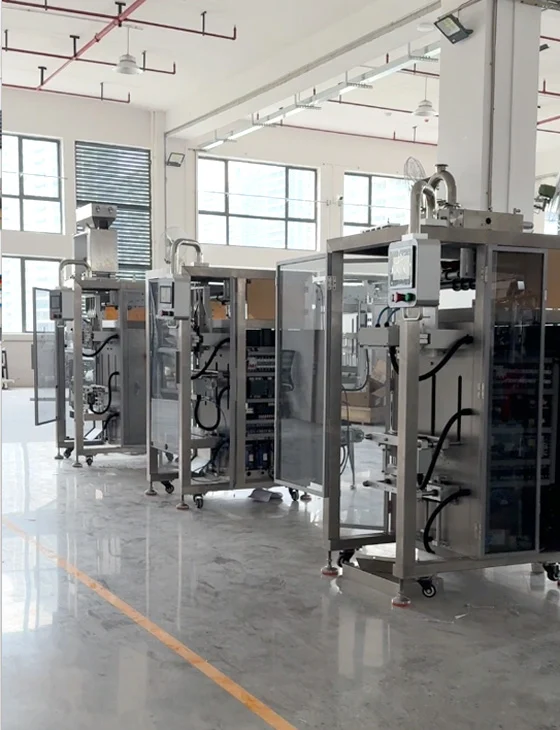
The more often you change product or pack size, the less of a multi-lane machine's capacity you actually use, because each switch adds access, cleaning, setup and first-pack approval. A multi-lane machine is best suited to sustained runs of a stable product and format. Model a typical day with every expected task in it, not just the longest and easiest run.
List the real product families. Switching between coffee flavors is a different job from switching between a protein powder and a liquid gel, which can call for a different equipment configuration altogether. Even among powders, flow behavior and cleaning needs vary: a dusty formulation or one prone to bridging can need a different auger or hopper setup from a free-flowing blend on the same machine. Ask which changes the offered platform supports and what has to be replaced or adjusted, so a high lane count is not mistaken for broad product flexibility.
Product supply and dosing for every lane
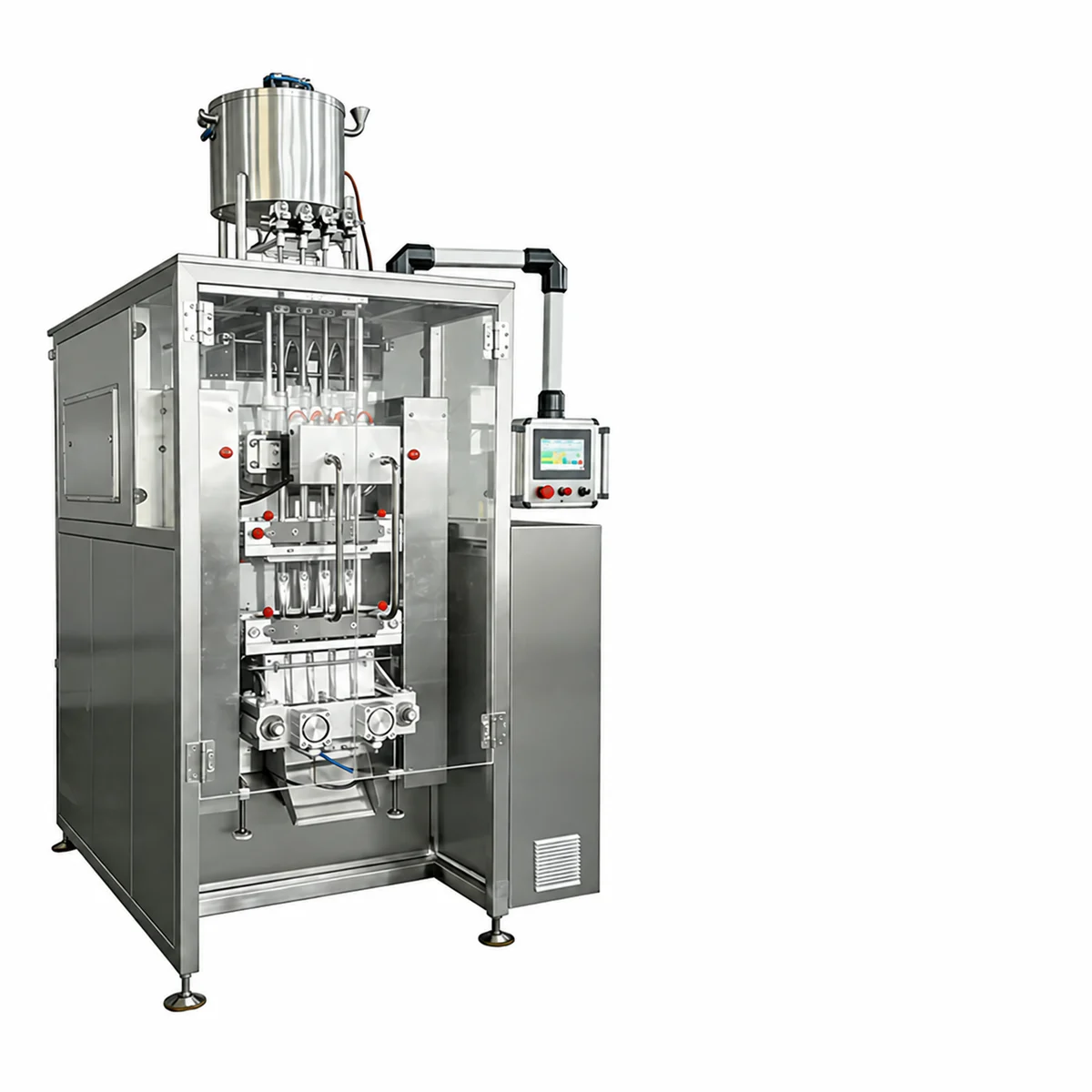
Every active lane needs a steady product supply, not only a filler that can nominally keep pace. Our powder range uses auger-based configurations and our liquid machines use a pump and nozzle suited to the material, so adding lanes means hopper replenishment and flow consistency must hold up across all of them. A machine can have plenty of pack positions while its product feed becomes the real constraint.
During trials, collect results separately from every active lane, because a combined average can hide one lane that consistently runs differently. Watch performance as the hopper level changes and after a restart, and ask how lane-specific adjustments, maintenance or faults are handled; do not assume a single lane can be switched off on its own. The answer affects both useful capacity and how the production team responds when one filling path needs attention.
Film, tooling and changeover work
Multi-lane packaging slits one wide roll into several packs, so each format needs its own roll width, artwork layout and change parts matched to the machine design and pack geometry. Compare the approved film layouts for each proposed configuration and ask how a different pack width would be introduced. More lanes do not automatically mean a fixed material saving or a fixed increase in waste.
Make changeover a defined demonstration: name the starting product and size, the next product and size, the parts exchanged and the checks required before production resumes. Record the time and film used to reach accepted output, including operator tasks that are easy to leave out. If the project needs only one format at first, still pin down the future change-part scope so a later product launch does not turn into a much larger equipment change than expected.
Floor space, operators and downstream handling
Lane count changes the space around the machine, not only its footprint. Leave room for film loading, product supply, maintenance access, cleaning and movement of finished packs, and lay the proposed layout over your actual floor plan and utilities. Ask where the operator stands and how routine work is done; a compact machine drawing is incomplete without the service area around it.
Discharge matters just as much. Several lanes release packs together, and counting, collecting or cartoning must accept that pattern. If operators will fill cartons by hand, check that task at the proposed accepted output. If another supplier provides downstream equipment, agree the transfer point and who is responsible for conveyors, inspection or case packing between the two machines before ordering either one. A faster primary packer does not raise shipped output when the next operation is congested, so review the complete line to see whether more lanes solve the real constraint.
Further reading: Packaging World: stick pack collation and cartoning at PACK EXPO
Comparing stick pack machine costs on one scope
Request every quotation against one written brief that separates the core machine, filler, change parts, feeding equipment, coding, inspection and downstream handling. Add sample trials, acceptance testing, training, installation arrangements and delivery terms where relevant. A price gap between two offers can reflect a different supply boundary rather than a more economical machine, so keep exclusions visible until the order is placed.
Operating comparisons need stated assumptions too: labor, consumables, spare parts, maintenance tasks and the planned product schedule, using measured inputs or clearly labeled estimates rather than a promised payback from a higher nominal speed. A configuration that costs more upfront may suit one production pattern, while a simpler arrangement suits another. The aim is to compare practical alternatives for your plant, not to crown one lane count for every business.
Deciding with a representative trial
A trial settles the lane question only if it reflects the intended workload: your key material and film, the required dose, all active lanes and any important stop or changeover checks. Agree beforehand on what counts as accepted output, how each lane is sampled and how rejects are recorded. If the future product range is uncertain, keep that expansion scenario separate from the confirmed launch requirement.
Close with a short decision record explaining why the chosen configuration fits demand, product variety and line capacity, with the trial results, layout and itemized quotation attached. To start that comparison, send StickPackMachine your product information, pack drawing, target output and batch pattern on WhatsApp. A lane count only means something once it is tied to an operating plan the production team can repeat after the demonstration ends.
Further reading: OEM Magazine / PMMI: factory acceptance test planning guidance
Common Questions
What is the difference between single-lane and multi-lane stick pack machines?
A single-lane machine forms, fills and seals one stick pack per cycle, while a multi-lane machine slits a wide film roll and runs several lanes side by side in the same cycle. The multi-lane design raises nominal output per cycle but needs product supply, change parts and discharge sized for every lane.
When does a single-lane machine make more sense?
A single-lane arrangement can suit uncertain launch volumes, many short batches or frequent recipe and size changes, where a multi-lane machine would spend much of the day in changeover and cleaning. StickPackMachine builds multi-lane configurations and does not list a single-lane model, so use the comparison to test whether multi-lane fits your schedule.
Does adding lanes to a stick pack machine change floor space needs?
Yes. More lanes need more room for film loading, product supply, maintenance access and the discharge of packs released together. Check the proposed layout against your actual floor plan and confirm how counting, collecting or cartoning will handle several lanes releasing packs at once.
Do more lanes mean less film waste?
Not automatically. A multi-lane machine slits one wide roll into several packs, but film use depends on roll width, artwork layout, lane spacing and how much film is consumed reaching accepted packs after setup or changeover. Compare the approved film layouts and the measured changeover waste for each configuration.