
Count one billing period, then divide
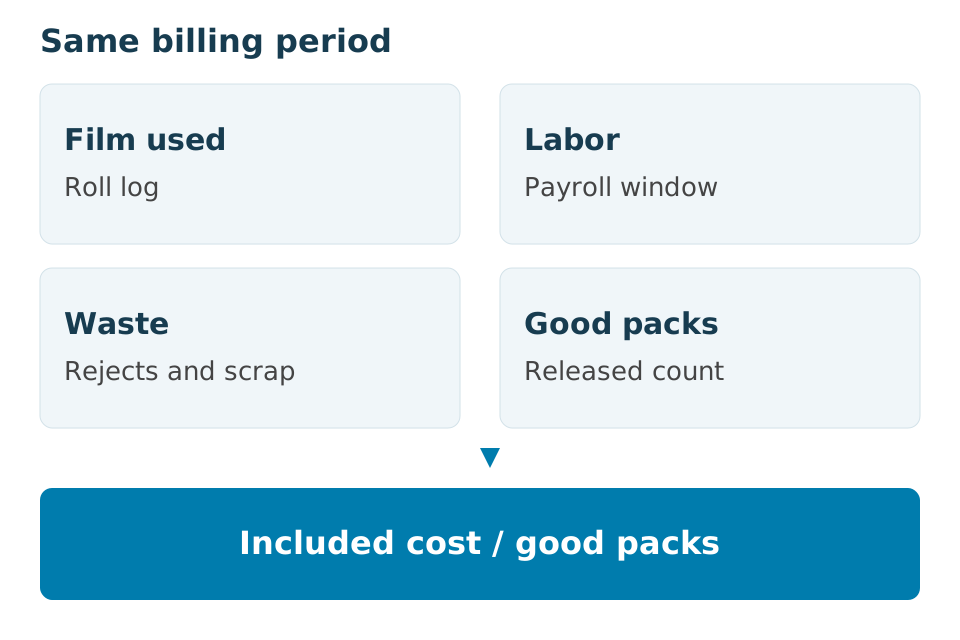
Write the start, the end, the line and the SKU before you collect numbers. If the run mixes SKUs, name the mix. Film issued, labor hours, rejected packs and released packs all have to fall inside that window. A roll logged on Monday belongs with Friday's pack count only when both days sit inside the period you named.
The unit cost is the packaging cost you choose to include, divided by the good packs released in that period. Included cost can hold film, labor, waste and an equipment charge already posted in your books. Leave a line blank when the record is missing. Two plants can both report a cost per stick pack while adding different lines, so the result has to name what went in.
Use the sheet below as the calculator. You fill the cells from your own documents and apply the division. The page supplies the definitions. Your roll log, payroll record and release count supply the quantities.
Charge the film the line consumed
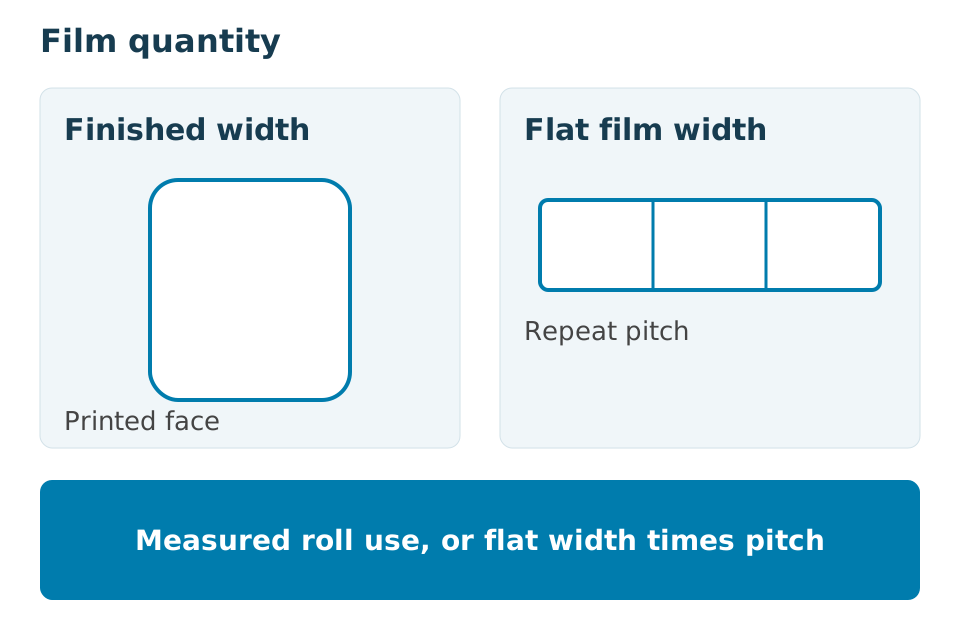
Take the length or the weight issued to the line during the period and subtract film that returned to stock unused. The roll log, the issue ticket or the invoice quantity for that window is the film line. A drawing of the finished stick is a pack specification. It is the wrong quantity for this cell.
When the roll log does not exist yet, estimate from the approved web layout. Multiply the flat film width by the repeat pitch, the distance the web advances for one stick, and then by the packs attempted in the period. Confirm both dimensions on the layout the film supplier and the equipment team have signed. Seal width, trim and the slit into lanes sit inside that flat width and that pitch.
Finished stick width leaves those allowances out. A narrower printed face can still use the same web when the seals and the lane pitch stay the same. A longer stick changes the pitch. A different lane count changes how much of the web each pack uses. Recalculate from the revised layout, or wait for the next period's roll log and cost the measured use.
Record the film structure beside the quantity when the structure changes how much material you buy. Unified Flex, in an article published on 5 October 2026, writes that serving size, stick dimensions and film structure each place requirements on forming, filling and sealing. The same article says a higher-barrier structure may add material and cost beyond what the application needs, and that a gauge change made to reduce material usage can change web handling and sealing. Keep the structure and the measured use together. Ask your film invoice for the money. This page has no film price to enter for you.
Related reading: Stick Pack Film & Machine Compatibility; Stick Pack Sizes & Dimensions Guide
Keep labor inside the same start and stop
Enter the labor your payroll assigns to this line between the same start and stop. Use hours from the schedule or the time record, and the cost your finance team already uses for those hours. When people split a shift across two lines, record the hours the schedule shows for this line.
Changeover time stays in the period when those people were on the clock. Note the changeover so a later comparison can see why labor rose while good packs fell. Cleaning between recipes is the same kind of time. It belongs to the window you named.
A supervisor who covers several lines needs a split you can point to. If the schedule does not show one, leave that person's cost off this SKU and write that you left it off. An even split you invented will make two products look more alike than the day was.
Put waste in the cost once
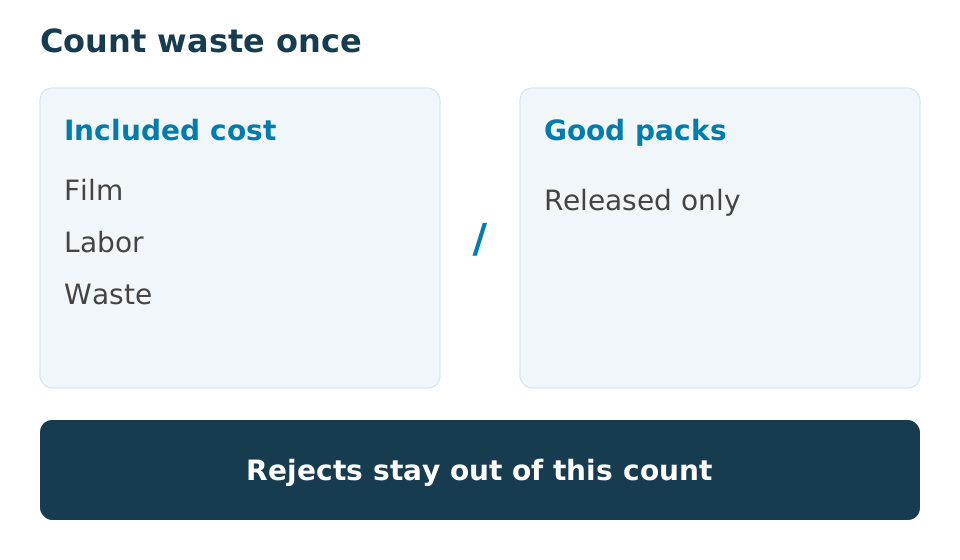
Waste is film, product and packs you paid for and did not release. Startup sticks, seal failures, spilled powder or gel, and packs held by your release check belong in the included cost when you paid for that film and that product. Suden Machines, in an article published on 10 September 2026, describes unstable dosing showing up as giveaway that raises material use, and as leakage, short stops and start-up waste. Count those losses from your own records. That article is a public description of filling trouble. It is a third-party source, and it is not a trial of your product.
The denominator is good packs, so rejected packs are already absent from the number you divide by. Subtracting them a second time, or adding a scrap allowance on top of film you already measured, counts the same loss twice. The unit cost then looks heavier than the period was.
Extra product inside a released pack is still a released pack, so the pack stays in the denominator. The extra product is a material cost when you can weigh it or when the checkweigher log totals it for the period. If the only note is that the filler seemed heavy, leave that cell blank until you have a weight.
Divide by packs you released
Good output is the packs you released in the period. Use the release record, the case count tied to released sticks, or the checkweigher total of packs that passed, and name which record you used. Packs you attempted, including rejects, can support a pitch estimate of film. They are the wrong denominator for the unit cost.
When the line ran two SKUs, split the released packs before you divide. A blended count is a cost for the mix. Label it as a mix, and split the film and the labor on the same basis. Moving one SKU's rejects into the other SKU's released count makes the cleaner product look expensive.
Write the hours the line was planned to run beside the good-pack count, and add a short note if the line was down. That note shows whether the film, the labor and the packs describe one window. Keep it as a note. The worksheet stops at the period cost. It does not convert downtime into a machine speed.
Related reading: Single vs Multi-Lane Stick Pack Machines
Fill the blank worksheet from documents
Copy the rows into a sheet and fill a cell only when a document supports it. The sheet is the calculator: your quantities, this division. Empty cells stay empty. An empty film price is acceptable. A guessed film price is a different document from the one you have.
Film quantity comes from the roll log. Labor comes from payroll for the window. Waste comes from the reject and scrap notes. Good output comes from the release record. The equipment row is a depreciation or lease amount your books already post to the line, or it stays blank. The last row divides included cost by good packs and lists the lines that were included.
Write the currency and the pack unit on the sheet. A cost per carton uses a different denominator. If you ship sticks in cartons, divide by released sticks first. Multiply by the sticks in a carton only when you want a carton figure, and label that second result.
Scroll horizontally to see all columns. Keyboard: focus the table and use the arrow keys.
| Record | What to enter | Same-period check |
|---|---|---|
| Billing window | Start, end, line, SKU or named mix | Every other row uses this window |
| Film used | Length or weight issued, minus returns | Roll log dates fall inside the window |
| Film money | Your invoice for that quantity, or blank | Blank is allowed; a guessed price is not a record |
| Labor | Hours and the payroll figure for those hours | Hours fall inside the window |
| Waste and rejects | Film, product and packs you did not release | Already inside the film quantity if the roll log includes them |
| Good output | Packs released in the window | This is the denominator |
| Equipment charge | Depreciation or lease your books post, or blank | A supplier quote stays off this row |
| Unit cost | Included cost divided by good packs | List the lines you included beside the result |
Check the sheet before you divide
Read the sheet from the top. Every row should name the same start and end. Film issued minus film returned should equal the film quantity you cost. Good packs plus rejected packs should match the attempt count you used for a pitch estimate, or the gap needs a sentence. A missing sentence means the records are not ready to divide.
Compare two periods or two lines only when the included lines match. If one sheet has depreciation and the other has film and labor only, the lower number covers less. Write the scope next to the result. A machine purchase quote, a film-supplier shortlist and a laminate choice live in other guides. They join this sheet only after your books have turned them into a charge for this period.
Discuss this configuration
Send the details below to discuss the configuration and any missing information. Leave undecided fields blank; agree how to share samples and documents on WhatsApp.
- Billing period
- Film used
- Labor
- Waste and rejects
- Good output
- Lines left out
We reply within 24 hours.
Discuss on WhatsAppAdd an equipment charge only from your books
Some finance teams post depreciation or a lease to the line each month. If yours does, enter that posted amount for the same dates as the film and the labor. The source is your ledger. If the charge covers several lines, use the allocation the ledger already uses and name that allocation.
A quoted machine price answers what the project costs to buy and install. This worksheet answers what one released stick cost to make in a period you ran, or in a plan whose assumed cells are marked. Leave the quote on the price guide. Dropping the quote into the numerator, with no period and no good-pack count, is a capital figure sitting in the wrong sheet.
Related reading: Stick Pack Machine Price: Budget & Quote Guide
When to use a different guide
Use the format, dimensions and film guides while you are still deciding whether the product should be a stick pack and what web the machine will run. Those choices change the film quantity you will later record. Use the price guide when you want suppliers to quote a machine. Send the pack drawing, the film specification and the output you need, and compare what each quotation includes.
A planning draft of this sheet is allowed. Mark every assumed cell. When the period closes, replace assumptions with the roll log, the payroll record and the release count. An unmarked assumption will be read as a result from the line.
Method and sources
Updated 12 October 2026. The division combines film, labor, waste and any book charge you choose to include, then divides by good packs from the same billing period. You supply the quantities. The page defines which records share a window.
Two public articles support the production comments above. Unified Flex, How to Select Packaging Film for Magnesium Stick Packs, was published on 5 October 2026 and fetched on 8 October 2026. It discusses serving size, stick dimensions, film structure, added material on a higher barrier, and gauge changes that can affect web handling and sealing. Suden Machines, Stick Pack Filling System Selection: Auger vs Volumetric vs Pump, was published on 10 September 2026 and fetched on 8 October 2026. It discusses giveaway, leakage, short stops and start-up waste as signs of unstable dosing. Both are third-party pages. They do not establish what this site's equipment will do on your product, and this worksheet copies no tolerance band and no machine speed from either one.
Measured roll consumption is the film quantity to cost. Flat web width times repeat pitch is the fallback, taken from the approved layout. The film guide and the dimensions guide on this site explain how to read that layout with the equipment team.
Further reading: Unified Flex, film selection for magnesium stick packs (5 October 2026); Suden Machines, stick pack filling-system selection (10 September 2026)
Common Questions
Does this calculator print an industry cost per stick pack?
No. You enter film, labor, waste and good packs from one billing period on your own line. The page defines the division. It does not provide a film price, a wage or a finished cost per pack.
Can I estimate film from the finished stick width?
Use the roll log. If you have to estimate before a log exists, use the flat film width and the repeat pitch on the approved web layout. Finished width omits seals, trim and the lane arrangement.
Where should the machine purchase quote go?
Keep it on the price guide and in the capital comparison. This worksheet accepts only a depreciation or lease amount your own books already post to the period, and that row can stay blank.
What if one period covers two products?
Split film, labor, waste and released packs by product before you divide, or label the result as a mix. One unit cost for a mix hides which product consumed the film.