
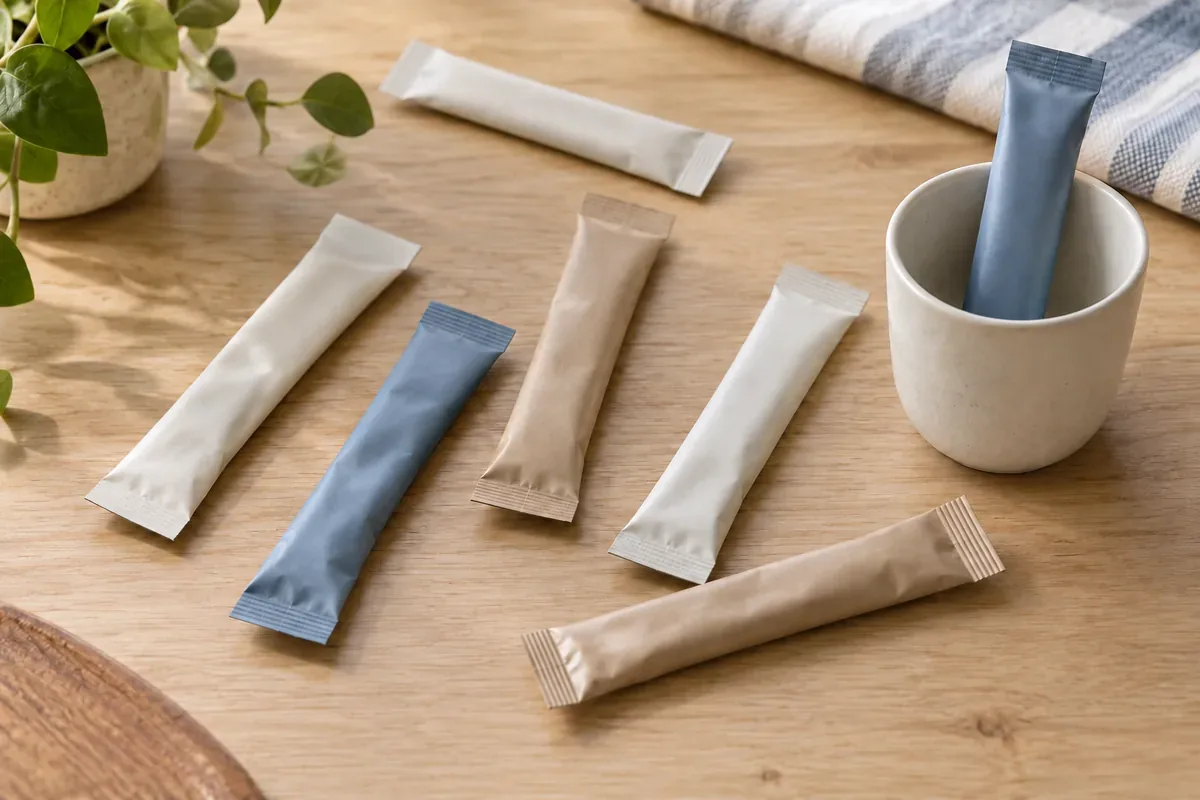
What is a stick pack?
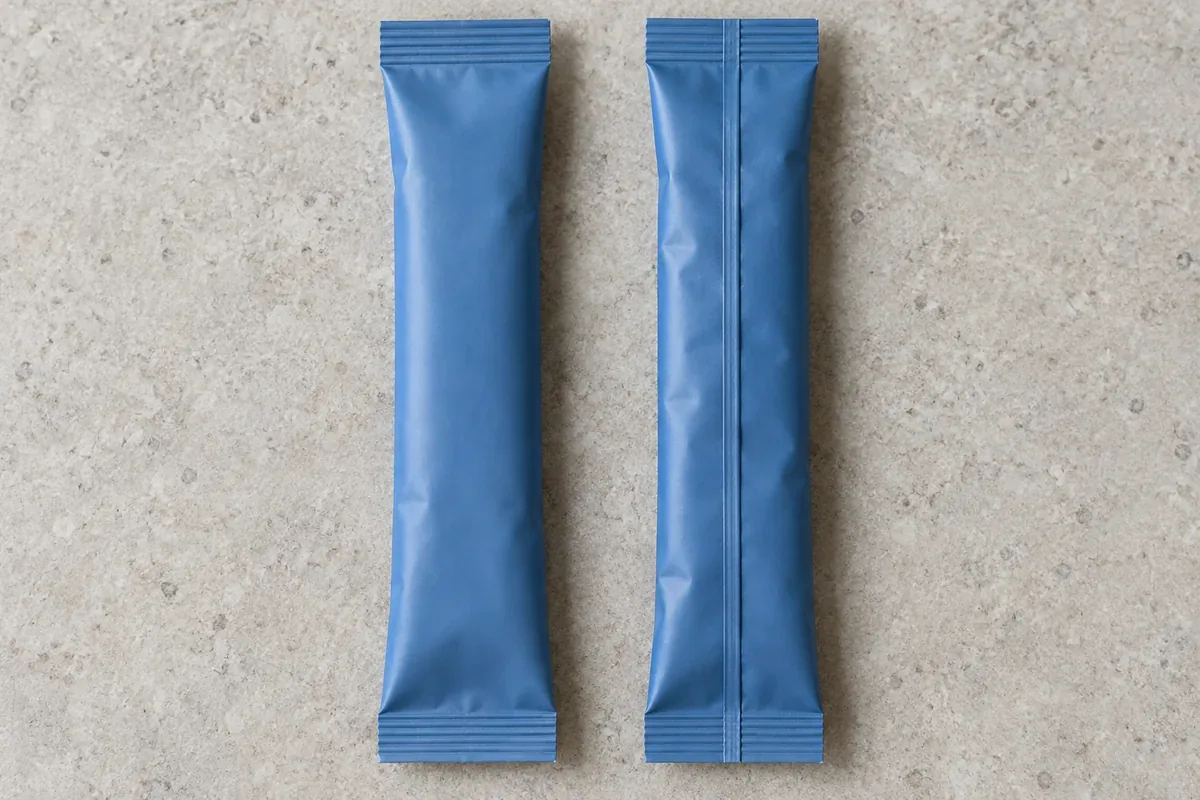
A stick pack is a long, slim flexible package that holds a single portion of product. Most have three seals: one running the length of the back and one across each end. Instant coffee, sugar, drink mixes, nutritional powders, gels and honey are common contents. The name describes the finished pack, not the machine that makes it.
- Format: a narrow flexible pack, usually with one back seal and two end seals.
- Contents: one portion of a powder, granules, liquid, gel or paste.
- Main appeal: portable, pre-portioned use without measuring from a bulk container.
- Main check: whether your portion, opening and printed information fit the pack you have in mind.
How do you recognise a stick pack?
Look at the shape and the seals. A stick pack is a narrow tube of film closed along the back and sealed at both ends, so it lies flat but is much longer than it is wide. Many also carry an opening feature, such as a small tear notch near one end, but that is a design choice agreed for each product.
You will see several names for the same object. Stick pack, stickpack, stick sachet and stick bag are used for this elongated, back-sealed pack, and some buyers simply say sachet. The word sachet on its own is ambiguous, because it is also used for flatter packs sealed on three or four sides. When you brief a packaging supplier or a film converter, send a sample or a photograph with the seals visible, so that everyone is discussing the same finished pack.
A stick pack machine is the equipment that produces the pack from a roll of film and the product, often across several lanes at the same time. The machine operation guide explains how film and product come together and in what order. Knowing the format name tells you little about which machine configuration your product needs; that depends on the material, the portion and the pack drawing.
Related reading: How a Stick Pack Machine Works
What products are packed in stick packs?
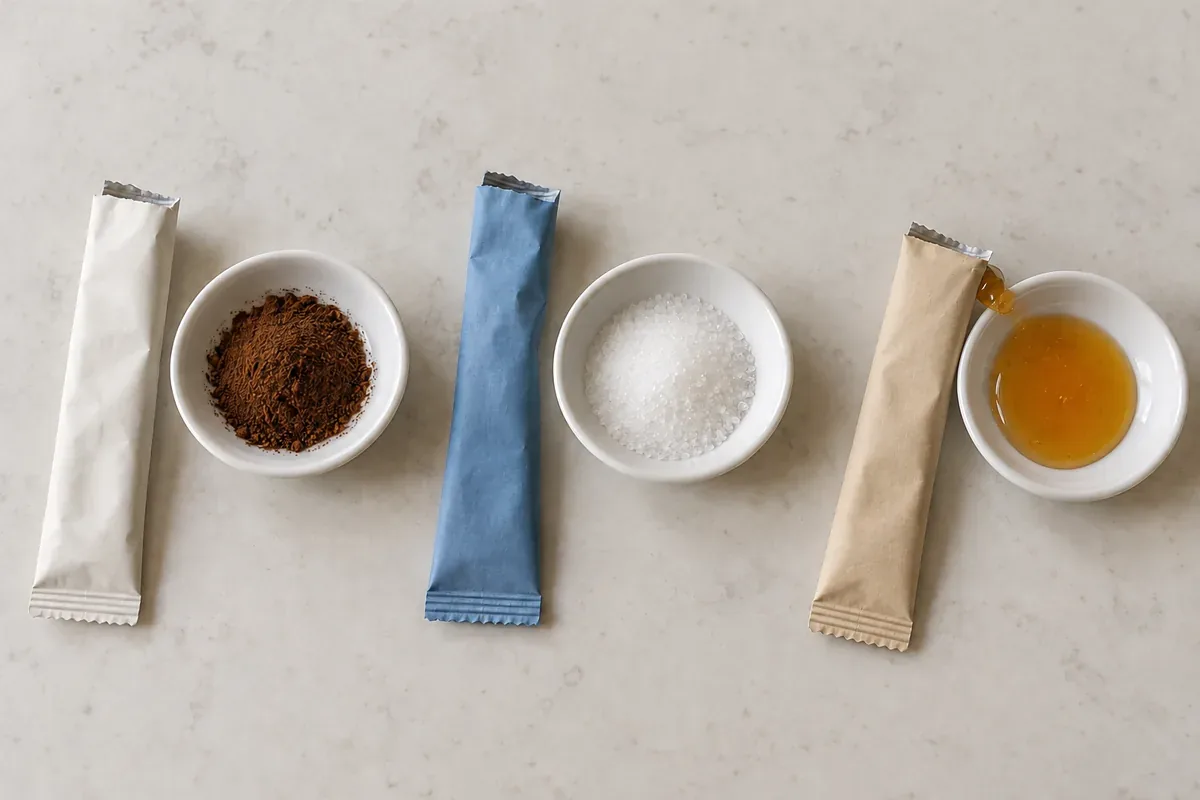
Stick packs carry single portions of both dry and fluid products. Typical dry contents are instant coffee, sugar and sweeteners, drink mixes and nutritional powders. Fluid contents include sauces, honey, energy gels and liquid supplements. Equipment makers also list pharmaceutical, cosmetic and pet-nutrition uses. A product category is a starting point; your own formulation still needs assessing.
Powders and granules are the most familiar contents. A coffee stick usually holds instant coffee or a coffee mix for one drink. A sugar stick holds a portion of sugar or sweetener for a café counter, a hotel tray or a catering pack. Drink-mix and nutritional-powder sticks carry one serving to be stirred into water, milk or a shaker bottle. The coffee, sugar and nutritional powder application pages describe the product checks each of those projects raises.
Liquids, gels and pastes also go into stick packs, from energy gels and honey portions to sauces and liquid supplements. These products vary widely. Two products sold under the same name can differ in thickness, particle content and filling temperature, depending on the recipe. That is why a liquid example in someone else's range does not show that your formulation will fill, seal or squeeze out cleanly. The energy gel and honey pages cover the questions thick products raise.
Other sectors use the format as well, and packaging-equipment makers list pharmaceutical, cosmetic and pet-nutrition products among stick pack applications. Those are general market examples, not evidence that a given supplier has validated a medicine, met a sterility requirement or holds a particular certification. If your product is regulated, handle the regulatory requirements as a separate review with the people responsible for them, and use the format discussion only to describe the pack.
Related reading: Stick Pack Machine Applications; Coffee Stick Pack Machine & Packaging; Sugar Stick Packing Machine; Nutraceutical Stick Pack Machine; Energy Gel Stick Pack Machine; Honey Stick Pack Machine
Why do brands use stick packs?
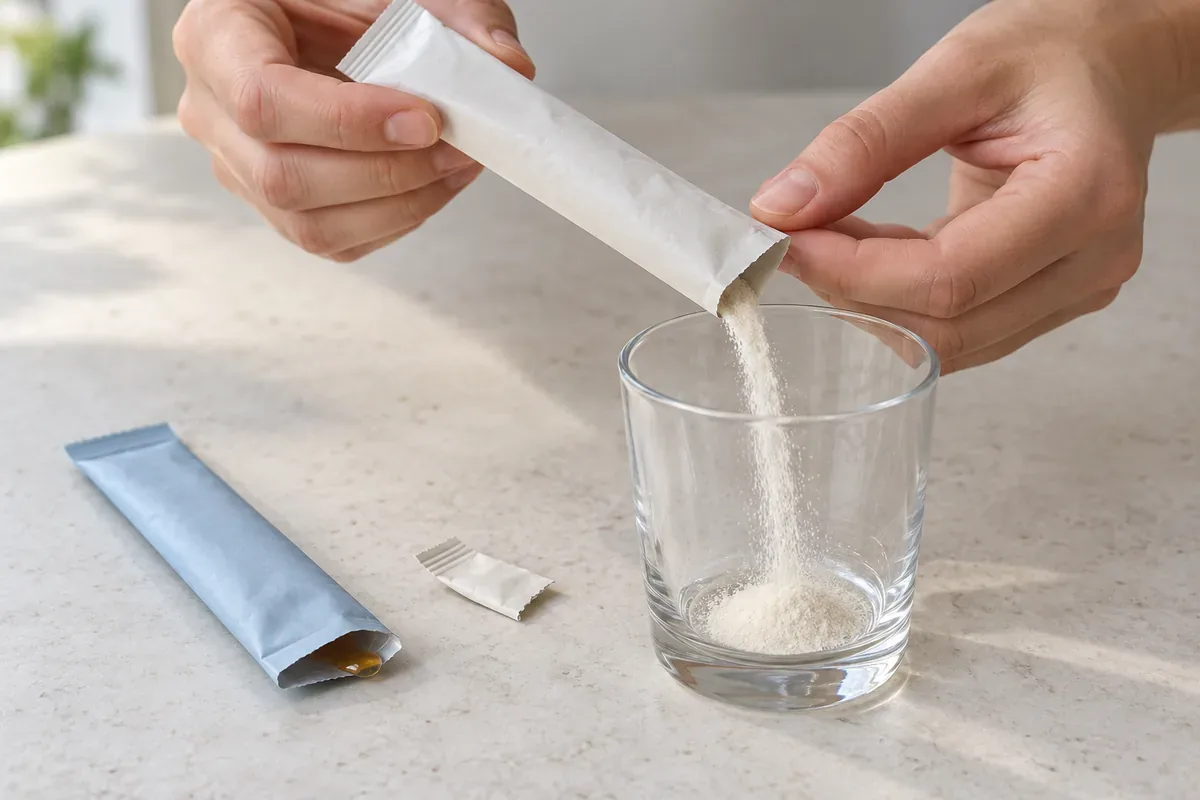
Brands mainly choose stick packs for convenience. The pack is light and slim, fits in a pocket, bag or carton, and gives the user one portion without measuring from a jar or tub. It also puts a single serving where it is used, whether that is a café counter, a gym bag or a travel kit.
Portability is the benefit most users notice. A narrow pack takes up little space, so a carton can hold several portions and a user can carry one or two for the day. For drink mixes and coffee, the long shape can make it easier to pour the contents into a bottle or cup. These are practical advantages rather than measured ones: whether your pack opens and pours cleanly depends on its opening feature, the film and the product, and needs checking on a filled sample.
Pre-portioning is the second reason. The user takes one pack instead of scooping from a bulk container, which can suit trial sizes, sampling, hospitality and on-the-go use. A pre-portioned pack is a way of presenting the product, not a measurement guarantee. The fill of each pack depends on the dosing equipment, how the product behaves and the checks run during production, and those have to be specified and verified separately.
Some benefits that sales material attaches to the format need more care. Claims about using less material, being greener, protecting the product better or reducing transport damage depend on the specific film, pack size, secondary packaging and the comparison being made. The stick shape alone does not establish any of them. If one of these points matters to your launch, ask for documented evidence that applies to your actual pack.
Scroll horizontally to see all columns. Keyboard: focus the table and use the arrow keys.
| Item | Practical benefit | What to verify |
|---|---|---|
| Slim, light pack | Easy to carry and to store several portions | Fits the intended carton, display or bag |
| Single portion | No measuring from a bulk container | Fill is specified and checked in production |
| Pour-out shape | Directs contents into a cup or bottle | Opens and empties cleanly with your product |
| Sampling and travel use | One serving to try or take away | Required information stays readable on the printed face |
What are the disadvantages of stick packs?
The narrow shape that makes stick packs convenient also limits them. A stick holds a modest portion, offers a small printable face, is meant to be emptied in one go and cannot be resealed. The shape also tells you nothing about barrier protection or disposal. Check each limit against your product and how it will be used.
Portion size is the first limit. A larger serving needs a longer or wider pack, and at some point the result becomes awkward to hold, pour or fit into a carton. The dimensions guide explains how a portion turns into pack width and length. If your serving does not fit comfortably, a flat sachet or another format may suit it better, and the stick pack versus sachet guide compares those choices in detail.
Printable area is the second. A narrow face leaves limited room for the product name, directions, ingredient or nutrition information and any other text the product must carry. Lay out the real artwork at the real pack size early and confirm that every required element remains readable. One packaging-equipment maker notes that a sachet is often chosen when a larger fill or more surface for product information and regulatory text is needed.
Opening and emptying come third. Check whether a powder pours out smoothly or leaves clumps and residue in the pack, whether a thick gel or honey clings to the film, and whether the notch is easy to find and use with wet or gloved hands. These outcomes depend on the product, the film and the opening feature, so observe them on filled samples rather than assuming them from the format.
Protection and disposal are the last. How well a stick pack protects its contents from moisture, oxygen or light depends on the film structure and the quality of the seals, not on the stick shape. Recycling and disposal routes likewise depend on the materials and on local collection. The film guide explains what a film specification needs to cover; ask the film supplier for documented information that matches your actual pack.
Related reading: Stick Pack Sizes & Dimensions Guide; Stick Pack vs Sachet: Which Format to Use; Stick Pack Film & Machine Compatibility
When this does not apply
A stick pack is not the right starting point for every product. It suits single portions that are opened and used up at once. If your product matches one of the situations below, compare other formats before developing a stick pack.
Bulk, refill and multi-serve use. Products that people scoop or pour from repeatedly, such as a family-size tub of protein powder or a kitchen sugar jar, are better served by a container they can reopen. A stick pack only makes sense for these products as a separate single-serve or sample range.
Repeated opening and reclosing. A stick pack is designed to be emptied once it is opened. If users normally take part of the contents and keep the rest for later, the format will frustrate them unless a different closure is part of the design.
Large servings, or thick products that must be emptied completely. A serving that would need an unusually long or wide stick, or a dense product the user has to squeeze out fully, deserves an early sample check and a comparison with flat sachets or other packs before artwork and film are ordered.
Does the stick pack format suit your product?
Answer this with a short three-step check before any machine discussion: describe how the product will be used, try a filled sample of the pack you have in mind, and write down what is decided and what is still open. The result is a brief that a packaging supplier can review against your actual product.
First, describe the use. Who opens the pack, where, and into what? A coffee stick emptied into a cup at a desk, an electrolyte stick shaken into a bottle at the gym and an energy gel squeezed out during a run make different demands on the opening, the pour and the information printed on the pack. Note the serving you intend to give, with its unit if you already know it.
Second, check a filled sample. Use the product itself, or a close stand-in, in a pack of roughly the size you are considering. Open it the way a user would, empty it into the intended container and look at what remains inside. Check that the opening feature is easy to find and use, and that the information you must print can be read at that size. Record what you see; it is an observation to discuss, not a test result.
Third, prepare the brief. List the product and its form, the intended portion, the opening requirement, the information the pack must carry and the decisions that are still open, such as pack size or film. Attach photographs of the sample. When it is ready, send us your project details using the list below, and we can discuss whether a trial with your product is the right next step. The machine selection guide explains how to compare supplier proposals and the evidence behind them.
Related reading: Stick Pack Machine Sample Testing; How to Choose a Stick Pack Machine
Discuss this configuration
Send the details below to discuss the configuration and any missing information. Leave undecided fields blank; agree how to share samples and documents on WhatsApp.
- Product and form
- Intended use
- Intended portion
- Reference pack or photos
- Opening and emptying notes
- Information and artwork
- Open decisions
We reply within 24 hours.
Discuss on WhatsAppWhat should you read next?
Choose the next guide by the question you now have. Go to the comparison guide if you are still deciding on the format, to the dimensions, film and machine guides once a stick pack is settled, and to the application pages for product-specific checks. The guides hub lists every guide with the decision it supports.
If you are weighing a stick against a flat sachet, read the comparison first. If the stick format is settled, the dimensions guide turns your portion into a pack drawing, and the film guide sets out what to agree with a film supplier. When you are ready to look at equipment, the machine operation guide explains how the pack is made, and the machines overview introduces the powder, liquid and granule configurations.
Related reading: Stick Pack Machine Buying Guides; Multi-Lane Stick Packaging Machines Compared
Method and sources
This guide was written from publicly available information on the stick pack format, including packaging-equipment makers' descriptions of the format and its typical applications and a manufacturer's article on packaging liquid supplements, together with the existing guides on this site about dimensions, film and machine operation. Search questions about the format were reviewed to choose the topics and the questions answered below.
It describes the format in general terms. It does not report tests, trials or measurements carried out by us, and it makes no claim about fill accuracy, shelf life, barrier performance, recyclability or regulatory suitability for any product. Those depend on the product, the film and the pack design and must be confirmed for each project. Last reviewed October 2026.
Common Questions
What is a stick pack machine?
A stick pack machine is the equipment that makes stick packs from a roll of film and the product, often on several lanes at once. The stick pack is the finished package; the machine is a separate purchase chosen for the product, portion and pack drawing. The machine operation guide explains how it works.
What are sugar sticks?
In packaging, sugar sticks are narrow single-portion packs of sugar or sweetener used at café counters, in hotel rooms and in catering. The same term is also used for confectionery such as rock candy on a stick, which is a different product. The sugar application page covers packing sugar into stick packs.
What is a coffee stick called?
In packaging, it is usually called a coffee stick, coffee stick pack or instant coffee stick: a narrow flexible pack holding one serving of instant coffee or a coffee mix. No single name is used by everyone. A thin wooden or plastic stick used to stir a drink is a coffee stirrer, which is a different item.
What is a honey stick pack?
A honey stick pack is a narrow flexible film pack holding one portion of honey, which the user tears open and squeezes out. It differs from rigid plastic honey straws sold as snacks. Because honey is thick, check opening and emptying on filled samples; the honey application page covers the product questions.
What are the key differences between a stick pack and a sachet?
A stick pack is a narrow pack with a lengthwise back seal and two end seals, while a sachet usually means a flatter, wider pack sealed on three or four sides. A sachet gives more printable face and can suit larger portions; a stick is slimmer and pours from one end. The comparison guide covers the choice in detail.
How do I open a coffee stick pack?
Look for the opening feature on the pack, usually a small notch or marked tear line near one end, and tear across from there. Tap the contents to the other end first, then pour from the open end. Follow any directions printed on the product, because designs differ and there is no single tear direction for every coffee stick.