
Film stick packs or plastic honey straws?
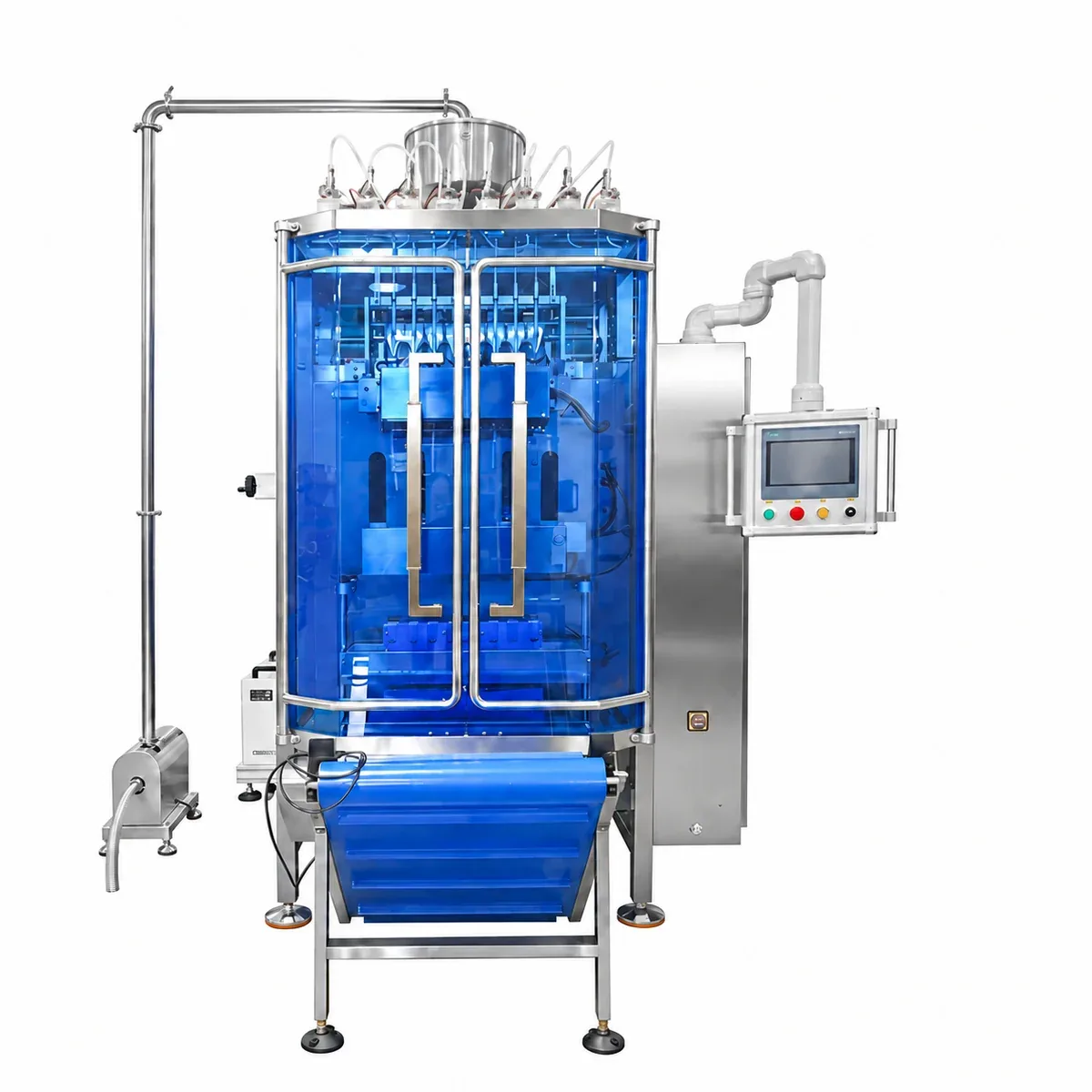
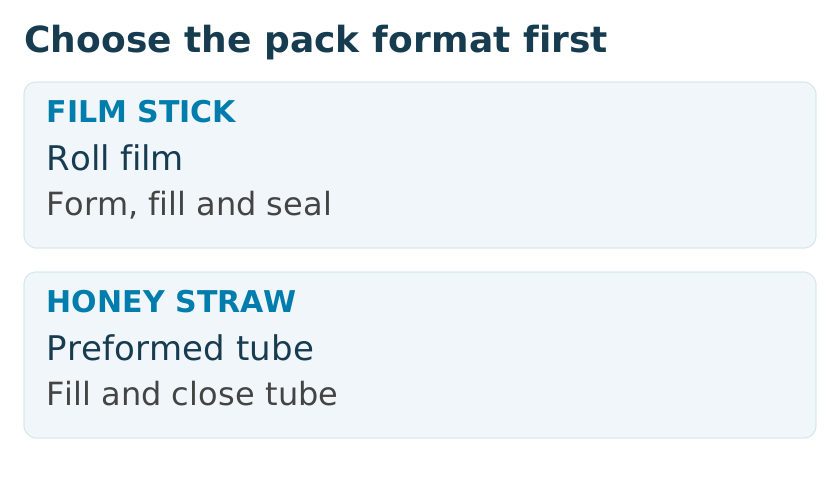
The phrase honey stick machine describes more than one pack. A flexible film stick is made from a reel, with a lengthwise seal and end seals. A honey straw starts with a tube that must be filled and closed using equipment intended for that format. Send a photograph or drawing of the finished portion with your enquiry. A long, narrow outline alone does not identify the machine you need.
This application covers film stick packs on the liquid packaging route. It does not cover straw filling, hobby kits or a promise that existing straw tooling can run on a film machine. Compare the finished pack's opening, handling and emptying before deciding. If customers need to squeeze honey into a drink, test that action with filled samples; an attractive empty mock-up cannot show how the honey leaves the pack.
Scroll horizontally to see all columns. Keyboard: focus the table and use the arrow keys.
| Format | Starting material | What to confirm |
|---|---|---|
| Film stick | Roll-fed flexible film | Forming geometry, seals, opening and filled sample |
| Plastic honey straw | Preformed tube | Tube filling and end-closing process with its equipment supplier |
Describe the honey at the filling point
Honey viscosity varies with composition and moisture content, and increasing temperature generally makes it flow more easily. FAO's technical account of honey also describes varieties whose behavior changes with agitation. A room-temperature description such as thick or runny is therefore an incomplete equipment specification. Record the honey type, condition and intended filling temperature, and supply viscosity information with the measurement conditions when available.
Explain whether the supplied sample is liquid, partly crystallized, creamed or blended, and whether the production material can differ during storage. Describe the container used to deliver it to the machine and any upstream conditioning. Keep the equipment trial within your product team's approved handling limits. This page sets no universal heating temperature: a filling adjustment is not, by itself, evidence that product quality or a label claim has been preserved.
Further reading: FAO: Honey physical characteristics, section 2.2
Review the feed tank, pump and nozzle together
Ask for the proposed product path from the supply connection through the hopper, pump, tubing and nozzle. The company's liquid reference materials include pump dosing, anti-drip nozzle arrangements and an optional heated, agitated hopper. These are configuration discussion points. They do not establish which arrangement will handle your honey, or prove a particular fill accuracy. Have the supplier identify what is included and what your plant must supply.
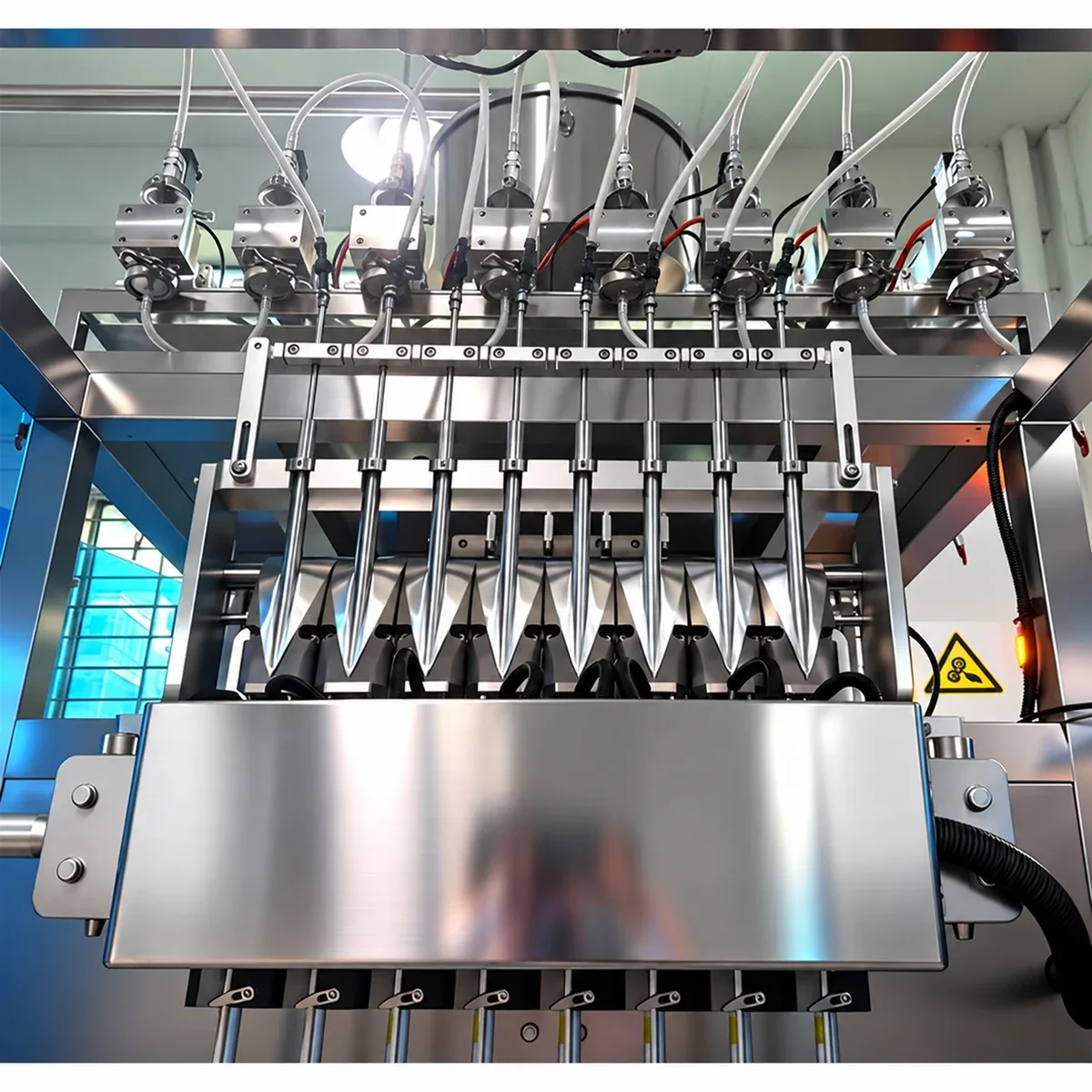
During a sample run, watch how honey replenishes the dosing system and what remains at the nozzle after the dose. Ask the machine team to check any tail or drip that approaches the sealing area, and retain the affected packs with the operating conditions recorded. A change to one part of the path can alter the result elsewhere. Review supply consistency, dose timing and nozzle position together before accepting a proposed correction.
Related reading: Liquid Stick Pack Machine for Gels
Manual or small equipment versus multi-lane production
Compare the work each option automates. With a manual or partly automated arrangement, ask who positions the pack, starts the dose, closes the pack and removes it. With a roll-fed multi-lane machine, several lanes form and fill packs within the same production sequence. The comparison should include loading material, replenishing honey, removing rejected packs and collecting finished portions, as well as the automatic cycle itself.
Choose around the production day you actually expect. A short batch with frequent product changes creates a different workload from a long run of one honey and one pack size. State your required accepted output and the available operating time; request a trial-based proposal that also records cleaning, film changes and restart losses. Do not treat another liquid's catalogue speed or the number of lanes as a confirmed honey output figure.
Related reading: Single vs Multi-Lane Stick Pack Machines
Confirm the portion, dimensions and film before artwork
Specify the intended net portion and its unit, the proposed pack width and length, the opening style and any carton constraints. If the label quantity is a mass and dosing is volumetric, ask how the trial will check the finished net mass for this honey under the agreed conditions. No single gram-to-millilitre conversion is assumed here. Keep the declared quantity separate from the machine setting and record how each is checked.
Request a drawing for the proposed configuration instead of adopting a generic minimum or maximum size. Usable dimensions depend on the forming and sealing arrangement as well as space for the honey and opening. Send the film supplier's structure, grade, thickness, reel details and sealing information. Approve film through filled-pack trials, including opening and leakage checks agreed with your quality team. A packing trial does not establish shelf life.
Related reading: Stick Pack Sizes & Dimensions Guide; Stick Pack Film & Machine Compatibility
A honey trial record that separates the lanes
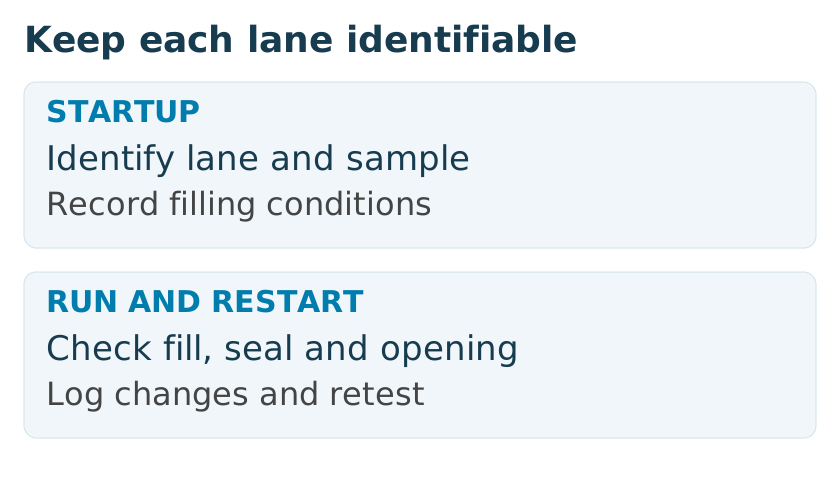
Agree the trial plan before sending samples. Include the honey identification, film grade, pack drawing, target portion and operating conditions, with named acceptance checks and an agreed sampling method. Keep each lane identifiable so a combined average does not hide a troublesome nozzle. Retain samples from startup, stable running and restart, and log any change to settings beside the samples produced after it.
Use the results to identify unresolved questions. Check fill results against the agreed criterion, inspect seals and residue, and assess opening and emptying. If the run used different honey, film or temperature from the proposed production process, write that difference into the report. An approval should name the tested combination and outstanding work; a video of a machine running is useful context but cannot replace those records.
Related reading: Stick Pack Machine Sample Testing; Stick Pack Machine FAT Checklist
Scroll horizontally to see all columns. Keyboard: focus the table and use the arrow keys.
| Record | Reason |
|---|---|
| Honey batch and filling condition | Identify what the result applies to |
| Film grade and drawing revision | Keep packaging changes visible |
| Lane and operating stage | Separate stable running from startup and restart |
| Fill, seal and opening checks | Compare finished packs against agreed criteria |
| Adjustments and outstanding items | Define what must be retested |
What changes the honey stick machine quotation?
Ask for an itemized scope covering the machine and lane arrangement, pump and nozzle configuration, feed system, any temperature-control equipment, pack tooling, coding and downstream handling. Include the film or product samples needed for trials and the documentation to be supplied. Separate optional equipment from the base configuration, and identify installation, training, spare parts and transport as individual commercial items rather than assuming they are included.
Compare quotations against the same product and pack brief. A lower machine-only figure may omit a feed tank or collection equipment that another proposal includes; a larger lane count may require a different supply arrangement. Request the proposed operating assumptions and trial acceptance terms with each quote. Price, delivery and honey-specific performance remain matters for the project quotation, so this guide gives no price range or output guarantee.
Related reading: Stick Pack Machine Price: Budget & Quote Guide
Prepare the sample and cleaning brief
Describe the products that share the line and the sequence of changeovers. Ask which product-contact parts can be removed, what access is available and what the equipment supplier's cleaning instructions cover. Have your own quality team define the cleaning verification needed for your product and plant. Include reassembly and the return to acceptable packs when assessing changeover work; a hopper that looks clean does not describe the whole product path.
For the first enquiry, send a finished-pack reference, target portion, honey description and handling conditions, candidate film information, required accepted output and the planned batch pattern. State what information is still missing. The next useful deliverable is a proposed configuration and sample-test plan with responsibilities assigned, followed by a quotation tied to that scope. These details let the discussion move beyond a generic request for a honey stick maker.
Related reading: Request a Stick Pack Machine Quote
Method and sources
Updated 7 October 2026. This selection guide combines the company's approved liquid-machine configuration records with published honey-handling background. FAO's Honey chapter supports the discussion of viscosity; the machine category and sample-testing pages explain the equipment and trial route. The checklists are proposed purchasing questions, not a report of a completed honey installation. No honey-specific operating range has been verified for publication here.
Related reading: Liquid Stick Pack Machine for Gels; Stick Pack Machine Sample Testing
Further reading: FAO: Value-added products from beekeeping, Honey
Common Questions
Does this honey stick machine fill plastic straws?
This page covers narrow packs formed from roll film. Plastic honey straws need equipment intended to fill and close tubes; send a pack sample so the format is confirmed before quoting.
Must honey be heated before stick packing?
That depends on the honey and its approved handling process. Temperature affects viscosity, but this guide gives no universal heating requirement or set point. Agree the filling conditions with your product team and verify the proposed equipment with samples.
What honey portion sizes can the machine make?
Send the target portion, its unit and a pack drawing. The proposed filling range and pack dimensions must be confirmed for the honey, dosing system and forming tools; generic liquid ranges are not a honey-specific specification.