
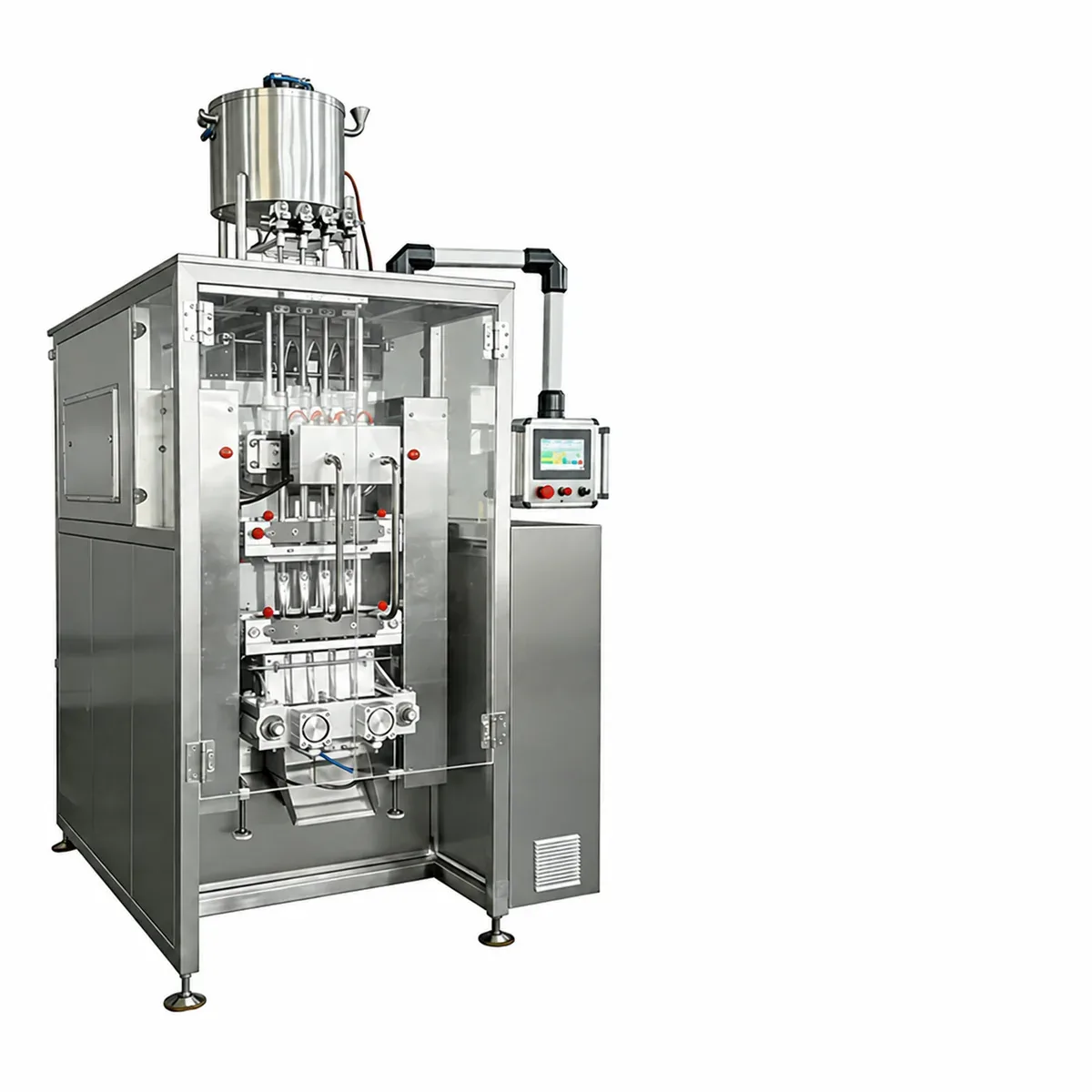
Define the finished seasoning blend before choosing a filler
Dry seasoning is a recipe, not a single handling category. Primary manufacturer guidance identifies particle distribution, flowability and bulk density as inputs to feeding and dosing selection. Use the finished formulation for the discussion, including its fine fraction and visible herbs or crystals. A sample of the main ingredient alone cannot stand in for the recipe being packed. This guide covers dry blends; seasoning oil and liquid sauce filling need a separate assessment.
Create a recipe sheet with a formulation revision, ingredient specification references, product lot and intended use. Ask your product team to flag permitted ingredient substitutions and seasonal raw-material changes. Attach the product specification rather than an informal description such as “like table salt.” Keep confidential formulation details in the agreed document-sharing process; the initial inquiry can use a coded recipe identifier.
Select samples that represent the differences within your planned portfolio. Include a recipe that pours readily, a dusty or cohesive blend if present, and a blend with fragile visible pieces if present. Explain why each sample was selected. A successful run of the easiest flavour should remain evidence for that flavour and its tested conditions, with the other recipes still listed as open work.
Related reading: Stick Pack Machine Buying Guides; Powder Stick Pack Machine: Auger Dosing; Granule Stick Pack Machine: Drink Mixes
Further reading: Dry seasoning packaging considerations — primary manufacturer guidance
Record particle size, flow and density as separate observations
Particle size, particle shape and bulk density differences can encourage separation during spice handling. Moisture and fat content can also contribute to sticking, bridging or caking. These are reasons to inspect the product path, not diagnoses to assign from a photograph. Describe what happens when the actual blend is transferred and held, and keep any suspected cause separate from the observed result.
Ask the laboratory or ingredient supplier for the available particle-size distribution and its method. Preserve the sieve or analysis report reference and identify the sample state. Record whether the recipe has visible leaves, crystals, clumps or a substantial fine fraction. If the supplier proposes agitation, ask to compare the blend before and after that handling step for visible breakage or changed appearance.
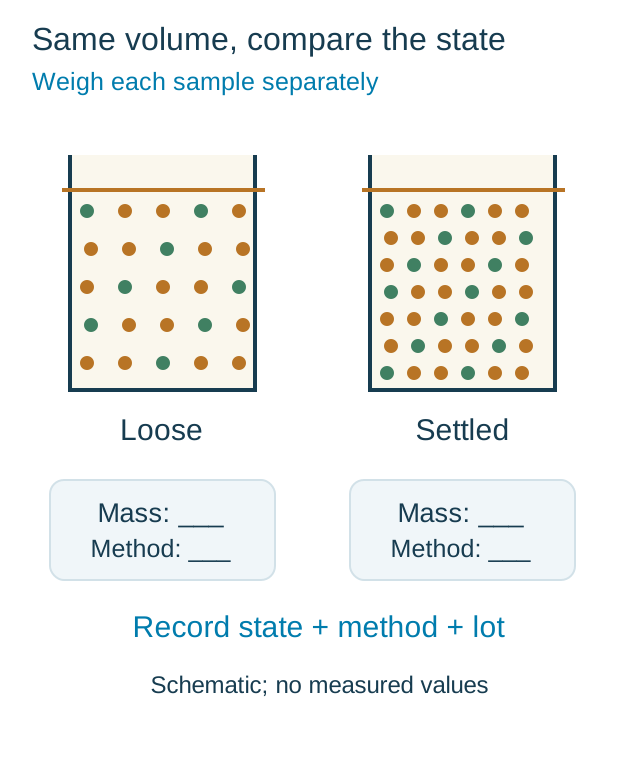
Bulk density records need the measurement method and product condition beside the value. A loose sample and a settled sample are different comparison states. Ask the trial team to record the state used for each density measurement and to connect it to the corresponding weight samples. Do not turn a density result into a guaranteed dose setting. A cup or auger candidate still needs finished-pack weighing with the proposed feeding arrangement.
Further reading: Spice powder handling: segregation, bridging and caking; Powder filling: density, tooling and weighing considerations
Blend characteristics × dosing candidate × trial observation
An auger is a candidate for many seasoning powders; a volumetric cup is a candidate for consistently free-flowing granular products. Neither description settles the choice for a mixed recipe. Supplier guidance on filling systems also links volume-based weight drift to density variation and calls for checking dust near the seal. Ask the supplier to explain the proposed candidate against your blend sheet, then keep alternatives open where the observations disagree.
Copy the matrix into your trial brief and add a separate row for each recipe revision. Treat the candidate column as a question for the equipment team. Record the actual filler and tooling identifiers used, any conditioning or agitation and the hopper refill method. If a candidate is rejected, preserve the reason and evidence reference rather than deleting its row. This makes supplier comparisons useful when an apparently similar quotation proposes a different route.
Where variable density or a demanding weight requirement is material to the decision, ask whether weight-based control or verification is appropriate. The supplier should describe the implementation and what is actually measured. Do not assume that a downstream checkweigher changes the way the dose is delivered, or that an inspection option is included in the basic machine quotation.
Further reading: Stick pack filling systems — auger and volumetric candidates
Scroll horizontally to see all columns. Keyboard: focus the table and use the arrow keys.
| Blend characteristic to confirm | Dosing candidate to discuss | Observation and evidence to record |
|---|---|---|
| Fine or cohesive seasoning powder | Auger with product-specific tooling and feeding review | Bridging, discharge tail, dust, lane weights, refill/restart behaviour; candidate/tool ID: ___ |
| Stable-flow granular seasoning | Volumetric cup, subject to the actual blend trial | Cup fill/discharge consistency; density state; weight trend; retained particles: ___ |
| Fine powder mixed with crystals or herb pieces | Compare feasible candidates after handling assessment | Blend composition through the run; leaf damage; obstruction; weight and composition checked separately: ___ |
| Blend that cakes or adheres during holding | Resolve feeding/conditioning scope before approving a filler | Hold conditions; accumulation location; interruption and recovery; any new handling step: ___ |
| Density varies across the expected lots | Discuss weighing/control and verification options | What is measured; response to variation; option scope; evidence and open limitations: ___ |
Discuss this configuration
Send the details below to discuss the configuration and any missing information. Leave undecided fields blank; agree how to share samples and documents on WhatsApp.
- Actual seasoning and recipe range
- Film sample and pack drawing
- Dose and project requirements
- Recipe changes and cleaning record
Use one sample-test record from incoming blend to finished sticks
Agree the test plan before dispatching material. State the recipe and film revisions, dose requirement, permitted variation, intended output and which observations would stop the test. Leave quantities and acceptance limits for the buyer and supplier to agree against the actual project. A useful report preserves individual observations and exceptions; an overall “passed” message cannot show which recipes, lanes or operating conditions were examined.
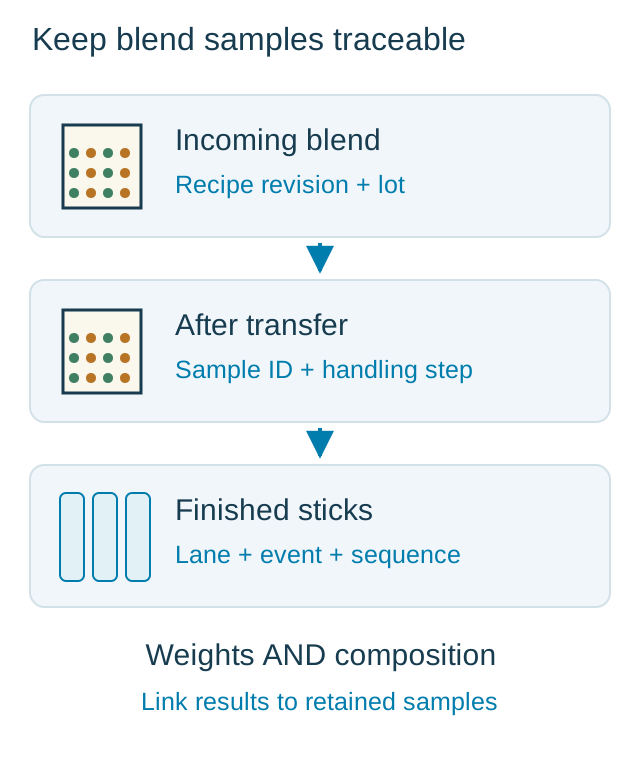
Label incoming material, samples taken after transfer and finished packs so they can be traced back to the same recipe lot. For each operating segment, record the lane identity, collection point, sequence and any intervention. Include normal running, a refill and a restart if those events are in the agreed scope. Retain the time relationship between samples instead of mixing all packs into a single unlabelled bag.
Check blend composition separately from net weight. A pack can meet its weight requirement while carrying a different share of the fine and coarse ingredients. Ask the product team to define the relevant composition check and its acceptance criteria. Appearance can flag an issue, but the trial report should state when visual inspection is insufficient and a laboratory method remains pending. Do not publish an inferred homogeneity result from a row of attractive packs.
Related reading: Stick Pack Machine Sample Testing; Stick Pack Machine FAT Checklist
Scroll horizontally to see all columns. Keyboard: focus the table and use the arrow keys.
| Record block | Fields to complete | Evidence or disposition |
|---|---|---|
| Identity and setup | Recipe revision: ___; lot: ___; film revision: ___; configuration/tool ID: ___ | Material receipt and setup sheet ref: ___ |
| Operating segment | Lane: ___; running/refill/restart: ___; collection sequence: ___; setting changes: ___ | Individual weight results and retained sample IDs: ___ |
| Blend preservation | Incoming/after transfer/finished sample IDs: ___; composition method: ___ | Composition results: ___; pending analysis: ___ |
| Decision | Agreed criterion: ___; observed exception: ___; affected scope: ___ | Accept / modify / retest: ___; owner: ___; report ref: ___ |
Inspect seasoning in the seal area with the actual film
Dry seasoning packaging guidance treats product discharge, filling timing and pack geometry as connected to seal cleanliness. Ask for photographs of the open seal region and retained finished packs linked to the trial segment. Record where powder or particles appear, which lanes are affected and whether the issue follows a refill or restart. Keep the observation distinct from the supplier’s proposed corrective action.
Use the intended film grade and its supplier specification for the relevant trial. Record the roll and artwork revision, pack drawing, seal arrangement and opening requirement. Ask the packaging team to define the seal and leak evaluation methods and to document the result. A clean-looking seal alone should not close an unresolved integrity question. Any alternative film trial needs its own identity and assessment, rather than being reported as proof for the original laminate.
Also assess emptying the stick as the user will use it. Record whether seasoning remains in corners, clings to the film or pours unevenly, and whether visible herb pieces are damaged. Keep this product-use check beside the dosing and seal evidence. If the pack must change, send the revised drawing back through the trial discussion before releasing printed film.
Related reading: Stick Pack Film & Machine Compatibility; Stick Pack Sizes & Dimensions Guide
Record recipe changes and cleaning before approving shared equipment
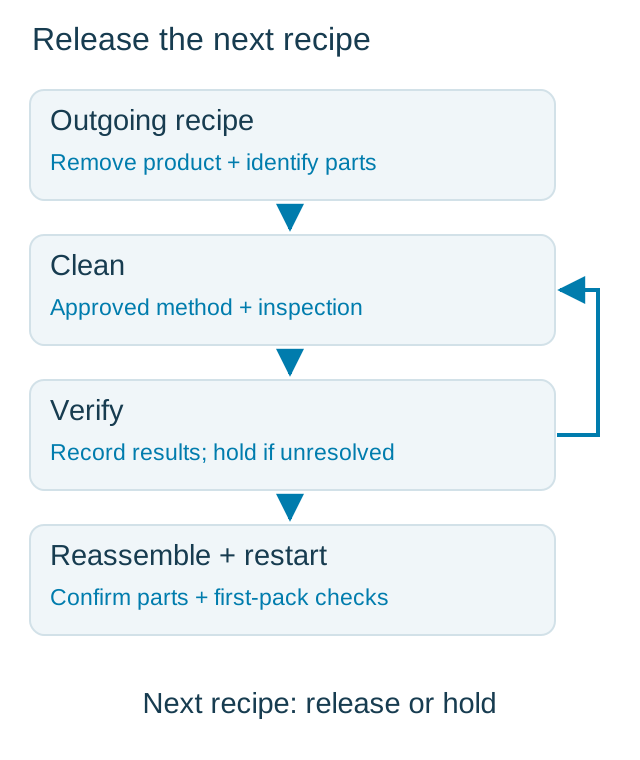
Spice-processing manufacturers identify cleanability, dust management and frequent recipe changes as design concerns. Fragile ingredients also require attention to how they are handled. For a shared seasoning line, turn these concerns into a witnessed changeover record. Ask which product-contact parts must be removed, which surfaces can be inspected and which cleaning procedures the supplier supports for the proposed configuration.
Prepare a recipe transition list with your production and quality teams. Each transition should identify the outgoing and incoming recipes, relevant carryover concerns and the approved cleaning instruction. Include hoppers, transfer components, dosing tooling and filling outlets within the agreed product-contact boundary. Record part identity and storage after cleaning so that a clean component cannot be confused with an unassessed spare.
Have the responsible quality team define verification and release requirements for each transition. Visible cleanliness, colour or odour checks may be useful observations, but do not label them proof of allergen removal. Keep results, unresolved residues, corrective action and the release decision together. If wet cleaning is proposed, ask how drying and readiness for the next dry blend will be confirmed. Do not assume the quoted machine includes an automatic cleaning system.
Measure the complete changeover during the agreed demonstration, including material removal, dismantling, cleaning, verification, reassembly and restart checks. Preserve the conditions and operators involved. A mechanical tooling swap and the release of the next recipe are separate milestones. Ask the quotation to identify change parts, cleaning access provisions and excluded work; avoid transferring another manufacturer’s changeover time into your production plan.
Further reading: Tea and spice processing — handling, dust and cleanability
Scroll horizontally to see all columns. Keyboard: focus the table and use the arrow keys.
| Changeover record item | What to write down | Release evidence / owner |
|---|---|---|
| Recipe transition | Outgoing recipe/lot: ___; incoming recipe/lot: ___; carryover concerns: ___ | Approved cleaning instruction/revision: ___; owner: ___ |
| Removal and access | Parts removed: ___; tooling IDs: ___; inaccessible areas: ___ | Inspection photos/ref: ___; open actions: ___ |
| Cleaning and verification | Method and completion record: ___; verification method: ___; drying if applicable: ___ | Results/ref: ___; deviations: ___; quality decision: ___ |
| Reassembly and next recipe | Correct parts/settings confirmed: ___; first-pack sample IDs: ___ | Restart assessment: ___; release/hold: ___; authorised person: ___ |
| Elapsed work and scope | Removal/cleaning/verification/restart milestones: ___; assistance required: ___ | Measured conditions: ___; quotation inclusions/exclusions: ___ |
Methods, sources and what to send for a seasoning assessment
These blank worksheets are editorial procurement tools compiled from primary manufacturer pages checked on October 16, 2026. The linked sources describe their own equipment and application considerations; they establish questions to investigate, not StickPackMachine model capability or a successful seasoning installation. No completed trial, standard acceptance threshold or universal filler rule is claimed. Keep a source reference and check date beside any technical value later added to your brief.
Send your actual finished product and film sample availability, recipe identifiers, particle and density reports if available, pack drawing and project requirements. Include the recipe transition list, intended production pattern and the test questions still open. Agree sample quantities, shipping arrangements, confidentiality, test scope and evidence format before sending materials. We can use the brief to discuss the proposed assessment; configuration, performance and commercial arrangements require project confirmation.
Related reading: Stick Pack Machine Sample Testing; Request a Stick Pack Machine Quote
Common Questions
Does every fine seasoning powder need an auger filler?
No. An auger is a candidate, but actual flow, density variation, blend structure and the required dose must be assessed. Ask the supplier to identify the tested tooling and feeding arrangement and retain any limitations for other recipes.
Can a salt-based seasoning use volumetric cups?
A consistently free-flowing granular blend may be a candidate. Test the finished seasoning rather than salt alone, record density state and verify filled-pack weights and blend composition under the agreed operating conditions.
Why check composition when pack weight is acceptable?
Weight alone does not show the distribution of ingredients in a mixed recipe. Keep incoming, post-transfer and finished-pack samples traceable and have your product team specify a suitable composition assessment.
What should a multi-flavour changeover record include?
Record the outgoing and incoming recipes, carryover concerns, parts removed, cleaning instruction, verification results, reassembly and next-recipe restart assessment. The responsible quality team defines release requirements.
What should I send before requesting a seasoning trial?
Provide actual product and film sample availability, recipe identifiers, pack drawing, dose requirements, output and batch pattern, and cleaning concerns. Agree sample quantities, arrangements and the test scope before shipping.